Tuesday, April 10, 2007

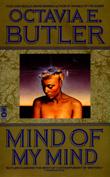
Mind of My Mind, by Octavia Butler

Mind of My Mind is the second published novel in Octavia Butler's Patternist series, and chronologically it is the second, but the first published is actually fifth in the chronology and the fourth published is first. Confused? Don't be. Stick with publication order and everything will be just fine.

In Patternmaster we are introduced to a future Earth where humanity is divided into Patternists (telepaths), the Mutes (normal humans), and Clayarks (disease altered humans living no better than beasts). The telepaths are linked through something called "The Pattern", hence Patternists.

Mind of My Mind jumps back to a time not far off the present day and none of the future Pattern exists. We are introduced to Doro, a once human who has lived for thousands of years by jumping from one body to the next. He has been selectively breeding families of humans for millenia for telepathic ability and now he has several humans who may have sufficient power and control to take the next step.

Up until Mary, most of Doro's potential telepaths have been failures. Most who have transitioned to be an Active have been unbalanced and a danger. Mary has the potential to be the strongest and the most stable, if she lives through transition from Latent to Active.

What follows is a gathering of telepaths, the rise of Mary, and the origins of the Pattern. While this can be read before Patternmaster or after Wild Seed (which is set even before this book), but publication order is the way to go as Butler reveals this world in a particular way and with each revelation the next becomes more important.

Patternmaster was quite obviously Octavia Butler's first novel. It was decent enough, but not as strong as her later works. With Mind of My Mind Butler has written a much stronger novel which deals more with issues of identity and belonging, but it is also simply a stronger story with greater detail and description and more raw emotion. The first half of the novel is building, building and telling a consistent storyline with shifting viewpoints. Midway through when Mary actually begins building the Pattern Butler's storytelling becomes fragmented in that we are now given scattered episodes about the building of the Pattern. There are greater shifts in time during the second half of the novel, but this too is building to a great conflict and a great confrontation.

Not perfect and not as extraordinary as her later work, Mind of My Mind is a much more accomplished novel than her debut and shows the growth of Butler's soon to be masterful storytelling.

Saturday, April 07, 2007

Booksfree

I haven't written about Booksfree before, though the owner has commented in a couple of threads about Bookswim. Booksfree seems to be essentially the same service, except Booksfree was here first and for several years. Since they are actually in business the subscription plans are available to see and compare to Bookswim...except that Bookswim's rates are not posted yet.

The plan rates make sense, are comparable to Netflix's plan, and I think it works.

I still don't think that a book rental plan makes good sense for me since I have such a strong local library system in my area, but without having tested the plan it looks like Booksfree has the right idea...but as always, only for those who don't have access to a good library system.

Deadman's Road

The Spring 2007 issue of Subterranean Magazine has a story by Joe R. Lansdale that was simply fantastic: Deadman's Road.

It hit me with this in the second and third paragraphs and did not let me go.
He was a man of the Lord and he hated God, hated the sonofabitch with all his heart.

And he knew God knew and didn’t care, because he knew Jebidiah was his messenger. Not one of the New Testament, but one of the Old Testament, harsh and mean and certain, vengeful and without compromise; a man who would have shot a leg out from under Moses and spat in the face of the Holy Ghost and scalped him, tossing his celestial hair to the wild four winds.
Hot damn. It tells us everything we need to know about Jebidiah and sets up the tone of the rest of the story very well. This is followed up with gems like these two:
"I have become irritated with you now," Jebidiah said. "Might I suggest you shut your mouth before I pistol whip you."

and
The deputy puked in the bushes. "Oh, God. I don't want no more of this."

"Go back. I won't think the less of you, cause I don't think that much of you to begin with. Take his head for evidence and ride on, just leave me my horse."

The deputy adjusted his hat. "Don't need the head...And if it comes to it, you'll be glad I'm here. I ain't no weak sister."

"Don't talk me to death on the matter. Show me what you got, boy."


It's a damn good story. Makes me want to seek out more of Lansdale's short fiction and see what else he's got.

Friday, April 06, 2007

Harry Potter 7 Cover

The cover image for Harry Potter and the Deathly Hallows has been available for several weeks now, so it does not count as news, but I wanted to post it anyway.

I like it. The focus is entirely on Harry with a much brighter color scheme than we've had before. Considering that this is likely going to be the darkest book of the series, it is an interesting choice, but it's a cover that grabs the eye because of that orangish sky.

He looks all grown up and he seems ready for something. To get revenge on Snape? For his death? To stop Voldemort? Anything. Something.

Great cover. Can't wait to read what is inside.

Image from The Leaky Cauldron.

Wednesday, April 04, 2007

Keeping It Real, by Justina Robson

While Keeping It Real by Justina Robson is her fifth published novel, she shows off the full strength of her imagination here and announces to those who may not have heard already that she is a major talent and that she will write a blend of science fiction and fantasy that demands to be read.

How is that as a selling point?

Keeping It Real opens with a not quite a chapter, not quite a prologue telling us what we need to know. In 2015 there was some sort of Quantum Bomb which detonated in Texas and which opened our world to five alternate / parallel worlds where there are elves, fairies, demons, the dead, and elementals. The other races insist they have known about us all the while.

The novel takes place in 2021 and we need to know that this is the state of being because this is not what the novel is about nor is it the story Robson is telling. But it is the setting.

Lila Black is possibly less than half human. The other half is machine. At the start of the novel we do not know why or how, only that she is assigned security for a rock band called the No Shows which consists of fairies singing backup and an elf as the lead singer. The No Shows are immensely popular and someone is trying to kill the elf, Zal. Lila, as it turns out, does not entirely trust elves and is barely comfortable in her own skin, such as it is. She is in control of her body and machine, but not entirely. There are glitches.

This is the starting point of Keeping It Real. The rest needs to be discovered to be believed. Robson keeps the novel moving at a reasonably fast clip with action, excitement, elf sex, imperfect cyborg machinery, inept fake assassination attempts, and a heroine who is broken more on the inside than on the outside...and this is the woman who must protect Zal, and elf who barely wishes to be protected.

Keeping It Real is perhaps the most original science fiction or fantasy novel I have read in some time and it is because Robson is able to blend the two genres so seamlessly that it is simply just good storytelling. Robson plays with familiar concepts (elves, cyborgs, different worlds, magic), but in doing so she puts them together in ways we haven't seen before. The elves here are aware of the stereotypes brought on by countless fantasy novels and Lord of the Rings (the elves crack on lembas bread so that the humans can't). Remember, this is our world, just altered in our future.

Keeping It Real is the first volume in a proposed trilogy and I cannot wait to see what Robson brings us next.


Reading Copy provided courtesy of Pyr Books.

The Door Through Space, by Marion Zimmer Bradley

It is interesting just how much of The Door Through Space Bradley cribbed for her Darkover series: The Terran Empire colonizing the universe, a world bound by compact rather than charter to the Terrans, culture clash, Dry Towns, The Ghost Wind, a hint of ESP, chains binding women, the red sun, catmen, and the exclamation of the word "Sharra". These are both superficial as well as deeply thematic similarities to Darkover. In truth, if The Door Through Space was only given minor edits, it could pass as a Darkover novel. This was Bradley's first published novel and Darkover was obviously a work in progress throughout her entire career, but it is interesting to note how much of this novel she used to create an entire series of novels completely unrelated to this one. The world of Wolf could easily be Cottman IV. Had the word "matrix" shown up anywhere in TDTS I would have cried foul.

Race Cargill is a Terran intelligence agent who has been stuck behind a desk because of a bitter dispute with another agent who has "gone native". When Cargill's sister comes to Race because her husband, the former friend and agent who maimed Cargill, has apparently threatened her and her daughter, Cargill goes back into the field instead of leaving the planet for good. Adventure ensues.

Honestly, the book isn't that good. It is a pulpy science fiction and fantasy blend that works less well than any of her later, more developed Darkover novels. Add to the fact that having read the majority of Darkover, The Door Through Space comes off as a cheap copy, no matter that this book came first. It is a weaker Darkover novel without any of the trappings that make Darkover compelling. It is as if Bradley were trying out the ideas which would later mark her as a top talent in the 1970's and 1980's. The novel is short enough, which is good, because 300 pages of this would be rough going. The novel is not all bad and there are positives in her description of the customs and traditions of the cultures she introduces. Her handling of character, however, is less skillful.

Overall, no need to read this. Science fiction has been done far better, and Bradley herself would later re-write this novel into the vastly superior Darkover series.

Monday, April 02, 2007

March 2007 Reading

1. 1776 - David McCullough
2. Dark Tide I: Onslaught - Michael Stackpole
3. The Android's Dream - John Scalzi
4. Dark Tide II: Ruin - Michael Stackpole
5. Bloodchild and Other Stories - Octavia Butler
6. The Road - Cormac McCarthy
7. Goodbye, Columbus - Philip Roth
8. Falling Boy - Alison McGhee
9. Inside Job - Connie Willis
10. My Secret: A PostSecret Book - Frank Warren
11. The Roads Between the Worlds - Michael Moorcock
12. Sense and Sensibility - Jane Austen
13. Alice's Adventure in Wonderland - Lewis Carroll
14. Witches Abroad - Terry Pratchett
15. Stranger Things Happen - Kelly Link
16. Patternmaster - Octavia Butler
17. The Magician's Assistant - Ann Patchett
18. Shadows Linger - Glen Cook
19. Looking Backward: From 2000 to 1887 - Edward Bellamy
20. Heroes Die - Matthew Stover
21. How to Write Science Fiction and Fantasy - Orson Scott Card
22. Down and Out in the Magic Kindgom - Cory Doctorow
23. Pygmalion - George Bernard Shaw
24. Grendel - John Gardner
25. Child of God - Cormac McCarthy
26. The Best American Sports Writing 2006 - Michael Lewis (editor)
27. Harvest of Changelings - Warren Rochelle
28. Eastern Standard Tribe - Cory Doctorow
29. The Fantasy Writer's Assistant - Jeffrey Ford
30. The Secret Lives of Men and Women: A PostSecret Book - Frank Warren


Book of the Month: Shadows Linger, Heroes Die (tie)
Disappointment of the Month: Patternmaster (because my expectations were so high)
The Alison McGhee Award for Really Good Books: Falling Boy
Pleasant Surprise of the Month: Down and Out in the Magic Kingdom

Sunday, April 01, 2007

Kindred: The New Addition

The first new book I've purchased in a long time is a great one. Kindred was my introduction to the literary genre goodness that was Octavia Butler.

Since then I've read almost all of her novels, excluding four of the five Patternist books which I am working on right now. Most of Butler's work is extraordinary. Parable of the Sower / Talents, and Fledgling raise the bar of the genre.

The Xenogenesis trilogy is also worth noting.

Kindred will now find a place of honor on my bookshelf. Hopefully it will be joined by its sister novels.

Thursday, March 29, 2007

Harvest of Changelings, by Warren Rochelle

In Harvest of Changelings Warren Rochelle introduces the reader to a modern day fairy tale. Or, perhaps that should be a modern day faerie tale. Ben Tyson is a librarian from Garner, North Carolina. In the prologue (set in 1981), Ben met and loved a fairy named Valeria. She loved him back and together they had a son named Malachi. When Malachi was still an infant Valeria was murdered by the Formoii, an offshoot branch of faerie intent on destroying Valeria's Daoine Sidhe faerie. The first chapter moves ahead ten years and it is now 1991. Malachi is ten years old and beginning to exhibit his magical heritage which Ben has not mentioned or prepared him for.

Harvest of Changelings
uses Ben Tyson as a framing device for the story. Excerpts from Ben's journals are used to give an adult perspective which gives shape to the story Rochelle is telling. But, while the story is told mostly through Ben Tyson's eyes, Harvest of Changelings is not about Ben. Harvest of Changelings is about Malachi and three other children who are discovering their identities as magical beings in a mundane world and dealing with the ever increasing threats against their safety.

This is a different kind of faerie tale. While the prologue sets up the idea of a war amongst the faerie, the first third of the novel (or more) is little more than a coming of age story. The prologue, which is very much out of place with the pacing of the rest of the novel, is necessary because it tells us what we need to know about these children and their powers. The reader will not spend chapters wondering what exactly is going on here. Unfortunately, the reader will spend chapters wondering when exactly Rochelle is going to get to the point. The early chapters, or viewpoint segments as there are only eight chapters in the 300+ page novel, introduce Malachi, Jeff, Russ, and Hazel to the reader and they each have their own story which needs to be addressed. The construction of the novel in this manner makes sense, but it is frustrating because the prologue tells us a war is coming but the reader must then face page after page of bad parenting, misunderstanding teachers, and outcast children finding out who they are.

With that said, once these children do find out what they can do, Harvest of Changelings starts rolling. The danger starts to build, the viewpoint of a black magic user begins to hint at the stakes introduced in the prologue, and when strange events begin to happen around the children, in the town, and in North Carolina at large, the novel becomes more imperative. Now the reader begins to truly care about what is happening and now we wonder where Rochelle is taking the novel.

The fact that Harvest of Changelings focuses on children does not make this a children's book. There is darkness here and it isn't the darkness of Harry Potter. This is adult darkness, adult violence, and adult themes. It only gets darker before daylight.

What is the bottom line here? Warren Rochelle has created a very interesting and compelling look at a world where faerie is just outside our perception and knocking at the doors of our reality. This is not a perfect creation. If we turn too quickly some of the construction still clunks a little bit. There are rough edges here. The pacing is a bit off. With all that said, Harvest of Changelings is a worthy entry as a modern day fantasy where the light is in hiding and the darkness is barking down our door.

Harvest of Changelings is a interesting story and well told. There are flaws, certainly, but not enough to suggest that this should be avoided. Rather, this is a good introduction to an author who is working with some good ideas and just needs some more polishing on the execution of those ideas. Certainly, Harvest of Changelings is worth the time spent reading the novel. This novel is not enough to create Warren Rochelle as a brand where every publication is met with eager anticipation (not as, say, The Atrocity Archives did for Charles Stross). It is enough, however, that when the last page is turned and the cover is closed we can sit back and know that we enjoyed the journey Rochelle guided us through.


Reading Copy provided courtesy of Golden Gryphon Press.

Sunday, March 25, 2007

Heroes Die, by Matthew Stover

"I Swear by the Power of All Dark Gods that I will write Every Fucking Word Balls-Out for Glory." - Matthew Woodring Stover
I first knew Matthew Stover as the author of one of the absolute best Star Wars novels: Shatterpoint. And then as the author of the novelization far superior to the movie: Revenge of the Sith. But, it turns out the man has written his own original fiction and that as good as his tie-in fiction is (and it's good, trust me), his original fiction is that much better. Trust me on that, too.

Heroes Die is a brutal balls out for glory story where Hari Michaelson is an Actor on Earth who is better known as his alter-ego, Caine. The Blade of Tyshalle. On this dangerous vision of future Earth there is a rigid caste system and with the discovery of this Overworld where humans can transport to, the future of movies has transformed to Adventures where people back on Earth can first-hand or second-hand and live that Adventure the Actors go on. Caine is the most popular living actor and he is known for his brutality and his successes in being a killer and providing the most violent entertainment for the viewer's dollar.

Michaelson has tired of all the killing and assassination he has been involved in, but to save his ex-wife, Pallas Ril, Michaelson agrees to return to the Overworld once more as Caine to save her...but saving Pallas Ril means he must perform one more assassination under the guise of revenge.

Matthew Stover initially presents Caine, or Michaelson, as being a cliche of pulp fantasy: this warrior killer, cold blooded and reckless. Caine is all that, but Caine is so much more. Caine has a mind and over the course of the novel he shows the reader as well as the other characters that he knows how to use it to his benefit. The image we have of Caine at the beginning of Heroes Die is vastly different than what we have at the end, and through this character transformation Stover lets Caine remain the violent man he is but become so much more. Make no mistake, Heroes Die is not a character study. This is an ass kicking fantasy with more violence than you can shake a club at. Stover says that he will write every word balls out for glory and that is exactly the kind of novel he delivers with Heroes Die.

The reader gets the sense that with Heroes Die, Matthew Stover is really reaching for something and that with the fight of Caine against powers on two worlds, Stover hits the cliched ball out of the cliched park. Stover challenges the reader at every turn about the nature of fantasy and the possibilities of storytelling that actively strives to be something great. The exciting aspect here is that Stover succeeds at every turn.

With hints of the epic and classic style fantasy, Matthew Stover turns it all on its head and gives us something intense and provocative, bloody and gritty, funny and brutally painful, exciting and satisfying. Heroes Die is a novel that shows the reader what else fantasy can be.

Saturday, March 24, 2007

Shadows Linger, by Glen Cook

After the glory that was The Black Company, I expected more of the the same from Glen Cook in Shadows Linger: soldiers on the move, lots of bleak gallows humor, a desperate hunt and doublecrossing with The Lady's Soultaken, and lots of interaction between the various members of The Company. In short, a near carbon copy of the first book, only with a slightly different objective. Like, what so much of fantasy seems to be. Shadows Linger is NOT that book. At all. Shadows Linger is something else entirely.

The story here is two fold. First (or second, actually) is that of Croaker and a small band of the Company sent to distant Juniper to discover a way to combat the threat of The Dominator that is cropping up there. Croaker, the Annalist of the Company, has serious doubts of the Company betraying its morality by following The Lady. He also knows something that can get him killed and the Company destroyed: Darling, the girl Raven rescued in The Black Company - she is the reincarnation of the White Rose, the enemy of The Lady.

The second aspect of the story is that of Marron Shed, a innkeeper in Juniper trying to get out of debt and who knows a man named Raven and a girl named Darling who is working at his inn. Marron Shed's story, which should have no connection at all to what we think The Company is all about, but is an interesting story about the changing morality of a desperate man. Through Shed we see what Raven is up to and how Raven is still working to get as far away from The Company and The Lady as possible.

These two stories weave together in alternating chapters that reveal more about the world of The Company and the threats The Lady faces, about The Dominator, about the Company and its history, about The White Rose, and about the threat The Lady poses to The Company.

With characters like Croaker, Raven, Marron Shed, Goblin, and One Eye Glen Cook delivers a powerful tour de force of a novel. Shadows Linger is no less a powerful work of fantastic fiction than The Black Company is. This is high praise indeed because The Black Company was one of the more outstanding works of military fantasy out there. Shadows Linger takes the series, even only at the second volume, in an entirely new and unexpected direction. The direction it takes, however, is a wondrous one and one which shows the range of Glen Cook as a creative force. In a series which could easily be the same novel after the same, Glen Cook has already shown that he is willing to pick apart The Company and his characters and that the only driving force is to tell a good story.

He tells a great one.

Patternmaster, by Octavia Butler

Patternmaster is, I believe, the first novel published by Octavia Butler. In it Butler examines many of the themes and ideas which would become hallmarks of her work in decades to come. While Patternmaster is the first book Butler published, it is the fifth volume chronologically in her Patternist series.

Set in some distant future of ours, humanity is divided into three groups: the Patternists (those with a telepathy sort of gift), the Mutes (normal humans like you and me with no enhanced mental gifts), and the Clayarks (those suffering from a crippling transformative disease making them less than men). Considering the title of the novel, we see the story from the perspective of those with Patternist gifts.

There is a prologue with Rayal, the Patternmaster of this new world of ours, and his wife discussing that someday his children will fight and kill each other to take over the Pattern (the way the Patternists have power and link with each other). Then the first chapter introduces us to Teray and his sister / lover Iray leaving their school to join the household of Joachim. But when Joachim is forced to Trade Teray and Iray to his Coransee, the novel of conflict truly begins as Coransee wants to eliminate or control any obstacle to his taking control of the Pattern when Rayal dies. Teray, a strong Patternist and Coransee's brother, is that obstacle. Teray wishes only to be independent and free and not under the control of Coransee, so there's the conflict.

Patternmaster deals with racism (Patternists vs Mutes vs Clayarks), feudalism / class-ism, theories of power, and the possibility of the future. This is the genesis of all of Butler's work.

While Octavia Butler was an absolute master of science fiction and fantasy and that much of her later work was outstanding it is with great disappointment that Patternmaster failed to live up to Butler's pedigree. It is a decent novel with interesting ideas, and short at that, but Patternmaster ultimately falls into the trap of telling and not showing. There is a sense that Butler isn't letting the history flow organically out of the story, and that she is telling us too much. Whatever it is, it is something that does not work as well here as it did in Parable of the Sower or Dawn.

Still, Octavia Butler is always worth reading. Patternmaster is a short enough novel, but it ultimately fails to satisfy.

Confessor

The series has been a bit hit or miss lately, but I rather enjoyed Chainfire and Terry Goodkind is actually going to wrap up his Sword of Truth series with the eleventh volume: Confessor.

I have to say, I rather like the cover. Sure, the author's name overwhelms the cover image rather than compliments the cover, but I like the image. It follows the pattern of the previous two editions, but the hazy blue grey mist color works. It fits the haunting theme that Goodkind has been working with where Kahlan is just a figment, barely remembered.

Because Robert Jordan and George Martin are still writing their epics which I began reading when I first really discovered the giants of modern epic fantasy, it is good to see that one of them will actually finish what they started. Goodkind has fallen in disrepute among many fans (though his novels still sell), partly because of his personal politics and outspoken nature which has overwhelmed some of his storylines, but I've still found enjoyment in the Sword of Truth novels, so I want to see how this wraps up.

Saturday, March 17, 2007

Stranger Things Happen, by Kelly Link

With her debut collection Stranger Things Happen Kelly Link offers us a fresh new voice in fantastical short stories. While her stories could easily be shelved in the Fiction / Literature section of a book store, the short fiction of Kelly Link has such a strong element of the fantastic running through her work that they firmly belong as Fantasy. These stories get to the core of what fantasy means, and there are no elves or wizards or castles or orcs. As the title suggest, sometimes stranger things happen in life. Kelly Link's stories are those stranger things.

One hallmark of Link's stories in this collection is that they are all grounded deeply in reality but in each story there is something going on that isn't quite right, that isn't quite natural. In "Vanishing Act" the story is about one girl noticing that her cousin is slowly vanishing. In a very real sense this means that the adults and other people are not noticing her cousin because the cousin is withdrawing into herself, but the sense of unease comes in when we realize that no, Jenny Rose really is disappearing.

Link touches on an invasion of sexy blonde aliens in "Most of My Friends Are Two-Thirds Water", ghosts in "Louise's Ghost", Nancy Drew in "The Girl Detective" and this closing story is nothing like the Nancy Drew (or Hardy Boys for the guys) stories that we read as a child, but perhaps there really was something going on behind the scenes of Nancy Drew.

"Water Off a Black Dog's Back" is one of the creepiest stories in the collection and half the time it simply feels like a guy dealing with a girl who doesn't really want him to meet her family, but it has a sense of the windigo mythos, except for the whole heart of ice thing that comes with windigo. The malevolency is certainly there.

Overall, Stranger Things Happen is an impressive short story collection with none of the trappings of fantasy but still it sits very much in the fantasy genre. Kelly Link shows the reader what can be done with fantasy.

The Androids Dream vs Old Man's War video trailer

It's just one of those things. Scalzi lets us in on the ongoing battle between his two books.

Friday, March 16, 2007

Bookswim Alpha

Bookswim, the Netflix-like service for books which is in no way intended to replace libraries, has apparently begun it's Alpha testing today. I've been checking the website every couple of days to see when it went live because Bookswim was supposed to launch in the first quarter 2007 and, well, there are only two business weeks left in that first quarter.

When I last wrote about Bookswim on January 6 I received a comment from one of the three guys who started Bookswim offering me a free trial. I've been looking forward to starting that trial someday so I could see what the service is all about and how it really compares to a Netflix level service and what the merits of Bookswim are versus my local library. I know that I have a reasonably strong library system, but the service could work for a more rural audience.

Either way, we'll see, I suppose, if I do get that free trial and what the service shakes out to be. It’s about books, so I’m certainly interested.

-Library Stuff has an interview with one of the founders.
-The Library Stuff interview is apparently a snippet of this interview. I leave the Library Stuff link up because...well...it's a link to a blog about libraries. It's geek cool like that.
-Another interview, this one with the guy who posted a comment on my blog.

Thursday, March 15, 2007

Inside Job, by Connie Willis

Inside Job is the 2005 Hugo Award winning novella by Connie Willis. Inside Job is a modern day paranormal mystery story with a generous helping of pop culture, literature, and movie references.

Rob is a the publisher of a skeptic's magazine The Jaundiced Eye and a professional debunker. His job description is pretty much what it sounds like: he, and his staff of one, debunks claims of the paranormal. When his employee, more of a side kick, calls him about a new claim to debunk, Rob is brought into a mystery of the paranormal which might be more real than he could expect.

While other reviews and descriptions have given away details of the plot which could entice a reader, there is something to be said for letting the novella surprise the reader. Inside Job offers up a fun and sometimes silly story about skepticism, Hollywood, fake psychics and the literary tradition (yes, Willis weaves all of this together in fewer than one hundred pages). References to noted skeptic and reporter from the early 20th Century, H.L. Mencken abound and this adds to the narrative. More specifically, Inside Job is somewhat built around Mencken's ideas as each chapter opens with a Mencken quote.

Willis has written a fine, fun novella and without knowing what else was nominated for the Hugo that year, I can certainly see why Inside Job won. It's a good, fast, fulfilling read. The time investment is small, but now I want to read more of Connie Willis's work. That's the mark of a good book, no matter what the size.

Tuesday, March 13, 2007

Batman in 5 Seconds

Oh, glory. The entire Batman movie summed up in approximately five seconds of video.

Monday, March 12, 2007

The Road, by Cormac McCarthy

Cormac McCarthy brings us a brutal post apocalyptic story to modern America with The Road. Something happened. McCarthy never says exactly what happened and it does not matter. America, and probably the world, is in ruins. There is no hope, there is only survival. A man and his young son are walking across the new American wasteland heading south and to the coast in hopes that there things will be cleaner and there the weather will be warmer. Maybe in the south there will be a community of people wiling to take them in. Maybe there will be something to hope for. Maybe.

McCarthy's stark descriptions and narrative style fits The Road perfectly. The language and the style is as bleak as the landscape these unnamed characters are traveling through. One thing McCarthy is known for is that he doesn't punctuate his dialogue. This aspect of his writing is more like he is telling us a story orally and not through the written word. It is a quirk that works very well in his novels and works especially well in The Road. The dialogue is spare and is perhaps what a father and son would talk about when the world has ended and there is no promise that they will live to complete their journey or even that there is anything to hope for at the end of their journey. Just snips of conversation, unfinished sentences and thoughts. It all fits organically with the description of the story and of the journey.

Abandon all hope, ye who enter here. Post Apocalyptic novels and are built on foundations of ruined societies and The Road is no different. This is not a pleasant novel in the sense that the reader will necessarily want to spend times in the American Wasteland, but it is a powerful and moving novel about survival and holding on to the last glimmer of hope not for your sake, but for the sake of your child.

With all of this said, McCarthy's previous novel No Country for Old Men is a superior piece of fiction in terms of storytelling. The spareness of The Road is part of its power, but it is also part of its weakness. The unnamed father and son pair works in the abstract and works in the sense that it could be any father and son, but on the other hand we learn so little about the father and son that it is difficult to truly care about the characters. There is enough characterization to care, but we care more because of the situation than the character. Through all of the power and perceived power of The Road, there is also an emptiness at its core which is slightly unsatisfying.

Cormac McCarthy is an American master and while The Road is far more hit than miss, there are enough misfires here to not give it my strongest possible recommendation. But, The Road is sure worth the time spent reading it.

My Secret: A PostSecret Book, by Frank Warren

My Secret is Frank Warren's second collection of PostSecret postcards. To give a quick overview of what this is all about - PostSecret is described as a "community art project" where strangers mail Warren a postcard with a very personal secret which they have never shared with anyone before. The Postcard is typically decorated with some sort of artwork that describes the secret being sent. Every Sunday Warren posts them on his PostSecret blog, but he has also published three collections of the postcards. My Secret: A PostSecret Book is the second of the three collections.

What is first notable about My Secret is that it is quite a bit smaller than PostSecret: Extraordinary Confessions from Ordinary Lives. Without measuring or weighing the book, I would suggest that My Secret is approximately half the size. What this means is that there is far less content for your dollar.

The second thing to point out is that some of these postcards may have been recycled from the first volume. I have not confirmed this by comparing the two books side by side, but some of the postcards were suspiciously familiar. If some of them were not reused, they are very similar to the postcards of volume one with mostly the same content.

This may come across as a knock on My Secret, and in a sense it is, but if we look at My Secret as an individual volume standing alone, the second complaint falls away. My Secret is a collection of some funny and heartbreaking secrets that anyone may have sent in. Considering the volume of postcards Warren has received, any of our neighbors may have a postcard on the website or in a book at any given time. This is what is special about the PostSecret project and in turn about each of the collections. Reading these collections tells the reader that he or she is not alone, that other people have felt this way and that the painful experience is not unique and this can be a way to heal. Reading these collections shows us that we all have something extraordinary about us that our friends and family may never guess. While it is the painful ones which may be most remarkable, there are also funny and happy and silly secrets.

It is ultimately impossible to separate My Secret from the other collections and from the PostSecret project as a whole, so I will close by saying this: My Secret is not as strong of a collection as the first volume. It is smaller and somewhat weaker. But, with that said, it is still worth the half hour or and hour which it will take to go through all of the secrets and get a glimpse into the lives of others, and in turn into ourselves.

Saturday, March 10, 2007

Ask and Ye Shall Receive: Forthcoming Reviews

I ran across a blog post by Neth, a guy who writes reviews on his website as well as on Fantasy Book Spot, a website I visit and frequent the message board. Actually, I'm there more for the forum than the website content. Anyway, if you click on "a blog post" you will see that Neth sometimes receives books to review. Some have been through FBS, but others apparently are directly from the publisher.

A lightbulb made a pinging sound in my head.

Do publishers really send books to average shmucks to review? Maybe.

Now, I don't have an association with FBS other than occasionally posting on the message board and I owe my blog three hits every month, but I do post reviews on Amazon.com and I have a moderately high reviewer ranking there (226 at last count), so maybe if I write to some publishers they can send me some books and I'll give an honest review and post it on Amazon.

I write Pyr first. Pyr is mentioned a few times in the list of books Neth has received. I introduce myself, give my bona fide (I do have one, right?), mention that I would love to receive ARCs and name drop a couple of Pyr books I am interested in reading no matter what the response is. Because really, I just love to read and I have a noted interest in SFF.

The Director of Publicity at Pyr responds back within a day with a very friendly e-mail, offers me the two books I mentioned, and over the course of a couple of e-mails we worked out a couple of other books to review.

So, from the very friendly and good people at Pyr I will be reviewing:

Infoquake, by David Louis Edelman
Fast Forward 1, edited by Lou Anders
Keeping it Real, by Justina Robson
Bright of the Sky, by Kay Kenyon

I knew I've enjoyed a book or two from Golden Gryphon Press and plan on reading some of their other work, so what the hell, let's e-mail Golden Gryphon. I contact the Editor and Publisher of Golden Gryphon, since this is a small press (and I love the little guy!) and he responds back same day (same hour, I think!).

From the good people at Golden Gryphon I will be reviewing:

Harvest of Changelings, by Warren Rochelle
A Thousand Deaths, by George Alec Effinger

I am really excited to receive these books and get a chance to read them and post reviews (honest reviews, if I don't like something, I'll say it) both here as well as on Amazon. I really appreciate the willingness of these publishers to send out reading copies (in the case of Pyr, finished publication ready copies because it is more cost effective than Advanced Reading Copies) to a guy who loves the genre.

So, I just have two questions.

One: Are there any other publishers out there, small or large, who are willing to send out reading copies of their recently published or forthcoming work?

Two: Is there any way I can get paid to read books for the rest of my life?

Actually, I have a third, but it is tied to Two.

Three: Is that too much to ask?

Wednesday, March 07, 2007

Falling Boy, by Alison McGhee

In Falling Boy, Joseph works in a bakery in Minneapolis. He is sixteen years old and he is confined to a wheelchair, but more than that he is often confined within his own mind. He speaks some, but not often and not at length and certainly not about the reason why he is confined to a wheelchair in Minneapolis. Zap is seventeen years old and while I cannot tell exactly if he works at the bakery or if he just spends all his time there, I believe he works with Joseph at the bakery. Zap, nicknamed such because of his obsession with comic books tells everybody that Joseph is in a wheelchair because Joseph saved his mother from falling off of a precipice, a cliff overlooking the sea. Enzo, a nine year old girl, is another who frequents the bakery and seems to be in something of a war with Zap, though the reason why is not clear at the beginning of Falling Boy. She constantly attempts to find the reason why Joseph cannot just get up and walk and while she does not seem to believe Zap she also calls Joseph a superhero, something which Joseph denies being.

This is Falling Boy, the third young adult novel by Alison McGhee. While McGhee has now published as many young adult novels as she has published adult novels, the latest two (All Rivers Flow to the Sea and Falling Boy) are of such a high quality that if you take away the "young adult" tag and just call the books "novels" the reader will be left with two outstanding works of fiction which just happen to feature few adults as main characters and focus on the situations of these children. But then again, Shadow Baby was tightly focused on a child as well.

What I am trying to say here is that Falling Boy (and All Rivers Flow to the Sea before it) should not be judged so much by the proposed age group target, but rather by it being a fine piece of fiction. As she does with all of her fiction, Alison McGhee delivers finely drawn characters in a very real setting and tells a story which while small in scope is large in importance to the characters which inhabit the story. Enzo is partially a bratty nine year old girl, but there is a hint of sadness and loneliness about her. The same can be said about the compulsive storytelling of Zap and the quietness of Joseph. While Falling Boy is a story of friendship and discovery, it is also a story of sadness as the reader can almost sense this minor chord of dissonance running through the novel.

One other thing that McGhee excels at is building a sense of place. Much of her previous fiction has been set in and around the small town of North Sterns, in the foothills of the Adirondacks Mountains in New York. The sense of North Sterns being a real place with real people was something that permeated her work. Those were characters which continued to have lives and interactions even after the last page was read and the cover was closed. Alison McGhee brings this same sense of place to Minneapolis. While she describes just a corner of Minneapolis near Lake Calhoun, she leaves no doubt in the reader’s mind that these characters can be found in Minneapolis and that this corner of Minneapolis is one which could and should exist.

The shifting of the setting from New York to Minnesota is one which I find refreshing as a reader because I work in Minneapolis and I have run the three mile loop around Lake Calhoun. I do not know that particular area very well, but what McGhee describes is a setting which rings true. I suspect that readers outside of the Twin Cities Metro will also have this same feeling that the Lake Calhoun setting is as real as that of North Sterns.

Falling Boy has a very different feel to it than All Rivers Flow to the Sea. I mention this because All Rivers Flow to the Sea was a spectacularly strong piece of fiction brimming with raw power and emotion. Falling Boy is not that sort of story. It is filled with emotion, with sadness and with wonder, but it doesn't have the strength of All Rivers Flow to the Sea. Falling Boy moves like the familiar faces seen around Lake Calhoun, and it delivers a different set of feeling, that while lacking the raw power of All Rivers Flow to the Sea, it is no less strong a piece of fiction. By the time she reveals what exactly happened to Joseph the reader has fallen in love with the melancholy feel of the bakery and the child-centric setting.

As a reader I get excited when I learn Alison McGhee has written another novel because it means that she is delivering up another serving of memorable characters, a moving story, and a strong sense of place where I can smell the bread baking.

Was it beautiful?
It was. It is.

Bloodchild and Other Stories, by Octavia Butler

Besides her exceptional novels, Octavia Butler has published a collection of her short fiction entitled Bloodchild and Other Stories. The opening story in the collection is her Hugo and Nebula award winning story, the title story, "Bloodchild". This is what she has called her "male pregnancy story" and it features an Earth which has been taken over by some sort of alien creatures who form symbiotic relationships with humans, but who also use humans to breed their young and usually males because impregnating females means fewer humans will be born which means fewer young of their own kind. It was an interesting story.

My favorite of the collection, however, is her Hugo winning story "Speech Sounds". Some sort of cataclysm has hit our planet, one which has robbed humanity of the ability to speak and in some cases regressed the mental development of humanity to a more base level. Set in Los Angeles, "Speech Sounds" shows the loss of communication and what that does to society and we see it through the eyes of one woman who was on a bus when an incident occurred.

"The Evening and the Morning of the Night" is a story which sticks with the reader, though with me it was for the wrong reason I believe. This story features a hereditary disease which causes some people to lose their mind and try to dig their way out of their own skin and it is that image of people trying to do that to themselves that sickened me a bit, even though all that action occurred off camera, if you will. Interesting as a concept and well written, it is also one I would rather forget.

"Near of Kin" is Butler's one non-science fiction story and it is a story about family and perceived family. Quite good, but it would belong more in another collection than in a genre collection like this.

I did not remember "Crossover" two minutes after I finished.

Bloodchild and Other Stories also includes two essays on writing and being a writer and for all their brevity, they are interesting as a mini biography of Butler and also for the glimpse of her publishing career. The glimpse I was most struck by was that after selling two stories at Clarion, she then went five years before selling another piece of work. Five years! For an author of Butler's talent! This explains, of course, Butler’s mantra of: Persist.

Each story or essay is followed by an Afterword written by Butler giving a little bit of context or explanation as needed to the piece of fiction (or non fiction).

The edition of Bloodchild and Other Stories I was able to read was not the expanded edition which featured two more short stories. This edition, succinct as it is, is worth reading for fans of the genre and especially for fans of Octavia Butler.

Maelstrom

I think it should be pretty clear that if Starbuck was really going to get killed for good, no backsies, the producers / writers would find a much more glorious and meaningful manner than what they gave us at the end of Maelstrom.

Instead, we have Kara decending into the Maelstrom and exploding, much like Gandalf and the Balrog (except for the exploding part).

Why give us an episode where Kara pretty well hallucinates herself into suicide and those hallucinations of the Cylons tell her that she'll be back.

So, she'll be back.

Does this mean that she is a Cylon and that she uploaded to a resurrection ship? Gods, I hope not. But...it is possible and to be honest this is the direction I see them going with Kara.

And then she'll come back all Gandalf the White and wise and changed, and I'll miss the glory of Kara Thrace and the Menagerie of Nuerosis which she has been for the past three seasons.

What really bugged me about Maelstrom, though, is that for perhaps the fifth consecutive episode BSG's plot did not advance a lick. I like one off episodes that could possibly impact how we see the show and the characters, but it isn't building or advancing the story. And that bugs me.

Starbuck isn't "dead", though. Not by a long shot.

Originally posted
on Fantasy Book Spot's forums.

Tuesday, March 06, 2007

Project Gutenberg

Thanks to Project Gutenberg I will be reading free e-book editions of:

Sense and Sensibility
, by Jane Austen
The Way of All Flesh, by Samuel Butler
Looking Backward, by Edward Bellamy
Oliver Twist, by Charles Dickens

And then two heavy hitters:

Ulysses, by James Joyce
War and Peace, by Leo Tolstoy


Woof! I've got some heavy reading in front of me. I figure that chipping away at these books via Project Gutenberg will make it much more likely that I will actually read the books because I am more apt to borrow a book I wish to read for pleasure from the library versus one of the classics which may be somewhat painful (as I tend to find Jane Austen to be, which explains why I am reading her first). Finishing Ulysses will complete one of those life goals like running a marathon or writing a novel (check and check!) since I think while the novel is considered one of the great works of Literature very few people I know of, even when I was in college, have actually read the book.

Monday, March 05, 2007

The Android's Dream, by John Scalzi

John Scalzi knows that the best way to get a reader interested in his work is to hook said reader from the opening sentence. Scalzi opens The Android's Dream with a fart joke. A really good and creative fart joke. Then he spins that fart joke into a brilliant opening chapter which sets the stage for everything that follows. Essentially, John Scalzi sells the entire novel on the premise of a fart joke and then he makes it work. Amazing. It is a work of art.

The Android's Dream is about two groups of men. One group is trying to prevent the intergalactic diplomatic incident that was begun by that opening fart joke. The other is trying to spread the floodgates open wider and really mess things up. The solution to the problems of both parties was to locate a particular sheep. Yes, a sheep. The solution to prevent an intergalactic war is to find a sheep. Obviously hijinks ensue and trouble abounds and things do not go smoothly, but from a fart joke to a sheep (and O what a sheep!), John Scalzi has put together a very funny, sharp, witty, clever, and creative novel. The Andoid's Dream is an outstanding piece of science fiction and serves as a good reminder of what the genre can do.

Really, this book deserves three or four pages of praise rather than three short paragraphs, but it is what it is. Fans of Scalzi, Science Fiction, or Good Writing: You must read this book. Period.

Saturday, March 03, 2007

Vacancy

Subterranean Press is serializing Lucius Shepard's novella Vacancy in their online magazine a couple of chapters at a time. Right now they have the first seven (of twelve) chapters available.

So far it is a fascinating piece of work and the serializing of the novel is keeping me far more interested in reading Shepard's work than I would have been otherwise. There is a smaller time investment than picking up the book from the library and it keeps me wondering what is going to happen next.

Good things are happening over at Subterranean. If I were a book collector I would love their limited editions. As for now I think I am more frustrated by their limited editions of work I really want to read (Scalzi's limited editions, for example) but that my library will never get.

No matter. I will enjoy their online magazine until I can find a library edition of those books.

Books: February 2007

1. Vision of the Future – Timothy Zahn
2. Reaper Man – Terry Pratchett
3. The Scent of Shadows – Vicki Pettersson
4. PostSecret: Extraordinary Confessions from Ordinary Lives – Frank Warren
5. Adulthood Rites – Octavia Butler
6. The Rise of Endymion – Dan Simmons
7. Childe Morgan – Katherine Kurtz
8. The Atrocity Archives – Charles Stross
9. Imago – Octavia Butler
10. Survivor’s Quest – Timothy Zahn
11. Go Ask Alice - Anonymous
12. Vector Prime – R. A. Salvatore
13. The Effect of Living Backwards – Heidi Julavits
14. The Extra Mile - Pam Reed
15. The Good Earth - Pearl S. Buck
16. Allegiance - Timothy Zahn

The Best Book: The Rise of Endymion
Most Disappointing: Childe Morgan
Fiction Masquerading as NonFiction and Thus Less Engaging: Go Ask Alice
Pleasant Surprise: The Effect of Living Backwards

Thursday, March 01, 2007

The Extra Mile, by Pam Reed

The Extra Mile is the autobiography of ultramarathon runner Pam Reed. Reed is a two time winner of the Badwater Ultramarathon (overall winner, not just first female), a 135 mile footrace through Death Valley. She holds a number of national records in Ultramarathon events. The Extra Mile is her story, in her own words, bringing Reed from childhood up through 2005 and she tells us the hows and whys of her life, running career, and the ongoing battle with anorexia.

Pam Reed brings the reader from her childhood in small town northern Michigan and the expectation of hard work to her failed first marriage and how through that marriage and her decision to run brought her to meet her future husband even though both were married at the time. She follows into Ironman Triathlon and into Ultramarathon. We see how she juggles life, kids, and competition at an elite level.

The Extra Mile is not just about her athletic career. Reed focuses a good deal of attention on her struggle with anorexia and how paradoxically it helped her at the ultra distances.

Reed has a very simple, direct writing style. The Extra Mile is not written in a flowery style with extra description. Reed is very to the point. She tells us what happened, what she thought, and what the consequence was of what happened. She does not go into great depth or detail regarding any single race she has run, so readers looking for fifty pages of race report on her Badwater wins will be disappointed. This is Pam Reed's life from Reed’s perspective. She addresses the major topics and events from her life: marriage, divorce, moves, children, ultra running, running as an elite athlete, Badwater, running 300 miles and her future. No subject gets in depth attention, but each subject is covered sufficiently that the reader is given an idea of who Reed is as a woman and an athlete.

Some readers will likely be disappointed by the perceived shallowness of the book. I mean shallow in the sense that The Extra Mile does not plumb the depths of Reed's soul or cover mile by mile every race Pam Reed has run. But, nowhere does Reed claim that she is a researcher or have any intent of covering every aspect of her life. The Extra Mile is an overview of Pam Reed and expectations should be as such.

For Reed's level of craft as a writer, I thought The Extra Mile sufficiently covered Pam Reed's life and career and kept me interested the entire way through. Highlights were, of course, her running career because this was the reason I opened this book in the first place.

Monday, February 26, 2007

New Scalzi story

John Scalzi has a new short story up at Subterranean Press's new online magazine titled "Missives From Possible Futures #1: Alternate History Searches" and it reads as a reply back to a search inquiry regarding what would have happened alternate time streams if Adolf Hitler had been killed in a particular date in 1908. Being a work of Scalzi fiction, this is a fun and short read. With each subsequent possibility, the absurdity gets greater and greater.

I am rather enamored with Scalzi's fiction (currently reading The Android's Dream) and I wish that his novellas were more readily available at my library, but I would also love to see more short fiction from Scalzi. Maybe a couple more in a "Missives From Possible Futures" series for Subterranean. I know why he doesn't write much short fiction (novels pay better), but if he wrote more, I'd read them, too.

This story, though: Love it.

Premise of The Android's Dream
? Brilliant.

Saturday, February 24, 2007

What I'm Watching: January 2007

The best two shows on television right now: 24 and Battlestar Galactica. 24 offers up the biggest thrills and the most compelling drama as anything else that is out there, and Battlestar Galactica is simply superior science fiction, or more accurately, superior television. The last two episodes have been a little bit weaker than I might like, and I really did not want to get in Adama's head, but at its best, BSG tells great stories about survival.

Then there is Lost. I loved the Desmond episode, but this last one with Jack's Tattoo was underwhelming. But, I trust the producers when they say they are working towards something and negotiating and end date and that we’ll get some good answers this season. Is my trust misplaced? Maybe. But, that Desmond episode was so fascinating that it revitalized my Lost viewing and made it something I looked forward to again.

Dirty Jobs: Whenever Discovery can drum up enough dirt to put together an episode, Sandy and I are there...and half the time we get an interesting dirty job, the other half we think "is this the best they can find?", but there have been a hundred or so jobs so far, so really, how many dirty jobs are out there? Still, for episodes like the snake episode, or the bat caves, or the backed up plumbing where the basement was literally covered in shit, we’ll keep watching.

The Amazing Race: All Stars: I’m not sure all the teams here are really all stars since there is only one previous winning team in the race (Uchenna and Joyce) and a couple of them were interesting characters but not so much racers (Kentucky and the Charla / Mirna team...really?). What I would love to see is the winners from each season get together and race. That would be an All Star edition. But, there are quite a few top 4 / Top 2 finishers, so that’s not so bad. I don’t know who some of them are, and some I already dislike (the bald guys, drop 'em!). One thing that is worth noting is that in a show which is notable for having very few minority teams, the All Star edition only has one black team. Oh, and that black team happened to have won their race. If Uchenna and Joyce came in second would they have made it on the All Star show? Doubt it. Still, The Amazing Race is good television.

America's Next Top Model
: If the show wasn't so stinking interesting I would say this is a guilty pleasure, but I don't feel guilty about it. It's a good show. New season starts February 28. Be there. Note to all the contestants: Stop screaming when you see Tyra.

Thursday, February 22, 2007

Vector Prime, by R. A. Salvatore

Here begins the 19 volume New Jedi Order series, a turning point in Star Wars fiction. Vector Prime kicks off the New Jedi Order and it does so with gusto. Gusto, I say! Bob Salvatore is best known for his work in the Forgotten Realms shared world as well his own creation of Corona (DemonWars), but here he takes our familiar and favorite characters and sets them on a new path that will likely change everything. I say "likely" because even though I already know some things that happen, I do not know the details on what happens in the NJO and beyond. Just some events have been "spoiled".

Vector Prime is set some 25 years after the original Star Wars movie. Leia and Han have three kids, all teenagers. Luke is married. There are Jedi Knights in the galaxy. There have been many adventures which have been chronicled in the Star Wars Extended Universe. Vector Prime upsets the balance while still telling a damn good story. With gusto! Why else do we read, except to find that next damn good story?

Here is what you need to know: There is a new threat to the galaxy heading in from some unknown and uncharted regions. The Yuuzhan Vong. The goal: Conquest, Destruction, the usual. But the Vong are coming with technology the Galaxy has never seen before and they are a completely unknown quantity (unless you have read Greg Bear's Rogue Planet, in which case you have the vaguest of vague ideas). They are coming and working hard to stir up some unrest and otherwise invade completely under the hypothetical radar. Meanwhile, Leia, as an ambassador, is dealing with some of the repercussions of that unrest the Vong is stirring. Mara Jade, Luke Skywalker's wife, is very ill with some unknown virus but is still able to train the Solo daughter Jaina. The New Republic has some skepticism about the Jedi's role in the Republic. There is a lot going on here.

You ask yourself: Self, what do I need to know about Vector Prime? You need to know that Vector Prime is filled with action, some intrigue about the Vong, more action, ruminations on what it means to be Jedi, some exciting space battles, an emotional major character death, yet more action, a real and new threat to the New Republic, still more action, and a good deal of fun and enjoyment as Star Wars is about to take a dark turn. Oh, and action. Did I mention action? Written with gusto.

Bob Salvatore has written one heck of an opening to the New Jedi Order, one that surpassed my expectations and one which perfectly set up the New Jedi Order series. One could not ask for a better opening novel to the New Jedi Order. Interestingly enough, having read the previous eleventy billion Star Wars novels in the chronology I came to realize that one needs not have read everything that came before. Vector Prime is one possible entry point into Star Wars fiction because Salvatore does a great job in reintroducing characters and writing the characters that we learn enough as we go and the rest can give references to past actions but the novice reader can be content knowing the characters were busy for the past twenty five years. Either way, Vector Prime is a heck of a good read.

With action. And gusto.

Imago, by Octavia Butler

Imago is the concluding volume in Octavia Butler's Xenogenesis trilogy and one thing that should be apparent by the time the readers gets more than a handful of pages into Imago is that Octavia Butler has written a trilogy in the more classic sense of the term. Butler's trilogy is a collection of three novels which tell otherwise complete stories that while they expand on the previous novel, each novel does not depend on the other to stand. Octavia Butler's trilogy is three stand alone novels telling three stories related in theme and setting and that builds an overall story arc as well as three smaller story arcs.

Imago is the story of Jodahs, the latest Oankali / human hybrid child of Lilith Iyapo. An interesting thing about the Oankali child is that as a child their gender is not set, so depending on the stimulation and experiences given to the child, the child may develop into a male, female, or ooloi (a third gender). Up until this point no construct (hybrid) children have been permitted to develop into ooloi because the Oankali have had concerns about how they would develop and it was only recently that male hybrids were permitted to develop. Jodahs, of course, develops into an ooloi hybrid rather than the male he, or it, was intended to be.

The story of Jodahs is one of isolation and dependence and the reader gets to experience the anxiety Jodahs feels and experiences from his community (an ooloi always needs to find a new home because of sensory differences with those in the home it was raised in).

We are now at least several decades, perhaps longer, from the events of Dawn and Adulthood Rites so Butler reveals some of how the Earth has developed and how the Oankali / human project has progressed. We learn that the Mars colony that was proposed in Adulthood Rites is a success and giving humanity the only chance to survive unchanged.

Imago is written with a strong sense of character and Butler describes the alien culture in such a way that it feels authentic and the hybrids in a way that we can see why some humans would never accept them, but also why others have accepted the Oankali.

As always, Imago and the Xenogenesis trilogy is an examination about race, differences, fear, prejudice, the future, and identity. As always, Octavia Butler does an excellent job with her storytelling. And, as is the case with the two previous Xenogenesis novels, Imago is a very strong work of fiction but somehow less outstanding than some of her other work.

Tuesday, February 20, 2007

Diary of a Vampire: The First Draft is Finished!

It is with great pride and relief that I announce that I finished the first draft of my first novel this morning: Diary of a Vampire.

Ahh, it feels good to be done. I know that I need to spend quite a while revising the novel and going through several drafts, but I attempted it and I finished the first draft of a full length novel. Right now it is printed out and in a box in my closet where it will stay for approximately two months.

Say, does anyone know when Covington Cross and The Torkelsons are coming out on DVD? And while I'm looking it up, when did the Torkelsons get a sequel? Almost Home? How did I miss this?

Anyone remember these shows? Anyone? Anyone? Bueller? Bueller?

Monday, February 19, 2007

Top Ten Movies: 2005

Yeah, it takes me this long to see a sufficient number of 2005 movies to make a list I can stand by. And yeah, there are some flicks I didn't see. But I saw the majority of the movies necessary to make the call.

So, here are my Top 10 Films of 2005.

1. Cinderella Man
2. Crash
3. Serenity
4. A History of Violence
5. Hustle & Flow
6. Walk the Line
7. Why We Fight
8. Good Night, and Good Luck
9. North Country
10. Grizzly Man

And yeah, it'll be sometime in 2008 before you see a 2006 list. Count on it.

2004 (don't think I blogged about this year)
2003
2002

Sunday, February 18, 2007

The Atrocity Archives, by Charles Stross

After reading the first three volumes of The Merchant Princes I was half willing to completely write Charles Stross off. This fantasy series is less than impressive and while it has decent ideas about parallel worlds and secret families and has the potential to be a really strong series. But The Merchant Princes has been overall disappointing to read.

Charles Stross, on the other hand, has been lauded with most of the awards that a writer in SFF can be awarded with and he picks up nominations almost before he finishes writing a work of fiction. So maybe it was just me. Maybe I was missing something. Stross is known more for his science fiction than his fantasy, so perhaps if I gave his science fiction a shot I would find something that would live up to the hype.

I started at the beginning with The Atrocity Archives. The Atrocity Archive is a short novel which was his first published novel and the Archives also includes a novella The Concrete Jungle. The Concrete Jungle is a Hugo winner in 2005 for Best Novella.

I can only describe a small portion of what the novel is about because there are just somethings I am unable to explain properly. Let me say that the novel is set in early 2001 and there is a man named Bob Howard who works for the Laundry in London. The Laundry is a secret organization which is in place to battle the forces of darkness.

Imagine a world where the Nazis had attempted to tap into the netherworld to bring all sorts of evil to support the Third Reich and that all of this is possible and just science fact. Stross gives a level of detail to the unreal that the impossible feels almost prosaic. It is a remarkable talent.

Bob Howard (Robert E. Howard reference, anyone?) is a computer guy but wants to be put in the field on spy type jobs and his involvement without sufficient training gets him involved in events that build beyond what he ever would have imagined. Bob Howard gets involved into this very netherworld evil that the Laundry is trying desperately to stop.

What makes The Atrocity Archives quite a bit different than other SFF novels is that this is a combination of Lovecraft, Len Deighton's spy novels and perhaps a little bit of Neal Stephenson.
I think that Charles Stross is far stronger at the non-Merchant Princes work because while The Atrocity Archives read like a slow moving spy novel it kept building and building and became more and more interesting and exciting to find out what was happening next. The Atrocity Archives is worth the time spent reading it.

Saturday, February 17, 2007

Childe Morgan, by Katherine Kurtz

I could not have been more disappointed with Childe Morgan unless I tried to write the book myself. Let me back up. I am a long standing fan of Katherine Kurtz and her Deryni saga. These novels set in back in an era which approximates England's Eleventh Century in terms of society and history feature a Church and a human population fearful of and persecuting a race of humans called the Deryni. The only difference between human and Deryni is simply that the Deryni can use magic and normal humans cannot. But the Church, which is just as powerful as the King of Gwynedd, hates and persecutes the Deryni so they must operate in secrecy not to advance some secret agenda, but more to try to shape the world around them to be more tolerant of the Deryni race. I loved these stories, in particular the ones set earlier in the chronology which featured more of the interplay between the Church and the Deryni.

Childe Morgan is the second entry in Kurtz’s Childe Morgan trilogy which began with In the King's Service. These novels are set not long before the Kelson novels (Deryni Rising) and the Childe Morgan novels introduce us to the character of Alaric Morgan, so central to the Kelson novels. Only here, Alaric is four years old, and Kelson's father, King Brion is fourteen. I believe that this trilogy is setting up the battle of Brion against the Marluk, Hogan Festil, which we have referenced in the Kelson novels, but unfortunately, most of Childe Morgan is simply that: Set up.

Rather than the political and cultural intrigue which Katherine Kurtz has so successfully treated her readers to over the past thirty years, she instead focuses two thirds of Childe Morgan on Alaric's mother, Alyce de Coursy, and her relationship with her husband Kenneth Morgan, and a little bit of hinting by the King Donal Haldane that Alaric will have to be Brion's Deryni protector, but very little actually happens in the first two thirds of the book. I described Childe Morgan as mostly set up, but that is inaccurate. Childe Morgan is waiting for a set up. It is stasis. We learn a little bit about Alyce and her sister Vera, are introduced to Duncan (another player in the Kelson novels), and pretty much Katherine Kurtz spends the novel preparing Gwynedd for Alaric and Brion and later Kelson by moving several pieces around and hinting at Deryni magic.

In the final third of the volume there are several events which could rightly be called Major Events, but somehow in the telling they feel like Minor Events, and that is not a good thing. These huge events (in terms of this trilogy) somehow fail to resonate. There is a sense of relief that finally, something is happening, but the emotion is diminished by the fact that by this point in the novel I didn't care. An action sequence late in the novel does work well, but it is too little too late.

If I were not so invested in the Deryni novels and count several of them among my favorite works of fantasy, I would have given up long before I go to the last third of this 250 page novel. At least in the earlier Deryni novels the reader could get the sense that major acts are in the works, there was intrigue, risk, and excitement even in the description of arcane magic and Church politics. It's all missing here.

I will read the third Childe Morgan novel when it comes out and I will hope that when Katherine Kurtz writes her 948 novel that it will reclaim that vitality that she had when writing about Camber, Joram, Evaine and others, but that vitality is sadly lost here and I cannot recommend Childe Morgan to anyone, not even fans of the Deryni.

Thursday, February 15, 2007

but what does this mean for me?

As I was about to browse my library system's website I saw a link saying "Committee Recommends Library Consolidation" and my first thought was: They are closing Penn Lake. Why do I think this? Mostly because Penn Lake is a small library and I frequent that particular branch.

But rather than jump to conclusions I follow the link and read the article. Apparently the library committee is going to recommend that the Hennepin County Library System and the Minneapolis Public Library will finally all fall under the heading of Hennepin County Library.

This actually makes sense because Minneapolis is in Hennepin County. It also makes sense because now the largest city in the state will get to share its books with the residents of the county in which it inhabits, and vice versa.

What does this mean for me? Access to the Minneapolis system's books without having to go through interlibrary loan. That's a plus!

I was worried, though, that this could mean library closings but at least from that article nothing about closing libraries was mentioned. Hopefully this will help some branches stay open if they were on the block.

Unconsumed: Karavans

When I was in high school I thoroughly enjoyed Jennifer Roberson's Cheysuli series about shapechangers and how the story unfolded over generations. Roberson did a heck of a job building those characters and making them feel distinct as they lived as much for themselves while knowing there was some sort of prophecy occurring tying their lives to something greater. But, all the Cheysuli wanted was a chance to survive. I never did read her Tiger and Del novels.

When Karavans was published I was interested. Roberson was an author I previously enjoyed reading. So, when I checked Karavans out from the library and started reading I was disappointed by how little I cared about the story being told.

20 pages. I made it 20 pages. I know agents and editors may decide whether to take a chance on a book in 10-20 pages, but as a reader I tend to give an author more of a chance than that. More so if I like the author, as I do with Roberson. But I read 20 pages and gave up. I know I didn't give Karavans a fair shake and perhaps I'll give it another shot someday, but when I have The Atrocity Archives at home from the library, the final volume of Xenogenesis on its way, and an abundance of goodness on my bookshelf that I haven't read, I just don’t have patience for something that doesn’t even twinge a little bit of interest in me early on. And that may be my failing as a reader, but make me care! Why should I keep reading if the prologue and first chapter really contain little to interest me in what story might be coming next?