"Becoming an Ironman" is a collection of personal stories of the first experience of many athletes attempting their first Ironman Triathlon. An Ironman Triathlon is a race consisting of a 2.4 mile swim followed by a 112 mile bike ride followed by a marathon (26.2 miles). Some runners may consider the marathon to be the ultimate endurance event and with good reason, the marathon is not to be taken lightly, but Ironman only lets you run a marathon after one has traveled 114.4 miles. Since "Ironman" is actually a trademark of the World Triathlon Corporation, the "Ironman" name can only be used for a race sponsored by the WTC. But any triathlon of 140.6 miles can be considered an "Iron" distance race and the finishers are no less an Ironman as those finishing a sponsored race. 140.6 miles is a long, long way to go, and typically there is a 17 hour time limit. In "Becoming an Ironman" many athletes will tell of their experience in their own words.
The stories contained in this book are broken into a variety of sections. There are stories from those who are middle of the pack athletes and who struggled with the Ironman but still found strength to complete it. There is a section featuring athletes who learned in their first attempt that they were quite good at this distance and turned in excellent times which put them among the leaders. Conversely the stories of those who finished Ironman with only a minute or an hour to spare are no less compelling. Then there are the Did Not Finish (DNF) stories of those who for one reason or another had to drop out of the race or just could not make it to the finish line in time (the one who finished some six minutes after 17 hours was tough to take).
Every one of these stories provides inspiration to push through my pain in a race and furthers my desire to one day attempt and complete an Ironman despite the pain I know it will cause. But these same stories collected in "Becoming an Ironman" suffers from the fact that while reading a handful of these stories is easy and inspiring, reading every story back to back becomes repetitive. Yes, everyone struggled and gutted it out and provides a reason to be inspired, but it is essentially the same story every time with minor variations. The different sections helps as the stories are grouped into similar kinds of experiences, but it is still a lot of take at one time.
My recommendation is that this is an excellent book about the Ironman experience from the perspective of the average (if "average" can describe anyone attempting Ironman) athlete, but the reader should only read a few stories a day. Each story is only a few pages long and this way there will be less of a sense of burnout by the time the end is reached. Inspiring stuff, here.
Friday, September 23, 2005
Thursday, September 22, 2005
My Name is Earl and Top Model
I didn't get to watch Lost or Invasion last night because we had some severe storms and the first hour of Lost was supposed to be the season 1 recap and my wife wanted to watch the recap so she could get into this new season. Well, the first hour ended up being interrupted by the news telling us about the storm. Sandy will likely be reading some recaps so we can get into this new season soon. I have it recorded.
I would never have watched My Name is Earl if it didn't star Jason Lee. The premise is that this low life guy (Lee), who has been treating people poorly all his life, wins $100,000 on a scratch off ticket, but then gets hit by a car and loses the ticket. While in the hospital he watches Carson Daly on TRL talk about Karma and how good things have happened to him because he has done good things for others. Earl has never heard about this concept and decides to turn his life around. He makes a list of all of the bad things he has done (the list grows to over 200), and has decided that the only way to reverse all of his bad karma ("This Carson Daly...is he a holy man? A spiritual leader?") is to help all the people he has hurt. Of course, being Earl, things won't go smoothly and hilarity will ensue.
Chuckles ensued and it was an entertaining show. I hope it continues to get better because the premise has some possibility with Jason Lee in the lead. Lee has excellent timing and instincts for comedy (enjoy him in the Kevin Smith movies...) and can make nearly any movie he is in better.
The other show I watched last night was America's Next Top Model. Despite itself, I continue to be entertained by the show. It was the premiere last night (was that a 2 hour episode? It seemed long even with the DVR) and I got a sense of who a few of the girls are. In the first couple of shows you never really know who is going to last because nobody can walk and few have the model poise that they'll need in two months. Still a decent show, though I wonder how long this can really go on since it is essentially the same thing every year and some of the girls start blending together.
I would never have watched My Name is Earl if it didn't star Jason Lee. The premise is that this low life guy (Lee), who has been treating people poorly all his life, wins $100,000 on a scratch off ticket, but then gets hit by a car and loses the ticket. While in the hospital he watches Carson Daly on TRL talk about Karma and how good things have happened to him because he has done good things for others. Earl has never heard about this concept and decides to turn his life around. He makes a list of all of the bad things he has done (the list grows to over 200), and has decided that the only way to reverse all of his bad karma ("This Carson Daly...is he a holy man? A spiritual leader?") is to help all the people he has hurt. Of course, being Earl, things won't go smoothly and hilarity will ensue.
Chuckles ensued and it was an entertaining show. I hope it continues to get better because the premise has some possibility with Jason Lee in the lead. Lee has excellent timing and instincts for comedy (enjoy him in the Kevin Smith movies...) and can make nearly any movie he is in better.
The other show I watched last night was America's Next Top Model. Despite itself, I continue to be entertained by the show. It was the premiere last night (was that a 2 hour episode? It seemed long even with the DVR) and I got a sense of who a few of the girls are. In the first couple of shows you never really know who is going to last because nobody can walk and few have the model poise that they'll need in two months. Still a decent show, though I wonder how long this can really go on since it is essentially the same thing every year and some of the girls start blending together.
Monday, September 19, 2005
talk like a Pirate
Aye, today is Talk Like a Pirate Day. Gar, Where can I find a bottle o'rum?
Translation: Today is Talk Like a Pirate Day. You best do what we says!
I can't imagine that I'm actually going to talk like a pirate all day long, but I love the idea.
Translation: Today is Talk Like a Pirate Day. You best do what we says!
I can't imagine that I'm actually going to talk like a pirate all day long, but I love the idea.
Friday, September 16, 2005
Just Like Heaven radio spots
Has anyone heard the radio spots for the new Reese Witherspoon movie Just Like Heaven? The movie seems pleasant enough. She dies and doesn't know it. He can see her. Blah blah. It may actually be pretty decent because Reese has the "potential" to turn in some good movies. Some of her work has been really good in the past, but the line "Starring Reese Witherspoon" does not yet make me want to run to the theatre.
Anyway, back to the radio spots. The lines Reese has in the spot are all perky and light, but Mark Ruffalo sounds drunk. I know, he's all freaking out because she's dead and she's in front of him, but this doesn't sell me the movie.
We've got this perky dead chick and a guy who is loaded and can't deal with the fact that she walks through stuff in front of him.
Usher! Save me my seat! And get me a jumbo sized popcorn!
With that said, if my wife wants to see it I'll certainly go. It probably is a very pleasant movie and may even be good. Some critics have been saying for a few months now that this could be better than it sounds.
Anyway, back to the radio spots. The lines Reese has in the spot are all perky and light, but Mark Ruffalo sounds drunk. I know, he's all freaking out because she's dead and she's in front of him, but this doesn't sell me the movie.
We've got this perky dead chick and a guy who is loaded and can't deal with the fact that she walks through stuff in front of him.
Usher! Save me my seat! And get me a jumbo sized popcorn!
With that said, if my wife wants to see it I'll certainly go. It probably is a very pleasant movie and may even be good. Some critics have been saying for a few months now that this could be better than it sounds.
Thursday, September 15, 2005
movie lite
I've been fairly movie-lite since we moved and got the dog. It's a little difficult to sit down and watch something for two hours when you have to wonder if the dog is peeing on the carpet just out of your view. But, I was able to watch Beneath the Planet of the Apes and A Very Long Engagement. Unfortunately, I didn't really like either one of them.
Not surprisingly, A Very Long Engagement is the better of the two movies and by a long shot. It just didn't engage me (no pun intended) as much as I'd hoped and I loved Audrey Tautou in Amelie. I even liked her in Happenstance, which is one of the few things of the movie that really worked. Jodie Foster has a nice smaller role in A Very Long Engagement, as well. It is as if everything was in place and many people found the movie to be fantastic, but it just didn't work for me. It didn't reach me on a level that it could have, should have.
Beneath the Planet of the Apes was just crappy.
Not surprisingly, A Very Long Engagement is the better of the two movies and by a long shot. It just didn't engage me (no pun intended) as much as I'd hoped and I loved Audrey Tautou in Amelie. I even liked her in Happenstance, which is one of the few things of the movie that really worked. Jodie Foster has a nice smaller role in A Very Long Engagement, as well. It is as if everything was in place and many people found the movie to be fantastic, but it just didn't work for me. It didn't reach me on a level that it could have, should have.
Beneath the Planet of the Apes was just crappy.
Friday, September 09, 2005
a pretty good weekend for movies
I could spend all weekend at the movies this weekend. I really could.


It's only going to get better in the coming weeks, too.


It's only going to get better in the coming weeks, too.
Thursday, September 08, 2005
Dark Force Rising
“Dark Force Rising” is the second volume of the Thrawn Trilogy written by Timothy Zahn. Han Solo and Lando Calrissian are working to discover the identity of the intelligence leak within the New Republic High Council. As they work on this they learn of the leak they learn of the existence of the legendary Katana fleet which disappeared decades before. Leia Organa Solo is seeking to convince the Noghiri race to stop hunting her and to abandon their servitude to the Empire. Luke Skywalker, on the other hand, feels a call of a long lost Jedi Master named Joruus C’Boath. Joruus is quite insane and also happens to be a clone of the real Jedi Jorus C’Boath who was lost during the Clone Wars. The Grand Admiral Thrawn seeks to claim the Katana Fleet for his own and to crush the Rebellion, as he still sees it.
There is a lot of plot in this book, and while there is a slow start and I felt for at least half of this book that “Heir to the Empire” was far better, “Dark Force Rising” picks up midway through the book and by the end I was just as impressed as I had hoped to be. It is very easy to see why Timothy Zahn’s trilogy provided the spark which led to so many more Star Wars novels. These are well told tales featuring our favorite characters from the movies and they are brand new adventures. In the midst of the hundred or so Star Wars novels it is easy to forget that these books here really set the stage and while there were Star Wars novels written before “Heir to the Empire”, nothing really compares to this series and this is really the standard for all future Star Wars novels.
Not a perfect book, by any means. “Dark Force Rising” is definitely a middle novel with all the flaws therein, but in the realm of Star Wars this remains one of the better novels even a decade later.
There is a lot of plot in this book, and while there is a slow start and I felt for at least half of this book that “Heir to the Empire” was far better, “Dark Force Rising” picks up midway through the book and by the end I was just as impressed as I had hoped to be. It is very easy to see why Timothy Zahn’s trilogy provided the spark which led to so many more Star Wars novels. These are well told tales featuring our favorite characters from the movies and they are brand new adventures. In the midst of the hundred or so Star Wars novels it is easy to forget that these books here really set the stage and while there were Star Wars novels written before “Heir to the Empire”, nothing really compares to this series and this is really the standard for all future Star Wars novels.
Not a perfect book, by any means. “Dark Force Rising” is definitely a middle novel with all the flaws therein, but in the realm of Star Wars this remains one of the better novels even a decade later.
The Ultimate Guide to Marathons
"The Ultimate Guide to Marathons" is an excellent marathon resource for runners. This second edition was published in 1998 with information current up through 2000. A runner using this book as a guide needs to know that in five years a lot can change for a given marathon. A good example of this is the poorly managed Lakeshore Marathon in Chicago which recently had an issue of the course being measured incorrectly and being a mile too long. Information like this would be critical in any new edition of "The Ultimate Guide to Marathons". However, if you are able to accept this potential shortcoming of slightly out of date information and use this book as exactly what the title says, a "guide", then any runner can find a lot of value in this book.
This book ranks 110 marathons from across the United States and bases the rankings on such categories as fan support, race organization, course beauty, course difficulty, and how appropriate the race is for a first time marathon runner. The description of each of the 110 marathons includes sections on the history of the race, the race course itself, what sort of awards and accommodations there are, and other details about the race. This is excellent information. While every major marathon in the country is included in these rankings (as of 1998), there are also quite a few small marathons that make the list. As a Minnesotan I was pleased to see that all four Minnesota Marathons were included (Twin Cities, Grandma's, Med City, Walker North Country) and was surprised by Med City and Walker North Country because these are small marathons. W.N.C. in particular is a trail marathon and trail races are included and ranked right along with the big ones like Boston and New York City.
There is also a listing of approximately another 50 marathons that are typically smaller than the ones included in the ranking, and are "destination marathons", but as one that I recognized (Marathon to Marathon in Iowa) is not really a destination most people would want to go to, my guess is that these are just marathons that the authors were not able to fit into their ranking and that they ran out of time to get them included. I may be wrong about that, though. Either way, it is nice to see such a listing of marathons. I am aware of other regional marathons that were not included, but I do not know when these marathons were founded.
While the information provided in this book is several years out of date, the rankings and descriptions can be used as a guide to see if this is a marathon you are interested in running. If so, I would then recommend looking online at the race's website or perhaps finding another online marathon guide to see if there are any changes or significant drops in runner participation. But this book can be used as an excellent guide to get marathon ideas and if most major marathons are not changing their course or management you can expect that the rankings would stay fairly consistent overall. That makes me happy because Minnesota had the number 2 (Twin Cities, behind only Big Sur) and the number 13 (Grandma's) marathons according to these rankings.
This book ranks 110 marathons from across the United States and bases the rankings on such categories as fan support, race organization, course beauty, course difficulty, and how appropriate the race is for a first time marathon runner. The description of each of the 110 marathons includes sections on the history of the race, the race course itself, what sort of awards and accommodations there are, and other details about the race. This is excellent information. While every major marathon in the country is included in these rankings (as of 1998), there are also quite a few small marathons that make the list. As a Minnesotan I was pleased to see that all four Minnesota Marathons were included (Twin Cities, Grandma's, Med City, Walker North Country) and was surprised by Med City and Walker North Country because these are small marathons. W.N.C. in particular is a trail marathon and trail races are included and ranked right along with the big ones like Boston and New York City.
There is also a listing of approximately another 50 marathons that are typically smaller than the ones included in the ranking, and are "destination marathons", but as one that I recognized (Marathon to Marathon in Iowa) is not really a destination most people would want to go to, my guess is that these are just marathons that the authors were not able to fit into their ranking and that they ran out of time to get them included. I may be wrong about that, though. Either way, it is nice to see such a listing of marathons. I am aware of other regional marathons that were not included, but I do not know when these marathons were founded.
While the information provided in this book is several years out of date, the rankings and descriptions can be used as a guide to see if this is a marathon you are interested in running. If so, I would then recommend looking online at the race's website or perhaps finding another online marathon guide to see if there are any changes or significant drops in runner participation. But this book can be used as an excellent guide to get marathon ideas and if most major marathons are not changing their course or management you can expect that the rankings would stay fairly consistent overall. That makes me happy because Minnesota had the number 2 (Twin Cities, behind only Big Sur) and the number 13 (Grandma's) marathons according to these rankings.
Tuesday, September 06, 2005
Eldest, denied
I started Christopher Paolini's Eldest this weekend. I tried. I really tried. I was impressed by Paolini's debut novel Eragon but I suspect so much of the reason for that is because he started writing the book when he was only 15 and it was published when he was 19. It was a little amateurish, but it's by a fifteen year old and with that in mind it was a promising debut.

You get slack for your first book when you write it as a teenager. People will be impressed. But if you're writing a trilogy, the second book better deliver. Maybe it does. I'll never know. I made it 60 pages in and I couldn't read it anymore. It was no better than what I remember from the first book, very childish fantasy with a little bit too much description of things that don't need to be described. It feels like Paolini is still feeling his way.
I'm not willing to invest my time on this anymore. Maybe the last two hundred pages (of 600) were killer and would stand up with the great fantasy literature of our day. But I doubt it and while I know that a reader should often give a book more than 60 pages of chance I lost all interest in the book.
Maybe when Paolini finishes this series and starts on his next one I'll give it another try because he'll be older and will have had a chance to hone his craft. There are so many good books that I want to read that I don't want to spend too much time on the bad ones.

You get slack for your first book when you write it as a teenager. People will be impressed. But if you're writing a trilogy, the second book better deliver. Maybe it does. I'll never know. I made it 60 pages in and I couldn't read it anymore. It was no better than what I remember from the first book, very childish fantasy with a little bit too much description of things that don't need to be described. It feels like Paolini is still feeling his way.
I'm not willing to invest my time on this anymore. Maybe the last two hundred pages (of 600) were killer and would stand up with the great fantasy literature of our day. But I doubt it and while I know that a reader should often give a book more than 60 pages of chance I lost all interest in the book.
Maybe when Paolini finishes this series and starts on his next one I'll give it another try because he'll be older and will have had a chance to hone his craft. There are so many good books that I want to read that I don't want to spend too much time on the bad ones.
Vera Drake
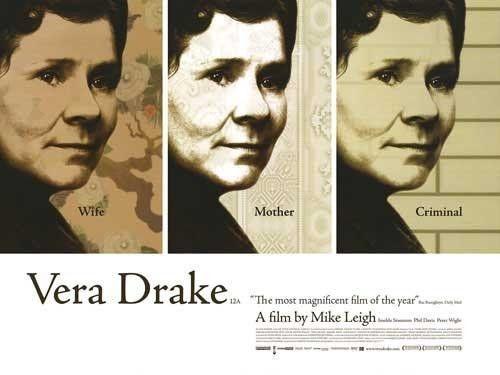
Before I watched "Vera Drake" I had no question in my mind that Hilary Swank was the Best Actress of last year for "Million Dollar Baby". No question. Halfway through "Vera Drake", I wasn't so sure anymore. To really break down "Vera Drake" into its simplest elements for an American audience this is a movie starring actors most of us have never heard of, set in 1950's London, about an older lady who performs illegal abortions. For this movie to sell itself effectively the lead actress really has to be someone special. She is.
Vera Drake (Imelda Staunton) works as a maid for wealthier families. She is exceedingly friendly and everyone seems to like her. Another character calls her a busybody and she is, but she is also the kindest lady anyone is ever going to meet. Her whole life is cheerfully serving other people and she is happy with who she is. We meet her family and there is a certain amount of dysfunction, but the family is very close. This is the first fifteen minutes or so of the film, and then we get the first shot of Vera's other life. She goes down a dark alley and knocks on a door. She is let in by a young woman and led down a dark hallway where Vera reassures that young woman and "helps her out" because she "is in trouble". Free of charge, but with crude (though relatively humane) instruments, Vera helps induce a miscarriage.
To reveal more about the movie's plot would do a disservice to the film. It is a very low-key affair but with each passing minute I was more and more impressed with the work of Imelda Staunton. The character of Vera Drake initially seems to be something of a simpleton, but as we learn more we see that she is a good hearted woman doing something daring and as she sees it, necessary. Staunton is able to tell a story just in the natural facial expressions that Vera has as she reacts to situations, and in several critical scenes her face really does move the film and the viewer. These are instances of acting without moving and it really is impressive to watch. During the first twenty minutes or so I was really struggling to find any sort of interest in this movie, but after that I was completely sold on the story and the performances and bought into what was on screen. Excellent movie, with a standout performance from Staunton.
Vera Drake (Imelda Staunton) works as a maid for wealthier families. She is exceedingly friendly and everyone seems to like her. Another character calls her a busybody and she is, but she is also the kindest lady anyone is ever going to meet. Her whole life is cheerfully serving other people and she is happy with who she is. We meet her family and there is a certain amount of dysfunction, but the family is very close. This is the first fifteen minutes or so of the film, and then we get the first shot of Vera's other life. She goes down a dark alley and knocks on a door. She is let in by a young woman and led down a dark hallway where Vera reassures that young woman and "helps her out" because she "is in trouble". Free of charge, but with crude (though relatively humane) instruments, Vera helps induce a miscarriage.
To reveal more about the movie's plot would do a disservice to the film. It is a very low-key affair but with each passing minute I was more and more impressed with the work of Imelda Staunton. The character of Vera Drake initially seems to be something of a simpleton, but as we learn more we see that she is a good hearted woman doing something daring and as she sees it, necessary. Staunton is able to tell a story just in the natural facial expressions that Vera has as she reacts to situations, and in several critical scenes her face really does move the film and the viewer. These are instances of acting without moving and it really is impressive to watch. During the first twenty minutes or so I was really struggling to find any sort of interest in this movie, but after that I was completely sold on the story and the performances and bought into what was on screen. Excellent movie, with a standout performance from Staunton.
Friday, September 02, 2005
Celebrity Death Match: Malcolm Gladwell vs Steven Levitt
I would like to propose a Celebrity Death Match. I would like Malcolm Gladwell to square off against Steven Levitt. Gladwell has written The Tipping Point and Blink. Levitt is the author of Freakonomics.
Why do I want these two intellectuals to face off in the squared circle? Well, it's because both are very popular authors right now with non-fiction books that have sparked quite a bit of interest and in one instance they disagree with each other.
See, in The Tipping Point Malcolm Gladwell writes about how the big crime wave of the 80's in New York City was turned around by new police tactics focusing on smaller crime which managed to start eliminating larger crime. Like not paying the fares of the subway and letting the subway cars be vandalized. Gladwell explains it better. Read the book, it's good.
But Levitt disagrees and his big theory is that it is abortion that helped reverse the crime wave of the young criminals because when abortion was legalized it was the young, poor women who were more likely to get an abortion and it was those children who came from broken homes and a poor economic future that were more likely to become the criminals of today. Levitt even talks about NYC and how the same reversal of the crime trends were happening in other cities which did not use the new tactics and that the reversal was no greater in New York than it was in other cities.
Well, who is right?
In my view we are going to have to go back to the olden days where to men would fight out a point of contention and the winner is clearly in the right and favored by God.
Seems fair, doesn't it?
Oh, go read the books.
Why do I want these two intellectuals to face off in the squared circle? Well, it's because both are very popular authors right now with non-fiction books that have sparked quite a bit of interest and in one instance they disagree with each other.
See, in The Tipping Point Malcolm Gladwell writes about how the big crime wave of the 80's in New York City was turned around by new police tactics focusing on smaller crime which managed to start eliminating larger crime. Like not paying the fares of the subway and letting the subway cars be vandalized. Gladwell explains it better. Read the book, it's good.
But Levitt disagrees and his big theory is that it is abortion that helped reverse the crime wave of the young criminals because when abortion was legalized it was the young, poor women who were more likely to get an abortion and it was those children who came from broken homes and a poor economic future that were more likely to become the criminals of today. Levitt even talks about NYC and how the same reversal of the crime trends were happening in other cities which did not use the new tactics and that the reversal was no greater in New York than it was in other cities.
Well, who is right?
In my view we are going to have to go back to the olden days where to men would fight out a point of contention and the winner is clearly in the right and favored by God.
Seems fair, doesn't it?
Oh, go read the books.
Thursday, September 01, 2005
The Hard Goodbye
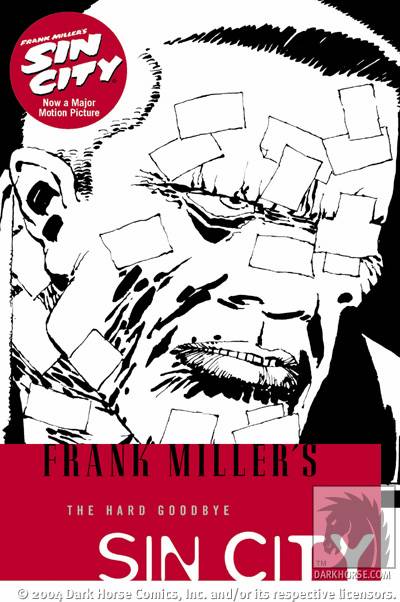
A co-worker lent me his copy of The Hard Goodbye, by Frank Miller. This graphic novel is one of the books that formed the basis of the recent movie Sin City. The Hard Goodbye follows Marv (the Mickey Rourke character) through his storyline to find the killer of Goldie, the prostitute who was "kind" to him.
I thought the movie was decent, but visually stunning. I loved the daring of the director in putting this on screen and the sheer creativity to bring the visuals to life. It is such a dark, stylish, old fashioned pulp hard boiled novel of a film told with three different storylines.
Reading the book I found it amazing how faithful the movie was. Very, very faithful. Much of the film's dialogue was lifted directly from the page and even more surprising, so was many of the images. Directly.
This is the first volume of seven and what I thought was lacking on screen comes off far better on the page. I can see why Robert Rodriguez wanted to make a movie of Sin City and why the actors would be a part of it.
Tuesday, August 30, 2005
The Fall Television Schedule
There are certain shows that I will be watching again this fall. Some are returning, others are new and i hope they don't suck. A couple look really intiguing.
ABC:
Invasion: This is probably the one show I am most interested in. Why? Alien invasion, of course. What else would I be watching? CBS already cancelled Joan of Arcadia. There are lights in the sky and suddenly some people are acting a little weird. Might the aliens have taken over the bodies of citizens? This is the kind of crap that I like. Might this stink? Yep.
Lost: A very well regarded show and one of the "breakouts" from last season. I like the idea of it, and it is often fascinating. I don't love it, though. There is something about the execution that isn't quite clicking inside me. Still, I really want to know what's going on with that damn island.
Alias: I won't be watching this. Not because I don't like the show, but because I have only seen the first two seasons on DVD. This reminds me I should Netflix season 3 pretty soon. I mention it because I really, really like this show.
Commander in Chief: Yeah, I know. Geena Davis as President. Get Joan Allen and I'm sold. On one hand, I don't think this show will be as successful as The West Wing. On the other, I just read yesterday that it was created by Rob Lurie, the guy who also wrote and directed the vastly underrated The Contender. He wrote and directed the pilot episode here. If Lurie has creative control, this show could be a real sleeper. Maybe. I don't even know if I'll really give this one a shot, maybe just the pilot episode.
CBS:
The Amazing Race: Whoa! There are too many people! This season is the one where each team is a family of four rather than a team of two. I had a hard enough time keeping track of who was who on previous seasons (all the models seem to look alike to me), and now I have families to deal with? With kids? Ugh. Points to the Race creators from trying something to keep from getting stale, but I don't know about this. I'm already looking forward to Season 9 when they go back to two person teams.
That's it for CBS. They cancelled Joan of Arcadia and that was the only other show of theirs that I wanted to see. Yes, I'm still slightly bitter about that. The fact that they replaced it with The Ghost Whisperer starring Jennifer "Give me a job, any job" Love Hewitt doesn't help matters. Bring back Amber Tamblyn and the rest of the cast!!
NBC:
My Name is Earl: Two words: Jason Lee. The man has never failed to entertain me and surely he can take such a ridiculous idea as a man trying to right every wrong he has ever done in his life and make it work. The only reason I'm going to give this show a shot, though, is Jason Lee. Bonus: it co-stars Ethan Suplee.
The E-Ring: I'm positive this is going to stink. I'd rather watch Commander in Chief. And yet...a show about conflicts inside the Pentagon seems a little intriguing. You heard it here first, this is still going to stink. Will I watch it? I don't know. Probably not.
Nothing much for NBC. I still haven't seen an episode of The West Wing, though I'm sure I'll hit the point where I fly through every episode on Netflix. The rest? Nah.
Fox:
Reunion: This the one that has the most potential to be something I want to see. Every episode the cast of characters ages a year, so everything is a year later. This could stink, but it could be really good.
Prison Break: Yeah, this could be the big show of the year. I'll probably catch it on DVD because right now I'm not willing to make the commitment for this show.
ABC:
Invasion: This is probably the one show I am most interested in. Why? Alien invasion, of course. What else would I be watching? CBS already cancelled Joan of Arcadia. There are lights in the sky and suddenly some people are acting a little weird. Might the aliens have taken over the bodies of citizens? This is the kind of crap that I like. Might this stink? Yep.
Lost: A very well regarded show and one of the "breakouts" from last season. I like the idea of it, and it is often fascinating. I don't love it, though. There is something about the execution that isn't quite clicking inside me. Still, I really want to know what's going on with that damn island.
Alias: I won't be watching this. Not because I don't like the show, but because I have only seen the first two seasons on DVD. This reminds me I should Netflix season 3 pretty soon. I mention it because I really, really like this show.
Commander in Chief: Yeah, I know. Geena Davis as President. Get Joan Allen and I'm sold. On one hand, I don't think this show will be as successful as The West Wing. On the other, I just read yesterday that it was created by Rob Lurie, the guy who also wrote and directed the vastly underrated The Contender. He wrote and directed the pilot episode here. If Lurie has creative control, this show could be a real sleeper. Maybe. I don't even know if I'll really give this one a shot, maybe just the pilot episode.
CBS:
The Amazing Race: Whoa! There are too many people! This season is the one where each team is a family of four rather than a team of two. I had a hard enough time keeping track of who was who on previous seasons (all the models seem to look alike to me), and now I have families to deal with? With kids? Ugh. Points to the Race creators from trying something to keep from getting stale, but I don't know about this. I'm already looking forward to Season 9 when they go back to two person teams.
That's it for CBS. They cancelled Joan of Arcadia and that was the only other show of theirs that I wanted to see. Yes, I'm still slightly bitter about that. The fact that they replaced it with The Ghost Whisperer starring Jennifer "Give me a job, any job" Love Hewitt doesn't help matters. Bring back Amber Tamblyn and the rest of the cast!!
NBC:
My Name is Earl: Two words: Jason Lee. The man has never failed to entertain me and surely he can take such a ridiculous idea as a man trying to right every wrong he has ever done in his life and make it work. The only reason I'm going to give this show a shot, though, is Jason Lee. Bonus: it co-stars Ethan Suplee.
The E-Ring: I'm positive this is going to stink. I'd rather watch Commander in Chief. And yet...a show about conflicts inside the Pentagon seems a little intriguing. You heard it here first, this is still going to stink. Will I watch it? I don't know. Probably not.
Nothing much for NBC. I still haven't seen an episode of The West Wing, though I'm sure I'll hit the point where I fly through every episode on Netflix. The rest? Nah.
Fox:
Reunion: This the one that has the most potential to be something I want to see. Every episode the cast of characters ages a year, so everything is a year later. This could stink, but it could be really good.
Prison Break: Yeah, this could be the big show of the year. I'll probably catch it on DVD because right now I'm not willing to make the commitment for this show.
Monday, August 29, 2005
why doesn't this show make sense?
The 4400 could be such a good show. All the pieces are in place. The first season was relatively perfect. I'm not saying it was flawless or as good as 24 or the X-Files, but the way the 6 episodes of the first season were executed it worked perfectly.
The first season introduced the idea that over the past century there have been these abductions. There is a white light and everything points to some sort of alien abduction. That is what we are programmed to believe with the lore of alien abduction and Area 51 and everything. But they are all returned at once. All 4400 of them from all across the world. They are all returned in one place. They are returned at the same age they were when they left, even though the world has kept turning. Why? Who took them? Who returned them? When the 4400 are carefully released back into the world it seems that some of them have come back with special powers. We see in each episode as a different returnee is profiled and how there is a ripple effect of that person's life is able to make the world a better place in some way. Then at the end of the season we learn that the 4400 were returned not by aliens but by humans from our own bleak future and the 4400 is to help alter that future. Bang, season ends.
When the second season started I had high hopes. I want to know where do they go from here. There were interesting things going on, like with the 4400 Center, Jordan Collier, some abilities, and the hint that there is something more going on, but the episodes didn't seem to connect to anything. The first third to half of the season was fine as they were building something with Jordan, but after that everything fell apart. It is as if the series lost focus and tried to fit too little into too many episodes.
I think the season would have worked far better as another 6 episode mini and work only with the primary storyline and keep much of the side stuff offscreen. Every now and then there was just enough hint and just enough revelation that I'm riveted to the screen, and then things don't make any sense again and there is no clue where the writers are going with this and no clue that the writers actually know except that they must be watching Passions to get tips on how to execute this.
And then the season ends with another something that makes me want to watch the third season in the hopes that the writers are able to tighten things up. I'm confident the series will be renewed. It's not like USA has anything better to air. Just, please, deliver on the promise of the show. This really could be one of the best things on tv right now. Running it during the summer off-season only helps. But deliver the product that this program could be!
Please. I want good science fiction on my television. And this is told in such a manner that the sci-fi doesn't overwhelm the human element (my wife watches with me, that should say something), so it is accessible to more than the sci-fi fans, but the show really needs to deliver.
The first season introduced the idea that over the past century there have been these abductions. There is a white light and everything points to some sort of alien abduction. That is what we are programmed to believe with the lore of alien abduction and Area 51 and everything. But they are all returned at once. All 4400 of them from all across the world. They are all returned in one place. They are returned at the same age they were when they left, even though the world has kept turning. Why? Who took them? Who returned them? When the 4400 are carefully released back into the world it seems that some of them have come back with special powers. We see in each episode as a different returnee is profiled and how there is a ripple effect of that person's life is able to make the world a better place in some way. Then at the end of the season we learn that the 4400 were returned not by aliens but by humans from our own bleak future and the 4400 is to help alter that future. Bang, season ends.
When the second season started I had high hopes. I want to know where do they go from here. There were interesting things going on, like with the 4400 Center, Jordan Collier, some abilities, and the hint that there is something more going on, but the episodes didn't seem to connect to anything. The first third to half of the season was fine as they were building something with Jordan, but after that everything fell apart. It is as if the series lost focus and tried to fit too little into too many episodes.
I think the season would have worked far better as another 6 episode mini and work only with the primary storyline and keep much of the side stuff offscreen. Every now and then there was just enough hint and just enough revelation that I'm riveted to the screen, and then things don't make any sense again and there is no clue where the writers are going with this and no clue that the writers actually know except that they must be watching Passions to get tips on how to execute this.
And then the season ends with another something that makes me want to watch the third season in the hopes that the writers are able to tighten things up. I'm confident the series will be renewed. It's not like USA has anything better to air. Just, please, deliver on the promise of the show. This really could be one of the best things on tv right now. Running it during the summer off-season only helps. But deliver the product that this program could be!
Please. I want good science fiction on my television. And this is told in such a manner that the sci-fi doesn't overwhelm the human element (my wife watches with me, that should say something), so it is accessible to more than the sci-fi fans, but the show really needs to deliver.
Deadhouse Gates
I don't know exactly what to say about Deadhouse Gates. Steven Erikson is continuing to create an incredibly deep world in his Malazan Book of the Fallen series, and there is such a wealth of history and intrigue and tension just brimming under the surface of the novel that you can feel it. It's there and just waiting to bubble out.  The odd thing is that it seldom bubbles out.
There is much that is good here. The story is told in several parts, and the one with Duiker the Imperial Historian is probably the best as he follows the Seventh Army and the barbarian Fist commander Coltaine. There are several other storylines in place here, and only two of them directly continue those that were introduced in Gardens of the Moon. The stories are related, and as the series continue I imagine we'll see more and more intertwine as Erikson builds to something really grand.
I like the book. I like the series. I want to read the next volume. I'm just not as enamored of this series as I should be. There is so much under the surface that I wish Erikson would let more out. There are flashes of amazement as Erikson reveals something that changes how you view the characters and the world, and without question, he knows how to end a book. This one left me stunned.
But I really hope that the future revelations will be worth it because as good as Erikson is, I'm concerned the hints will be better than the reveal.
Still, for the potential Erikson is showing: I'm going for book 3.
 The odd thing is that it seldom bubbles out.
 There is much that is good here. The story is told in several parts, and the one with Duiker the Imperial Historian is probably the best as he follows the Seventh Army and the barbarian Fist commander Coltaine. There are several other storylines in place here, and only two of them directly continue those that were introduced in Gardens of the Moon. The stories are related, and as the series continue I imagine we'll see more and more intertwine as Erikson builds to something really grand.
I like the book. I like the series. I want to read the next volume. I'm just not as enamored of this series as I should be. There is so much under the surface that I wish Erikson would let more out. There are flashes of amazement as Erikson reveals something that changes how you view the characters and the world, and without question, he knows how to end a book. This one left me stunned.
But I really hope that the future revelations will be worth it because as good as Erikson is, I'm concerned the hints will be better than the reveal.
Still, for the potential Erikson is showing: I'm going for book 3.
Wednesday, August 24, 2005
I'm excited for the New Robert Jordan novel
I'm a sucker for an extremely positive review. I really am. It's been several years since Jordan released The Crossroads of Twilight, and while I enjoyed it because I like getting to step into that world, it was a let down after the incredibly strong ending of Winter's Heart. That book ended with something that blew me away, but Crossroads spent 3/4 of the book getting every secondary character up to that event. A little frustrating because we know what is happening even if every other character does not.
So, a couple of years later and my excitement for the series has been tempered through time and reflective disappointment. That's gone now and I'm really excited for the new book. Why? The review I linked above. A paragraph like this builds my interest:
Big stuff is happening in the Wheel of Time, and if Jordan can finish of this book and the next (and thus the series) with the bang we're being promised...the faith of many readers will be restored and the series will potentially be elevated as one of the great ones and the weaker middle books will be just that "Well, it slowed down a bit in books 6-8, and 10, but it closed out with a bang!". One can hope.
But...does Jordan answer the Ultimate Question?
Who killed Asmodean?
So, a couple of years later and my excitement for the series has been tempered through time and reflective disappointment. That's gone now and I'm really excited for the new book. Why? The review I linked above. A paragraph like this builds my interest:
I was surprised when the first plot thread was completed. I thought to myself, "Will I ever read about this person again? Could it actually be possible that I've read their entire story now?" I stopped thinking that to myself by the time Jordan wrapped up his 4th or 5th plot line. Then more story lines got wrapped up, at least to the extent where I don't need to hear about a certain character again without feeling cheated. All of the major plot lines advance. Some are completed. (Have fun with that statement on the message boards). Lots of smaller plot lines are resolved or brought near conclusion. I haven't done a full count, but a few days after the book's released I'm sure every website will have a tally going.and these lines
This book contains more death and dying than any other WoT novel. Talk about a body count! Not to mention a lot of answers to questions we've been asking for a while.. What this means for me is that the series is going somewhere. It's going to end and we can see Jordan taking us to the end. There is storyline progression, something that feels lacking in the past several books (except for the major event of Book 9).
Big stuff is happening in the Wheel of Time, and if Jordan can finish of this book and the next (and thus the series) with the bang we're being promised...the faith of many readers will be restored and the series will potentially be elevated as one of the great ones and the weaker middle books will be just that "Well, it slowed down a bit in books 6-8, and 10, but it closed out with a bang!". One can hope.
But...does Jordan answer the Ultimate Question?
Who killed Asmodean?
more fall books to read
With the library system down online this week for new software to be installed it is a little hard to remember what books I was looking forward to because I didn't have them on my "to read" list, I just had them on hold. But reading an article on CNN I was reminded of a couple and also I acquired some new additions. So:
On Beauty - Zadie Smith
Shalimar the Clown - Salman Rushdie
Christ the Lord - Anne Rice (I don't know that this is necessarily going to be good, but I'm very interested to read what she does with this. Assuming Jesus doesn't turn into a Vampire, we might be surprised here)
One Bullet Away - Nathaniel Fick
My War: Killing Time in Iraq - Colby Buzzell
All Rivers Flow to the Sea - Alison McGhee (I wish this was an adult novel, rather than young adult, but McGhee is a favorite author of mine)
On Beauty - Zadie Smith
Shalimar the Clown - Salman Rushdie
Christ the Lord - Anne Rice (I don't know that this is necessarily going to be good, but I'm very interested to read what she does with this. Assuming Jesus doesn't turn into a Vampire, we might be surprised here)
One Bullet Away - Nathaniel Fick
My War: Killing Time in Iraq - Colby Buzzell
All Rivers Flow to the Sea - Alison McGhee (I wish this was an adult novel, rather than young adult, but McGhee is a favorite author of mine)
Tuesday, August 23, 2005
the fall semester
There is only one cd coming out this fall that appears to be interesting enough and good enough that I intend on going to the store and buying it: Fiona Apple's long awaited Extraordinary Machine. The cd will be released on October 4 and it's been six years since she released When the Pawn... Apple has long been a favorite of mine, I've seen her in concert and I really like both of her albums. I've just been so apathetic about buying and listening to music lately that I didn't even buy the new Tori Amos album that came out this summer. At one point that would be unthinkable as she has long been my favorite artist, though I think she's taken a backseat to Jennifer Knapp, and I haven't replaced the stolen copy of A Diamond in the Rough: The Jennifer Knapp Collection, and this is also odd since I have one of the song testimonials in the liner notes.
Books: The only book I actually plan on buying this fall is the new George Martin book: A Feast for Crows. Possibly the new Louise Erdrich novel The Painted Drum, depending on how I'm feeling and how much spare cash I have. Otherwise it will be a lot of library books as usual, which is fine. I still read an absurd amount of books, I just can't buy them all anymore. It's real life.
Robert Jordan is releasing the new Wheel of Time novel: Knife of Dreams. Terry Brooks is releasing Straken, which concludes yet another Shannara trilogy. Christopher Paolini has the new volume Eldest, which is the sequel to his bestselling Eragon. Eragon showed some promise (considering he was 15 when he wrote it), but Eldest has been rather poorly reviewed from what i've seen, so I can only hope it is a couple of bad reviews that I've read. I'm nervous that it really will be kind of bad. I'm geekish enough to admit that I'm looking forward to James Luceno's Dark Lord: The Rise of Darth Vader. There should be some nice Jedi Purge going on in that book plus some Palpatine/Vader interaction. There is, of course, and endless amount of books that are just coming out, have already come out, or are years old that I want to read, so I'll just highlight Cormac McCarthy's No Country for Old Men as another I'd like to read.
There are always a bounty of movies to see, even in a dry season. This fall looks to be no different, if only I can make it back to the theatre.
September: The Constant Gardener, The Exorcism of Emily Rose (this one will either be a horror classic or it was be horrible, I don't know if there is middle ground), An Unfinished Life, Proof, Corpse Bride (this is another feast or famine movie), and I'm only listing this last movie because it stars Jodie Foster and we really need more Jodie Foster movies: Flightplan. I just wish it looked better.
October: In Her Shoes (but only because it is directed by Curtis Hanson), Elizabethtown. Wow. Is that all? Okay, here are a couple that could be good: Domino, North Country, and Goodnight, and Good Luck
November: Jarhead, The New World, Harry Potter and the Goblet of Fire, Walk the Line, Syriana, and a big ol "why the hell not?" for Rent. I have no expectations for Rent. Maybe I'll be surprised.
Books: The only book I actually plan on buying this fall is the new George Martin book: A Feast for Crows. Possibly the new Louise Erdrich novel The Painted Drum, depending on how I'm feeling and how much spare cash I have. Otherwise it will be a lot of library books as usual, which is fine. I still read an absurd amount of books, I just can't buy them all anymore. It's real life.
Robert Jordan is releasing the new Wheel of Time novel: Knife of Dreams. Terry Brooks is releasing Straken, which concludes yet another Shannara trilogy. Christopher Paolini has the new volume Eldest, which is the sequel to his bestselling Eragon. Eragon showed some promise (considering he was 15 when he wrote it), but Eldest has been rather poorly reviewed from what i've seen, so I can only hope it is a couple of bad reviews that I've read. I'm nervous that it really will be kind of bad. I'm geekish enough to admit that I'm looking forward to James Luceno's Dark Lord: The Rise of Darth Vader. There should be some nice Jedi Purge going on in that book plus some Palpatine/Vader interaction. There is, of course, and endless amount of books that are just coming out, have already come out, or are years old that I want to read, so I'll just highlight Cormac McCarthy's No Country for Old Men as another I'd like to read.
There are always a bounty of movies to see, even in a dry season. This fall looks to be no different, if only I can make it back to the theatre.
September: The Constant Gardener, The Exorcism of Emily Rose (this one will either be a horror classic or it was be horrible, I don't know if there is middle ground), An Unfinished Life, Proof, Corpse Bride (this is another feast or famine movie), and I'm only listing this last movie because it stars Jodie Foster and we really need more Jodie Foster movies: Flightplan. I just wish it looked better.
October: In Her Shoes (but only because it is directed by Curtis Hanson), Elizabethtown. Wow. Is that all? Okay, here are a couple that could be good: Domino, North Country, and Goodnight, and Good Luck
November: Jarhead, The New World, Harry Potter and the Goblet of Fire, Walk the Line, Syriana, and a big ol "why the hell not?" for Rent. I have no expectations for Rent. Maybe I'll be surprised.
Friday, August 19, 2005
The World of Marathons
Sandy Treadwell's book "The World of Marathons" tries to capture exactly what the reader would expect from the title: the emergence of major marathons all across the globe. While there are blurbs on the back cover from elite marathoners and a forward by Fred Lebow (race director of the NYC Marathon), the coverage of each marathon is not necessarily from the elite perspective, but rather a bit from a mid-packers. How exactly a mid-packer is defined is up to interpretation, but the focus of this book is not for a Bill Rodgers (though he did blurb the book), or, to use a more modern example, a Deana Kastor or Paula Radcliffe.
"The World of Marathons" gives a moderately detailed description of worldwide marathons. Each marathon gets its own small chapter, which includes a couple of color photographs, a course map, and race details, as well as text which covers a little bit of the race history and what the particular marathon is like. The text covers details such as crowd support, things eccentric to that marathon (free beer at one), and attempts to give a sense of the marathon. Some marathons included are: NYC, Chicago, London, Paris, Venice, Moscow, and others (including an African marathon, I believe). In general, this book only covers the big, major marathons in various countries and while some of the marathons may be rather small they are important for the country and gives a sense of how other parts of the world are trying to organize a marathon.
The primary drawback to this book is simply its age. Published in 1987, much of the information is out of date. If I was planning a trip to a foreign marathon right now, I could not trust the information included in this book. What is the Stockholm Marathon isn't run anymore? What if the organization is now poor, or that the field has shrunk by several thousand? The book just feels very dated.
On one hand this is a fairly interesting book and it gives a nice overview of some marathons across the world as well as some inside America, but on the other hand the book tries to give the impression that it is topical and has up to date information. At one point it did, but it has been nearly twenty years since publication. An American marathon hopeful will also not likely find this book very helpful because the focus is mostly on foreign marathons.
I can't really recommend this book because while it does give a nice overview of worldwide marathons, the information is twenty years old and many things about any one (or more) of the marathons may have changed and some may even no longer be running. It is a coffee table sized book and in that respect the book is okay. Just don't go into it looking for current information.
"The World of Marathons" gives a moderately detailed description of worldwide marathons. Each marathon gets its own small chapter, which includes a couple of color photographs, a course map, and race details, as well as text which covers a little bit of the race history and what the particular marathon is like. The text covers details such as crowd support, things eccentric to that marathon (free beer at one), and attempts to give a sense of the marathon. Some marathons included are: NYC, Chicago, London, Paris, Venice, Moscow, and others (including an African marathon, I believe). In general, this book only covers the big, major marathons in various countries and while some of the marathons may be rather small they are important for the country and gives a sense of how other parts of the world are trying to organize a marathon.
The primary drawback to this book is simply its age. Published in 1987, much of the information is out of date. If I was planning a trip to a foreign marathon right now, I could not trust the information included in this book. What is the Stockholm Marathon isn't run anymore? What if the organization is now poor, or that the field has shrunk by several thousand? The book just feels very dated.
On one hand this is a fairly interesting book and it gives a nice overview of some marathons across the world as well as some inside America, but on the other hand the book tries to give the impression that it is topical and has up to date information. At one point it did, but it has been nearly twenty years since publication. An American marathon hopeful will also not likely find this book very helpful because the focus is mostly on foreign marathons.
I can't really recommend this book because while it does give a nice overview of worldwide marathons, the information is twenty years old and many things about any one (or more) of the marathons may have changed and some may even no longer be running. It is a coffee table sized book and in that respect the book is okay. Just don't go into it looking for current information.
Tuesday, August 16, 2005
Olympos
With "Olympos" Dan Simmons brings to a close the two book epic he began in 2003 with "Ilium". Simmons picks up the various plot threads that he weaved together in "Ilium" and once again pushes them apart in vastly different directions. At the start of the novel we know that the story takes place thousands of years in the future where evolved humans, or "post-humans", have left Earth and set themselves up as Greek Gods on Mars. Mars has been terra-formed to reflect the climate and topography of ancient Greece where the Trojan Wars have been taking place with, for a time, an almost perfect match of Homer's "Iliad". Back on Earth the "old style humans" were discovering who they are and a few have learned that they are about to begin a fight for their very survival. Meanwhile, there are moravecs (robots with a human core) traveling the galaxy to Mars to find out what is going on with the planet. This brings us to the start of "Olympos" where a Thomas Hockenberry, a scholar from the 20th Century has been recreated as an observer to the new Trojan Wars has managed to alter the course of history and the future. Now the gods war amongst themselves.
The story of Olympos is three-fold (at least), but when you boil the plot elements to their most basic form, each storyline is essentially the same. The moravecs are striving to stop the universe from unraveling because of all of the messing with quantum technology to terraform Mars and to make the post-humans into gods. The old-style humans are fighting for their own survival against a race of monsters which have awaken from their slumber. Hockenberry is trying to save the Greeks (the new, old greeks) and himself while helping the moravecs. Achilles is trying to save his love and return her to life. Essentially, everyone is trying to save something and even though the paths split once again in "Olympos", Dan Simmons manages to tie them all together again in the end.
If the brief description here of the plot is confusing, it should be. "Ilium" almost absolutely has to have been read first for "Olympos" to make any kind of sense. Even with "Ilium" read, "Olympos" is a fairly confusing novel. Simmons takes the story to very unexpected places and at times I think that Simmons might be reaching a little too far. He has very interesting ideas about alternative universes, history, and he has created very real characters to inhabit this world (or series of worlds). But there are some pretty wild jumps that Simmons makes here, and at times it is difficult to follow all of the jumps and accept them. My only actual complaint, however, is that the ending felt rushed. Imagine that, after 1200 pages and two books the ending felt rush. "Olympos" was build, build, build and then "oh yeah, we're done, wrap everything up!".
The complaint about the ending is very minor, however. What matters is the journey. What matters is that for nearly 700 pages of "Olympos" I was completely wrapped up in the story and Simmons did a masterful job describing the action and the history and how things connect. Granted, I feel Simmons did a better job of this with "Ilium", but there was no feeling at all of a let-down except for the ending and the rest of the book was so good that it overshadowed the ending.
Reading "Ilium" and "Olympos" is a serious time investment, but for a speculative fiction or fantasy reader, it is one well worth making. These books could use a prequel or a sequel, however, because there are a lot of questions that Simmons did not really explore.
The story of Olympos is three-fold (at least), but when you boil the plot elements to their most basic form, each storyline is essentially the same. The moravecs are striving to stop the universe from unraveling because of all of the messing with quantum technology to terraform Mars and to make the post-humans into gods. The old-style humans are fighting for their own survival against a race of monsters which have awaken from their slumber. Hockenberry is trying to save the Greeks (the new, old greeks) and himself while helping the moravecs. Achilles is trying to save his love and return her to life. Essentially, everyone is trying to save something and even though the paths split once again in "Olympos", Dan Simmons manages to tie them all together again in the end.
If the brief description here of the plot is confusing, it should be. "Ilium" almost absolutely has to have been read first for "Olympos" to make any kind of sense. Even with "Ilium" read, "Olympos" is a fairly confusing novel. Simmons takes the story to very unexpected places and at times I think that Simmons might be reaching a little too far. He has very interesting ideas about alternative universes, history, and he has created very real characters to inhabit this world (or series of worlds). But there are some pretty wild jumps that Simmons makes here, and at times it is difficult to follow all of the jumps and accept them. My only actual complaint, however, is that the ending felt rushed. Imagine that, after 1200 pages and two books the ending felt rush. "Olympos" was build, build, build and then "oh yeah, we're done, wrap everything up!".
The complaint about the ending is very minor, however. What matters is the journey. What matters is that for nearly 700 pages of "Olympos" I was completely wrapped up in the story and Simmons did a masterful job describing the action and the history and how things connect. Granted, I feel Simmons did a better job of this with "Ilium", but there was no feeling at all of a let-down except for the ending and the rest of the book was so good that it overshadowed the ending.
Reading "Ilium" and "Olympos" is a serious time investment, but for a speculative fiction or fantasy reader, it is one well worth making. These books could use a prequel or a sequel, however, because there are a lot of questions that Simmons did not really explore.
Monday, August 15, 2005
Prozac Nation (movie)
I first read Elizabeth Wurtzel's memoir "Prozac Nation" when I was in college and I was transfixed. The force of Wurtzel's personality and the passion in which she wrote honestly jumped off the page as she described her fight with depression and how she acted out and ultimately how Prozac helped her regain control of herself. Since Wurtzel grew up in the 80's, Prozac was not yet the common medication that it currently is, and was only just beginning to be described. I believe I first saw a preview for the film version of "Prozac Nation" when I was in college and I do know that I've been looking for a release of the movie for at least four years now. The film never caught a theatrical release, was only recently shunted off to a cable premiere, and is now out on DVD. Honestly, what took so long?
Elizabeth (Christina Ricci) is about to enroll at Harvard University as a freshman. She has a journalism scholarship. From the start it is clear that she is somewhat depressed and that she doesn't seem to fit in with the crowds. She says as much during her opening narration. It is also quite clear that her mother (Jessica Lange) is somewhat nuts and certainly oblivious to her daughter's pain. Perhaps it is not that her mother is oblivious, but is purposefully trying to ignore the issue in the hopes that it is suddenly "all better" and that it'll go away. Elizabeth finds solace in her friendship with her new roommate Ruby (Michelle Williams) as the initially seem to be a perfect fit. She even meets a guy (Jonathan Rhys-Meyers) whom she falls for.
Everything seems to be perfect, but considering the source material, the title "Prozac Nation", and that there wouldn't be much of a movie if nothing went wrong, something has to change. What changes is that Elizabeth is unable to deal with the pressures of life. The stress of school, her journalism, her relationship, her friendship, her mother, her father, and everything else seems to crash down upon her and Elizabeth more than anyone else starts to unconsciously and unthinkingly sabotage herself.
"Prozac Nation" never did receive very much critical acclaim, so this isn't a story about the little movie that could. The reviews have been mostly negative, scoring a 29% positive on the Tomatometer (at the time of this review). "Prozac Nation" isn't that bad. It lacks the searing performance of Angelina Jolie in "Girl, Interrupted", but it isn't that kind of movie. Ricci is given something to work with in this movie and does a good job with the role of Elizabeth Wurtzel. She seems to nail the depression and alienation quite well, though I think the screenwriter didn't quite round the character off as well making Elizabeth a little shrill and not quite as sympathetic as she could have been. Then again, maybe that really is Wurtzel. The best performance of the film, however, goes to Michelle Williams, as Ruby. Ruby is entirely human and warm and believable as a friend and roommate who becomes frustrated by Elizabeth. It's been several years since she played this role, but I hope it helps to find Williams some quality parts. This film is directed by Erik Skjoldbjaerg (the original "Insomnia", not the American remake).
This isn't the best film you will run across, but it is far from the worst and I found myself enjoying the performances of Christina Ricci, Michelle Williams, and even Jason Biggs (yes, he's in it, too). Biggs is very restrained here and far from his "American Pie" days. If the story itself sounds interesting or Christina Ricci is an actress you would like to see more of, then this is worth seeing.
Grade: C+/B-
Elizabeth (Christina Ricci) is about to enroll at Harvard University as a freshman. She has a journalism scholarship. From the start it is clear that she is somewhat depressed and that she doesn't seem to fit in with the crowds. She says as much during her opening narration. It is also quite clear that her mother (Jessica Lange) is somewhat nuts and certainly oblivious to her daughter's pain. Perhaps it is not that her mother is oblivious, but is purposefully trying to ignore the issue in the hopes that it is suddenly "all better" and that it'll go away. Elizabeth finds solace in her friendship with her new roommate Ruby (Michelle Williams) as the initially seem to be a perfect fit. She even meets a guy (Jonathan Rhys-Meyers) whom she falls for.
Everything seems to be perfect, but considering the source material, the title "Prozac Nation", and that there wouldn't be much of a movie if nothing went wrong, something has to change. What changes is that Elizabeth is unable to deal with the pressures of life. The stress of school, her journalism, her relationship, her friendship, her mother, her father, and everything else seems to crash down upon her and Elizabeth more than anyone else starts to unconsciously and unthinkingly sabotage herself.
"Prozac Nation" never did receive very much critical acclaim, so this isn't a story about the little movie that could. The reviews have been mostly negative, scoring a 29% positive on the Tomatometer (at the time of this review). "Prozac Nation" isn't that bad. It lacks the searing performance of Angelina Jolie in "Girl, Interrupted", but it isn't that kind of movie. Ricci is given something to work with in this movie and does a good job with the role of Elizabeth Wurtzel. She seems to nail the depression and alienation quite well, though I think the screenwriter didn't quite round the character off as well making Elizabeth a little shrill and not quite as sympathetic as she could have been. Then again, maybe that really is Wurtzel. The best performance of the film, however, goes to Michelle Williams, as Ruby. Ruby is entirely human and warm and believable as a friend and roommate who becomes frustrated by Elizabeth. It's been several years since she played this role, but I hope it helps to find Williams some quality parts. This film is directed by Erik Skjoldbjaerg (the original "Insomnia", not the American remake).
This isn't the best film you will run across, but it is far from the worst and I found myself enjoying the performances of Christina Ricci, Michelle Williams, and even Jason Biggs (yes, he's in it, too). Biggs is very restrained here and far from his "American Pie" days. If the story itself sounds interesting or Christina Ricci is an actress you would like to see more of, then this is worth seeing.
Grade: C+/B-
Saturday, August 13, 2005
Deuce Bigalow: European Gigolo
You don’t go into theatre to see “Deuce Bigalow: European Gigolo” and expect to see a modern classic of American Film. You go into a theatre to see the new “Deuce Bigalow” movie to see a dumb movie that may very well be funny. After all, Adam Sandler’s career was made on such movies, as was Jim Carrey’s. Rob Schneider, however, is neither Adam Sandler nor Jim Carrey. So while the dumb comedy genre has the potential to deliver big laughs, this movie doesn't. To be fair, I have seen “Deuce Bigalow: Male Gigolo” and it was surprisingly funny and far better than I expected. It offered a fairly ridiculous premise: Rob Schneider becomes a male prostitute. Right. That’s what I thought. And yet because of Schneider’s good nature and the absurd nature of his “clients”, the movie worked more often than it should have. In a place where a little went farther than it should have, Columbia Pictures decided to finance another “Deuce Bigalow” movie.
Here is the story so far: Deuce (Schneider) is still working as a fish expert, having given up the life of a gigolo when he married his wife Kate. Kate, unfortunately, was eaten by a shark two years ago because Deuce did not realize there was meat sauce on the lettuce he was feeding a sea turtle off of the coast of Mexico. Still with me? We open the movie with Deuce getting himself into a little bit of trouble because of two kids who are serious punks and mess with his research which causes a marine accident with some elderly blind people. When Deuce gets a phone call from his friend T.J. (Eddie Griffin) in Amsterdam, Deuce accepts the invitation to join T.J. and visit for a while. T.J. is living large as a pimp but is down on hard times (so to speak) because there is a murderer stalking the gigolos of the city. After stumbling upon a victim and somehow getting his friend implicated, Deuce decides to help T.J. discover who the real killer is by going back into business as a gigolo and investigating the crimes. Honestly, that is probably more than you need to know and it is as much as I can bear to tell about the story.
Like a “Police Academy” movie, the plot really does not matter one bit. It is an excuse to get our hero (hero?) from one situation to another and to drive the humor along. The real question should be: is this movie funny? The answer: No, not really. Much of the movie is rather stupid and parts that I think were supposed to be funny were not actually funny. Again, for the sake of honesty there were several parts that I laughed out loud at and several more that I quietly chuckled too myself. The laughs were few and far between and did not deliver nearly as much dumb humor as one would hope for. “Deuce Bigalow: European Gigolo” was neither fun nor funny, and the only recommendation I can give is to stay away from this movie and instead watch nearly anything else, except perhaps, “Boat Trip”.
Grade: D
Here is the story so far: Deuce (Schneider) is still working as a fish expert, having given up the life of a gigolo when he married his wife Kate. Kate, unfortunately, was eaten by a shark two years ago because Deuce did not realize there was meat sauce on the lettuce he was feeding a sea turtle off of the coast of Mexico. Still with me? We open the movie with Deuce getting himself into a little bit of trouble because of two kids who are serious punks and mess with his research which causes a marine accident with some elderly blind people. When Deuce gets a phone call from his friend T.J. (Eddie Griffin) in Amsterdam, Deuce accepts the invitation to join T.J. and visit for a while. T.J. is living large as a pimp but is down on hard times (so to speak) because there is a murderer stalking the gigolos of the city. After stumbling upon a victim and somehow getting his friend implicated, Deuce decides to help T.J. discover who the real killer is by going back into business as a gigolo and investigating the crimes. Honestly, that is probably more than you need to know and it is as much as I can bear to tell about the story.
Like a “Police Academy” movie, the plot really does not matter one bit. It is an excuse to get our hero (hero?) from one situation to another and to drive the humor along. The real question should be: is this movie funny? The answer: No, not really. Much of the movie is rather stupid and parts that I think were supposed to be funny were not actually funny. Again, for the sake of honesty there were several parts that I laughed out loud at and several more that I quietly chuckled too myself. The laughs were few and far between and did not deliver nearly as much dumb humor as one would hope for. “Deuce Bigalow: European Gigolo” was neither fun nor funny, and the only recommendation I can give is to stay away from this movie and instead watch nearly anything else, except perhaps, “Boat Trip”.
Grade: D
Friday, August 12, 2005
On Bullshit
On Bullshit is an interesting little volume. Written by Professor Harry G. Frankfurt, this is a 67 page work of philosophy examining what is bullshit and how it is used. This is probably a fairly understandable work of philosophy, but it is well thought out and occasionally funny. Considering the subject matter, the inherent humor should not be a surprise.
It is difficult for me to really absorb what Prof. Frankfurt is saying in this book and I imagine it would take several read throughs to really grasp the concepts. I say this knowing full well that if I was used to working my mind in a meaningful manner this would be much easier for me.
Then again, this is a 67 page book about bullshit.
Prof. Frankfurt has one of the great opening passages that I've read:
Several sentences later he writes
I want to read a book that opens like this.
It is difficult for me to really absorb what Prof. Frankfurt is saying in this book and I imagine it would take several read throughs to really grasp the concepts. I say this knowing full well that if I was used to working my mind in a meaningful manner this would be much easier for me.
Then again, this is a 67 page book about bullshit.
Prof. Frankfurt has one of the great opening passages that I've read:
One of the most salient features of our culture is that there is so much bullshit. Everyone knows this. Each of us contributes his share. But we tend to take the situation for granted.
Several sentences later he writes
In consequence, we have no clear understanding of what bullshit is, why there is so much of it, or what functions it serves. And we lack a conscientiously developed appreciation of what it means to us.
I want to read a book that opens like this.
Monday, August 08, 2005
World Track and Field Championships
While I haven't been to a movie theatre in more than a month I have been enjoying some decent television watching. Right now PAX TV is airing the World Track and Field Championships every day. Overall the coverage is decent, though it is only an hour a day. Sprints still get far too much coverage for my tastes and not enough distance. The 10k finals the other day only got the last three laps so all I knew is that Paula Radcliffe (marathon world record holder), who was trying to double up with the 10k and the marathon to help England, was in the back of the lead pack and struggling. I didn't get to see how she got there. Pooh on poor distance coverage.
I should feel lucky that all four laps of the 1500 were broadcast, but thus far only the heat with Alan Webb. Again, where were the other heats? What about the women's 800 heats (I saw one semifinal heat). I am guessing that I'll only get one heat of the 1500 semi's today, a brief bit of the men's 10k final, and if I'm very lucky some of the women's 3000 meter steeplechase. I question the coverage of the marathon on the 13th and 14th, but we'll see.
Do I complain too much? A little. I get that the sprints are the big deal and that most people don't want to sit and watch 13 minutes of a men's 5000, let alone a half hour of the women's 10k (then again, the Olympic coverage of the marathon was perfect: two complete races from start to finish...it's a thing of beauty). I should be just happy that there is daily coverage of the world championships. And I should be happy that I'll get to see a clip of the marathon this weekend.
But I want more. I want a stupid amount of distance coverage.
I should feel lucky that all four laps of the 1500 were broadcast, but thus far only the heat with Alan Webb. Again, where were the other heats? What about the women's 800 heats (I saw one semifinal heat). I am guessing that I'll only get one heat of the 1500 semi's today, a brief bit of the men's 10k final, and if I'm very lucky some of the women's 3000 meter steeplechase. I question the coverage of the marathon on the 13th and 14th, but we'll see.
Do I complain too much? A little. I get that the sprints are the big deal and that most people don't want to sit and watch 13 minutes of a men's 5000, let alone a half hour of the women's 10k (then again, the Olympic coverage of the marathon was perfect: two complete races from start to finish...it's a thing of beauty). I should be just happy that there is daily coverage of the world championships. And I should be happy that I'll get to see a clip of the marathon this weekend.
But I want more. I want a stupid amount of distance coverage.
Tuesday, August 02, 2005
I, Robot: The Movie
I hate to be a book snob when reviewing a movie, but when the title of the movie is "I, Robot" and is said to be "inspired by" the classic science fiction collection by Isaac Asimov, one would have a reasonable assumption that the movie would bear some similarity and passing understanding of the source material. Then, when the director of the movie is Alex Proyas, the director of the excellent "Dark City", there is a level of intelligence that is expected from the film version of "I, Robot".
I don't know what happened.
This is such a disappointment. Without spoiling a single plot detail I can reveal almost exactly how much this movie resembles the book: The Three Laws of Robotics, a couple of character names (most notably Susan Calvin), the title, and that there are, in fact, robots. That just about covers any similarity the astute viewer may find with the book. This is unfortunate because any one of a number of the "I, Robot" stories could have been used as a launching pad for an intelligent science fiction movie. Or, even the later Elijah Bailey Robot novels would have worked. But this? There is the barest framework of a plot, the barest scrapings of Asimov's ideas, and wrapped tightly around this is a silly action movie.
The problem is only half about the movie itself. By calling itself "I, Robot" there is a level of expectation of what sort of movie this will be and what it will be about. Imagine, perhaps if Peter Jackson made Lord of the Rings with Arnold Schwarzenegger as Gandalf and Gandalf ran around hitting the Orcs with moves you might only see in "Conan the Destroyer". That's a moderately fair comparison in making "I, Robot" into nothing more than a flashy action movie and how exactly Alex Proyas did this is completely beyond my understanding.
My guess is that the studio took a lot of control away from Proyas' vision. That's the only thing that makes sense to me. But let's think about "I, Robot" as something other than an offshoot of Asimov's work. How does it work as a mindless action movie? On these terms "I, Robot" isn't that bad. It's nothing special and we've seen it dozens of times. Will Smith does fine as a the wise cracking detective investigating a murder of a human where the only possibly suspect is a robot except a robot couldn't do it because of the three laws. Smith is actually quite a bit more serious in this role than one might expect. He cracks wise often enough, but overall is toned down and has a seething anger towards robots just under the surface. It works. The action probably works better on a larger screen than a smaller television, but for a simple action movie I suppose "I, Robot" can pass muster.
Forget that this movie is science fiction because it really isn't. Forget that this movie is inspired by Asimov's classic work because it really isn't. Forget that this should have been and could have been an excellent, intelligent and still entertaining movie, because it isn't. If you're looking for just a decent action movie with very few claims to be anything else besides some lip service paid to the plot...here you go.
I don't know what happened.
This is such a disappointment. Without spoiling a single plot detail I can reveal almost exactly how much this movie resembles the book: The Three Laws of Robotics, a couple of character names (most notably Susan Calvin), the title, and that there are, in fact, robots. That just about covers any similarity the astute viewer may find with the book. This is unfortunate because any one of a number of the "I, Robot" stories could have been used as a launching pad for an intelligent science fiction movie. Or, even the later Elijah Bailey Robot novels would have worked. But this? There is the barest framework of a plot, the barest scrapings of Asimov's ideas, and wrapped tightly around this is a silly action movie.
The problem is only half about the movie itself. By calling itself "I, Robot" there is a level of expectation of what sort of movie this will be and what it will be about. Imagine, perhaps if Peter Jackson made Lord of the Rings with Arnold Schwarzenegger as Gandalf and Gandalf ran around hitting the Orcs with moves you might only see in "Conan the Destroyer". That's a moderately fair comparison in making "I, Robot" into nothing more than a flashy action movie and how exactly Alex Proyas did this is completely beyond my understanding.
My guess is that the studio took a lot of control away from Proyas' vision. That's the only thing that makes sense to me. But let's think about "I, Robot" as something other than an offshoot of Asimov's work. How does it work as a mindless action movie? On these terms "I, Robot" isn't that bad. It's nothing special and we've seen it dozens of times. Will Smith does fine as a the wise cracking detective investigating a murder of a human where the only possibly suspect is a robot except a robot couldn't do it because of the three laws. Smith is actually quite a bit more serious in this role than one might expect. He cracks wise often enough, but overall is toned down and has a seething anger towards robots just under the surface. It works. The action probably works better on a larger screen than a smaller television, but for a simple action movie I suppose "I, Robot" can pass muster.
Forget that this movie is science fiction because it really isn't. Forget that this movie is inspired by Asimov's classic work because it really isn't. Forget that this should have been and could have been an excellent, intelligent and still entertaining movie, because it isn't. If you're looking for just a decent action movie with very few claims to be anything else besides some lip service paid to the plot...here you go.
Friday, July 29, 2005
The Looniness of the Long Distance Runner
After agreeing to sponsor a friend of his for the NYC Marathon, Russell Taylor decides that he would like to run that marathon the following year. Taylor is nearly 40 years old and is not a runner. "The Looniness of the Long Distance Runner" is Taylor's account of training for the NYC Marathon. The subtitle for this book covers exactly how crazy he is: "an unfit Londoner's attempt to run the New York City Marathon from scratch".
Russell Taylor is, apparently a humor writer, and so this book is filled with humorous observations on running, training, races, and why exactly he is doing this. Some of it is actually quite funny and I honestly found myself chuckling out loud a couple of times. Unfortunately, when I wasn't chuckling I was reading and hoping that something interesting would be on the next page. Often enough there wasn't. As a runner I am drawn to books about running and about marathons so I figured this book would be a natural fit, but it was a struggle to get through this one. Taylor includes a section of his training diary and that section was the single least interesting part of the book. It just dragged on and on and on. Sort of like this review.
Then Taylor gets to the races. As a part of his training Taylor ran several races and his racecourse descriptions and his feelings during the race (he made some interesting decisions as to which ones to run) were fascinating and funny. Once again I started enjoying parts of the book. The marathon itself seemed a little skimpy in the description.
I just can't recommend "The Looniness of the Long Distance Runner" to anyone. There are far better books about one man's journey to race (try "To the Edge" by Kirk Johnson for a more interesting book about an ultramarathon), and unfortunately when the humor stops there isn't much here to hold my interest. Pass on this one.
Russell Taylor is, apparently a humor writer, and so this book is filled with humorous observations on running, training, races, and why exactly he is doing this. Some of it is actually quite funny and I honestly found myself chuckling out loud a couple of times. Unfortunately, when I wasn't chuckling I was reading and hoping that something interesting would be on the next page. Often enough there wasn't. As a runner I am drawn to books about running and about marathons so I figured this book would be a natural fit, but it was a struggle to get through this one. Taylor includes a section of his training diary and that section was the single least interesting part of the book. It just dragged on and on and on. Sort of like this review.
Then Taylor gets to the races. As a part of his training Taylor ran several races and his racecourse descriptions and his feelings during the race (he made some interesting decisions as to which ones to run) were fascinating and funny. Once again I started enjoying parts of the book. The marathon itself seemed a little skimpy in the description.
I just can't recommend "The Looniness of the Long Distance Runner" to anyone. There are far better books about one man's journey to race (try "To the Edge" by Kirk Johnson for a more interesting book about an ultramarathon), and unfortunately when the humor stops there isn't much here to hold my interest. Pass on this one.
Thursday, July 28, 2005
Spoiling Harry Potter for Tom Hanks
I love it! I first saw this on July 20th, the day after I finished the new Harry Potter (thank goodness!) and it made me laugh out loud. That may not be a good thing considering I'm in a cubicle in an office, but I think this is great.
Be warned, however, that this short video will completely spoil the main surprise of Harry Potter and the Half-Blood Prince.
You have been warned.
Now go watch it if you haven't seen it and you already know.
Here it is!
Be warned, however, that this short video will completely spoil the main surprise of Harry Potter and the Half-Blood Prince.
You have been warned.
Now go watch it if you haven't seen it and you already know.
Here it is!
Netflix Lists
I've just started using this feature on Netflix where I can create lists of movies. I guess it can be used for anything, but I'm using it for stuff that I want to see someday but don't want to put in my queue. With a queue that can hold 500 movies why would I possibly want to not put something in it? Excellent question, I'm glad you asked. I had my queue maxed out once, that's how I know it can hold 500 moviess. When I maxed out the queue I realized two things: first, I'll never be able to make it through this list of movies and I won't feel like I'm making it through the list. Second, I can't add to the queue if it is full. So I purged and purged and purged and I'm down to a reasonable level.
So, now I still have 174 movies in the queue, but it feels like I'll be making progress moving through the DVDs this time around.
And plus the lists are a way to sort things. I have a list for documentaries (if I get the itch to see some Ken Burns flicks I'll just move them over to the queue) and for TV on DVD (a reminder to watch Farscape someday) and stuff like that.
I think it's going to be quite useful for me. It reminds me that yes, I did want to see this movie but it doesn't stick in my queue for two years.
So, now I still have 174 movies in the queue, but it feels like I'll be making progress moving through the DVDs this time around.
And plus the lists are a way to sort things. I have a list for documentaries (if I get the itch to see some Ken Burns flicks I'll just move them over to the queue) and for TV on DVD (a reminder to watch Farscape someday) and stuff like that.
I think it's going to be quite useful for me. It reminds me that yes, I did want to see this movie but it doesn't stick in my queue for two years.
Wednesday, July 27, 2005
Manifesto
Stephen King had an interesting column in Entertainment Weekly this week. Every few weeks he covers pop culture stuff and often I breeze through the article and by the time I'm done I've already forgotten it. This one stuck a little bit. He writes about what he likes in pop culture today and a lot of it resonated. He likes the classic country feel of Alan Jackson, but also the new "hick hop" of Cowboy Troy (country mixed with rap). With a parting shot at self important critics, he then closes the article with reference to Confederate Railroad's "Trashy Women" and that sold the entire article for me. It's been so long since I've heard that song and while not something I want to listen to every day, it's a nice tacky fun way to end.
Tuesday, July 26, 2005
Over There
Anyone planning on watching Over There on FX this week? Over There is, supposedly, a gritty and realistic look at the current war in Iraq but it is not intended to be political and rather will focus on the soldiers themselves. This is fiction based on reality. I don't know anything about the storylines or what the story arc is going to be, but I do like military movies and books, so I'm intrigued.
Plus FX is doing it and they have been doing some highy regarded work in The Shield, Rescue Me, and Nip/Tuck. Not that I've watch a single episode of any of it. The Shield interests me, in part because it stars the Commish and this season has Glenn Close in a guest role. A Netflix, I suppose.
Plus FX is doing it and they have been doing some highy regarded work in The Shield, Rescue Me, and Nip/Tuck. Not that I've watch a single episode of any of it. The Shield interests me, in part because it stars the Commish and this season has Glenn Close in a guest role. A Netflix, I suppose.
Thursday, July 21, 2005
Harry Potter and the Discussion of Plot Details
If you have not read Harry Potter and the Half-Blood Prince and do not want to know what happens in the book I would strongly advise you to wait until I post a new blog entry about something else because I'm going to be writing about major spoilers from the book and what I think about them.
You have been warned...all four of you.......
I'll start with the title. I spent most of the book thinking that I cleverly figured out that the HBP was Lily Potter, Harry's dead mum. It probably would have been too obvious if it was Lily. Slughorn, the new potions professor (Snape finally got his dream job of Defense Against the Dark Arts), said that Lily was one of his favorite students and was a natural at Potions and used unorthodox methods to work the potions. Harry seems to have an affinity for the HBP. Lily was at least muggle born, I don't remember if she was Half Blood.
But it was Snape, which makes more sense because Slughorn didn't talk about Snape all the time the way he did with Lily. And Snape was always the potions master and brilliant at it and Lupin had gone to Snape to help keep the werewolf in him under control. I don't know if this will have a larger impact in the series or it was just something to do for the book.
Speaking of Snape...
Here's what throws me about the big ending of the book: Snape murderers Dumbledore with the killing curse, the one that the only one who ever lived after being hit with it was Harry himself. But early in the book, like chapter two or three Snape is revealed to have been a Death Eater all along and that he fooled Dumbledore. He tells this to Draco Malfoy's mother (his father, Lucius, is now in Azkaban prison) and Beatrix Lestrange, the killer of Sirius Black (and torturer of Neville Longbottom's parents). To seal the deal, Snape agrees to take an Unbreakable Vow to help Draco Malfoy do whatever it is he is commanded to do by Voldemort. An Unbreakable Vow is one which the person bound by it must either fulfill or die. Breaking the vow will kill the bound wizard.
Why give this scene away for free? What I mean is that Jo Rowling has spent five books telling us that Snape is a good guy. He may dislike Harry and Harry's father and Sirius and pretty much everyone else, but he is a redeemed former Death Eater working for Dumbledore and the Order of the Phoenix. Why give away a scene like that telling the reader he is evil if Rowling will give us hints for five books that Snape, while sneaky and nasty, is a good guy and a protector?
Because he still is.
What if Snape then tells Dumbledore about what he vowed to do and Dumbledore agrees that he must go through with it no matter what the cost? What if that is what Hagrid saw Snape and Dumbledore arguing about? What if Dumbledore was not pleading for his own life, but rather for Snape to do it?
It's never shown on screen, but I think this is how it happens. Snape takes the vow to convince Lestrange and Malfoy that he still serves Voldemort. He is still under orders from Dumbledore to do this. Snape tells Dumbledore about the vow and about everything he learns from Malfoy. When the time comes Malfoy can't murder Dumbledore and if he doesn't Voldemort will kill him. If he doesn't, and Snape doesn't help, Snape will die from the Vow. Dumbledore pleads, just as he pleaded with Malfoy for Draco to leave Voldemort behind and let the Order hide him and Narcissa. But Dumbledore pleads for Snape to kill him as this will save Draco, keep Snape in place, and give Harry the last bit that he needs to finally be able to confront Voldemort and win. And live. So Snape kills Dumbledore. His reaction? Rage. Disgust. At whom? Not at Dumbledore, but at himself, at Malfoy, at everyone. Dumbledore was the only person to really trust Snape for years and Snape just had to kill him.
Now Snape really is outcast. Nobody will ever trust him again. He isn't a Death Eater but has to pretend to be. When he ran he could have attacked and stopped Harry but instead only blocked Harry's curses. Snape didn't strike out except to stun on his way out of Hogwarts.
My interpretation: Snape is conflicted and internally brutalized because of what he just did and he never turned his back on the Order and is still fighting Voldemort as he can and what was done was done with knowledge of Dumbledore and, dare I say, the blessing.
The other thing that makes me think this is that had Jo Rowling never revealed early on that Snape was still a Death Eater the murder of Dumbledore would have been even more shocking and would have been a true betrayal. But now we're expecting it and Rowling never gives something this big that early in a book unless there is a reason for it.
Side: I also think that Draco will be redeemed, that he'll turn away from Voldemort. He won't be a major player, but he'll betray Voldemort.
You have been warned...all four of you.......
I'll start with the title. I spent most of the book thinking that I cleverly figured out that the HBP was Lily Potter, Harry's dead mum. It probably would have been too obvious if it was Lily. Slughorn, the new potions professor (Snape finally got his dream job of Defense Against the Dark Arts), said that Lily was one of his favorite students and was a natural at Potions and used unorthodox methods to work the potions. Harry seems to have an affinity for the HBP. Lily was at least muggle born, I don't remember if she was Half Blood.
But it was Snape, which makes more sense because Slughorn didn't talk about Snape all the time the way he did with Lily. And Snape was always the potions master and brilliant at it and Lupin had gone to Snape to help keep the werewolf in him under control. I don't know if this will have a larger impact in the series or it was just something to do for the book.
Speaking of Snape...
Here's what throws me about the big ending of the book: Snape murderers Dumbledore with the killing curse, the one that the only one who ever lived after being hit with it was Harry himself. But early in the book, like chapter two or three Snape is revealed to have been a Death Eater all along and that he fooled Dumbledore. He tells this to Draco Malfoy's mother (his father, Lucius, is now in Azkaban prison) and Beatrix Lestrange, the killer of Sirius Black (and torturer of Neville Longbottom's parents). To seal the deal, Snape agrees to take an Unbreakable Vow to help Draco Malfoy do whatever it is he is commanded to do by Voldemort. An Unbreakable Vow is one which the person bound by it must either fulfill or die. Breaking the vow will kill the bound wizard.
Why give this scene away for free? What I mean is that Jo Rowling has spent five books telling us that Snape is a good guy. He may dislike Harry and Harry's father and Sirius and pretty much everyone else, but he is a redeemed former Death Eater working for Dumbledore and the Order of the Phoenix. Why give away a scene like that telling the reader he is evil if Rowling will give us hints for five books that Snape, while sneaky and nasty, is a good guy and a protector?
Because he still is.
What if Snape then tells Dumbledore about what he vowed to do and Dumbledore agrees that he must go through with it no matter what the cost? What if that is what Hagrid saw Snape and Dumbledore arguing about? What if Dumbledore was not pleading for his own life, but rather for Snape to do it?
It's never shown on screen, but I think this is how it happens. Snape takes the vow to convince Lestrange and Malfoy that he still serves Voldemort. He is still under orders from Dumbledore to do this. Snape tells Dumbledore about the vow and about everything he learns from Malfoy. When the time comes Malfoy can't murder Dumbledore and if he doesn't Voldemort will kill him. If he doesn't, and Snape doesn't help, Snape will die from the Vow. Dumbledore pleads, just as he pleaded with Malfoy for Draco to leave Voldemort behind and let the Order hide him and Narcissa. But Dumbledore pleads for Snape to kill him as this will save Draco, keep Snape in place, and give Harry the last bit that he needs to finally be able to confront Voldemort and win. And live. So Snape kills Dumbledore. His reaction? Rage. Disgust. At whom? Not at Dumbledore, but at himself, at Malfoy, at everyone. Dumbledore was the only person to really trust Snape for years and Snape just had to kill him.
Now Snape really is outcast. Nobody will ever trust him again. He isn't a Death Eater but has to pretend to be. When he ran he could have attacked and stopped Harry but instead only blocked Harry's curses. Snape didn't strike out except to stun on his way out of Hogwarts.
My interpretation: Snape is conflicted and internally brutalized because of what he just did and he never turned his back on the Order and is still fighting Voldemort as he can and what was done was done with knowledge of Dumbledore and, dare I say, the blessing.
The other thing that makes me think this is that had Jo Rowling never revealed early on that Snape was still a Death Eater the murder of Dumbledore would have been even more shocking and would have been a true betrayal. But now we're expecting it and Rowling never gives something this big that early in a book unless there is a reason for it.
Side: I also think that Draco will be redeemed, that he'll turn away from Voldemort. He won't be a major player, but he'll betray Voldemort.
Monday, July 18, 2005
Ice Princess
Casey Carlyle (Michelle Trachtenberg) is a science geek. There is no simpler way to say it. She is an excellent student who gets straight A's and her physics teacher believes that she has the chance to gain a major physics scholarship. To make the most of this chance she needs to spend the summer before her senior year of high school working on a project which demonstrates a practical application of physics and her teacher suggests that she "makes it personal". Casey may be a science geek, but the earliest scenes of the movie show Casey gracefully skating on a pond near her home. Inspiration for her physics project hits while watching a skating competition on television with a friend. Casey realizes there has to be a mathematical formula for the jumps and spins performed by a skater and this can be used to help improve the form of a skater.
Casey goes to the Harwood Skate Center run by Tina Harwood (Kim Cattrall) a former world class skater. After a brief bump in the road, Casey is allowed to film Tina's skaters and work on her science project. After Casey thinks she has her work figured out she goes to the rink with a friend to film her practical application. She attempts to land a jump and amazingly enough, she does, and with perfect form. Casey begins taking lessons from Tina and starts focusing more on skating than on her studies. It becomes something of an obsession, much to the dismay of her mother Joan (Joan Cusack), who is much more into intellectual pursuits and is something of a feminist. Casey, however, is starting to pursue her dream of seeing how far she can go in figure skating.
Much of this movie is fairly standard stuff. Whatever obstacles are placed in Casey's way will be overcome with some pluck and perseverance. There is a boy to impress. Casey is something of the "ugly duckling" of her school because of her brains and how she starts babbling about science when gets nervous. There are moments, particularly in the skating scenes, that we fully expect to see and we are not disappointed. Somehow, though, there is enough charm and realism and good performances that "Ice Princess" works. Michelle Trachtenberg does a very fine job as Casey and makes her a believable student as well as skater. I'm sure a double is used, but very often it looks like Trachtenberg herself skating. The movie also avoids several cliches by having a popular student (Hayden Pannettiere) who snubs Casey early on also be Tina's daughter and a skater. But Gen befriends Casey when they finally have something in common and it turns out that Gen is a decent person and not the standard snob that I expected when the character was first introduced.
The DVD contains a series of deleted scenes which are pleasant enough, but do not add to our understanding of the characters or make the movie work better. There are two music videos, and a commentary track featuring some of the kids who were in the movie. As far as special features go, this is pretty standard and is probably worth watching just once.
Overall, I was pleasantly surprised by "Ice Princess". I thought it was going to be horrible to watch and I was very wrong. I am as far from the target audience as you can get (a 26 year old male), but enjoyed the movie. It's not great or deeply original, but it is very pleasant. It is a true family film and I suspect that the teenage and pre-teen girls will love it. Rated G, parents have nothing to worry about if they let their children watch "Ice Princess" unsupervised.
Grade: B
Casey goes to the Harwood Skate Center run by Tina Harwood (Kim Cattrall) a former world class skater. After a brief bump in the road, Casey is allowed to film Tina's skaters and work on her science project. After Casey thinks she has her work figured out she goes to the rink with a friend to film her practical application. She attempts to land a jump and amazingly enough, she does, and with perfect form. Casey begins taking lessons from Tina and starts focusing more on skating than on her studies. It becomes something of an obsession, much to the dismay of her mother Joan (Joan Cusack), who is much more into intellectual pursuits and is something of a feminist. Casey, however, is starting to pursue her dream of seeing how far she can go in figure skating.
Much of this movie is fairly standard stuff. Whatever obstacles are placed in Casey's way will be overcome with some pluck and perseverance. There is a boy to impress. Casey is something of the "ugly duckling" of her school because of her brains and how she starts babbling about science when gets nervous. There are moments, particularly in the skating scenes, that we fully expect to see and we are not disappointed. Somehow, though, there is enough charm and realism and good performances that "Ice Princess" works. Michelle Trachtenberg does a very fine job as Casey and makes her a believable student as well as skater. I'm sure a double is used, but very often it looks like Trachtenberg herself skating. The movie also avoids several cliches by having a popular student (Hayden Pannettiere) who snubs Casey early on also be Tina's daughter and a skater. But Gen befriends Casey when they finally have something in common and it turns out that Gen is a decent person and not the standard snob that I expected when the character was first introduced.
The DVD contains a series of deleted scenes which are pleasant enough, but do not add to our understanding of the characters or make the movie work better. There are two music videos, and a commentary track featuring some of the kids who were in the movie. As far as special features go, this is pretty standard and is probably worth watching just once.
Overall, I was pleasantly surprised by "Ice Princess". I thought it was going to be horrible to watch and I was very wrong. I am as far from the target audience as you can get (a 26 year old male), but enjoyed the movie. It's not great or deeply original, but it is very pleasant. It is a true family film and I suspect that the teenage and pre-teen girls will love it. Rated G, parents have nothing to worry about if they let their children watch "Ice Princess" unsupervised.
Grade: B
characteriskilledbyblank.com
I have the book. Harry Potter and the Half-Blood Prince is in my grubby little hands. I was able to pick it up around 6 pm on saturday. I had no interest in going to one of those midnight Harry Potter parties where folks are dressed like Dementors and stuff, and the book would still be at the stores in mass quantities when I was able to get it. I had hoped to pick the book up a little bit earlier in the day than I did, but such is life.
I also know who the big death is. Not because I've read that far, I'm only on page 244. Sandy, my wife, was looking at HP spoilers saturday morning and while she wasn't telling me what happened in the book (just kept teasing me that she would) the link to a spoiler website was left in the drop down cache of previously viewed websites. She didn't realize that, nor did it occur to me. So, when I went online later that afternoon when she was out at the store I clicked the drop down to get hotmail (too lazy to type it in myself) and I see the website address: characteriskilledbyblank.com. Replace "character" with the name of the character who gets killed and "blank" with the name of the killer and you have a website address that is one big spoiler.
But it's okay. I'm not sure it ruined any suspense for me because "character" was one that I had seriously considered as the one to die. I just thought it might be in book 7, but this actually makes a little bit more sense the more I think about it. The real surprise is "blank". I didn't see this one coming, and I don't want to say more about it because...well, it just wouldn't be fair.
But Rowling is doing interesting stuff with her characters and to be honest I question the choice of "blank". Not because it is "blank" but because of something else.
Arg! It's tough when you want to talk about it but don't want folks to have major storyline points revealed two days after the book is released!!!!
I also know who the big death is. Not because I've read that far, I'm only on page 244. Sandy, my wife, was looking at HP spoilers saturday morning and while she wasn't telling me what happened in the book (just kept teasing me that she would) the link to a spoiler website was left in the drop down cache of previously viewed websites. She didn't realize that, nor did it occur to me. So, when I went online later that afternoon when she was out at the store I clicked the drop down to get hotmail (too lazy to type it in myself) and I see the website address: characteriskilledbyblank.com. Replace "character" with the name of the character who gets killed and "blank" with the name of the killer and you have a website address that is one big spoiler.
But it's okay. I'm not sure it ruined any suspense for me because "character" was one that I had seriously considered as the one to die. I just thought it might be in book 7, but this actually makes a little bit more sense the more I think about it. The real surprise is "blank". I didn't see this one coming, and I don't want to say more about it because...well, it just wouldn't be fair.
But Rowling is doing interesting stuff with her characters and to be honest I question the choice of "blank". Not because it is "blank" but because of something else.
Arg! It's tough when you want to talk about it but don't want folks to have major storyline points revealed two days after the book is released!!!!
Friday, July 15, 2005
quoting the movie reviewers
Have you ever wondered how fresh and original the men and women who review movies are? They (we, if on an odd moment take myself more seriously than I possibly should) complain that movies aren't original and praise the ones that are. But what is it that the reviewers actually say?
Here is a sampling:
I think that I may be enjoying reading this too much. I found it here and it makes me think about what it is that I say when I write up my l'il reviews for the blog and Amazon. What phrases might be a bit overused? How can I word things better (I know, Ice Princess is going to be tough)?
I can't even take credit for discovering the article, because I found the link on the Rocchi Report.
Here is a sampling:
FRESH & ORIGINAL
“Excellent...refreshing...stellar...a real winner.” (The Last Place On Earth) - Houston Weekly
“Fresh and funny.” (Inside Deep Throat) – Peter Travers
“…fresh, dazzling and often hilarious!” (The Hitchhiker's Guide to the Galaxy) – Paul Fischer
“A fresh family film with high-octane fun.” (The Pacifier) – Guy Farris
“Fun, fresh, confidently original and engrossing.” (Batman Begins) – Lisa Schwarzbaum
“A smart, touching and original film.” (The Ballad of Jack and Rose) – David Ansen
“Clever, funny and original.” (Bewitched) - Francine Brokaw, LA Family Magazine
“Moving. Funny. Original.” (Me and You and Everyone We Know) – Thelma Adams
“A wonderful offbeat and original comedy.” (Me and You and Everyone We Know) - Carina Chocano
“It's original, complex, delicate, tender, poetic, daring! (Me and You and Everyone We Know) – Roger Ebert
“One of the most original, daring, intriguing and honest films of the year.” (The Talent Given Us) – Roger Ebert
“The most original film in years!” (Sin City) – Dean Richards
“Original. Classic.” (Constantine) – Shawn Edwards
“Totally original.” (Mail Order Wife) - Russell Scott Smith, NY Post
“Totally original and exhilarating, fresh, dazzling and often hilarious!” (The Hitchhiker's Guide to the Galaxy) – Paul Fischer
“Utterly original from top to bottom.” (The Hitchhiker's Guide to the Galaxy) - Sam Hallenbeck
“The most wondrously original, most outrageously entertaining cinematic spectacle of the year!” (The Hitchhiker's Guide to the Galaxy) – Todd David Schwartz
I think that I may be enjoying reading this too much. I found it here and it makes me think about what it is that I say when I write up my l'il reviews for the blog and Amazon. What phrases might be a bit overused? How can I word things better (I know, Ice Princess is going to be tough)?
I can't even take credit for discovering the article, because I found the link on the Rocchi Report.
Tuesday, July 12, 2005
Gardens of the Moon
"Gardens of the Moon" is the first book in a proposed ten volume series titled "The Malazan Book of the Fallen". To call this an epic fantasy would not do justice to the potential scope of this book and series. Steven Erikson has most often been compared to George R.R. Martin ("A Song of Ice and Fire") and for good reason. Erikson is writing a long running series set in a medieval styled realm with a good deal of political talk mixed heavily with battle. The tone of the book is very dark and gritty, despite characters displaying good humor. This first volume is a bit daunting to begin because Erikson dumps the reader into the intrigue of his world with very little warning or exposition. What we know from the start is that there is a woman seeking to overthrow the Emperor of the Malazan Empire, many underhanded dealings regarding the missions given the mage soldiers, a young boy named Ganoes Paran who wants to be a soldier, and a hardened veteran who is angering this woman who is already claiming to be Empress. But this is just the exposition given in a short prologue. The meat of the novel begins several years later.
Several years later Paran is a captain in the Malazan Army. He is assigned to lead the legendary Bridgeburners. The Bridgeburners are being sent on every nasty mission the Empress Laseen can come up with, mostly in the hopes of the Bridgeburners being destroyed by attrition. Her problem with the Bridgeburners is that they are a reminder of the deposed Emperor and of the old battlefield glories of Malazan. They are a beacon to any who may consider revolt against the Empress. But Laseen's reach and ambition is far beyond getting rid of the Bridgeburners. She has turned her eyes to the city of Darujhistan. Darujhistan is one of the largest cities in the world, but while Laseen has turned her eyes to that city Malazan also faces a threat from a non-human race called the Tiste Andii and their magic. There is also another sub-plot regarding a young girl who has her soul taken and been turned into a ruthless killer, and another storyline featuring several different characters in Darujhistan.
Confused yet? This is only the tip of the iceberg, but to go into greater detail may spoil some of the surprises found in "Gardens of the Moon". It is also a book that is very difficult to adequately describe in a relatively short space. The viewpoint that Erikson gives the reader is that of the common soldiers and mages and peasants. We seldom get to see things through the eyes of those who hold real power. Laseen is never given a viewpoint, nor are the nobles or many commanding officers of any real rank. But this is where the sense of discovery comes in. As far as I can tell, Steven Erikson has built up a very rich world but he only gives us bits and pieces of what is really going on. With each character and with each chapter we get a little bit more of the overall story and more often than not what we think is going on is only a small piece of the whole, and since this is Book One, what we learn by the end is still only a small piece of an even greater whole.
While some time is spent trying to figure out who these characters are and how they relate to each other and the world, this is fascinating fantasy novel and one of the best opening novels to a series in some time. It compares well to "A Game of Thrones" except that it is a bit more confusing from the start. I understand that this series starts to come together a bit more in the next two books, and that may be a high price to pay for some readers who want to fully understand what is going on early, but I feel that the time invested in reading this book (and ultimately the series) is going to be worth it. Because the US publishing of this series is behind that of the UK, we are only just getting Book 4 where the UK is already on 6 and waiting for 7 (maybe 8), which means that we can expect to see each subsequent volume in a reasonable amount of time (unlike George Martin).
The bottom line for this book is that it is well worth the time spent reading it and it marks the beginning of what may be one of the best fantasy series ever written. I have read elsewhere that each subsequent book is better than the one before it. If that is the case, and this book is already quite good, it bodes well for the future of this series. While a 10 Book series may seem daunting, know that Erikson is almost done and he has a specific plan on how to finish it and seems to be churning out high quality books at a fairly good clip. If you like the fantasy of George Martin then this is certainly one to check out.
Several years later Paran is a captain in the Malazan Army. He is assigned to lead the legendary Bridgeburners. The Bridgeburners are being sent on every nasty mission the Empress Laseen can come up with, mostly in the hopes of the Bridgeburners being destroyed by attrition. Her problem with the Bridgeburners is that they are a reminder of the deposed Emperor and of the old battlefield glories of Malazan. They are a beacon to any who may consider revolt against the Empress. But Laseen's reach and ambition is far beyond getting rid of the Bridgeburners. She has turned her eyes to the city of Darujhistan. Darujhistan is one of the largest cities in the world, but while Laseen has turned her eyes to that city Malazan also faces a threat from a non-human race called the Tiste Andii and their magic. There is also another sub-plot regarding a young girl who has her soul taken and been turned into a ruthless killer, and another storyline featuring several different characters in Darujhistan.
Confused yet? This is only the tip of the iceberg, but to go into greater detail may spoil some of the surprises found in "Gardens of the Moon". It is also a book that is very difficult to adequately describe in a relatively short space. The viewpoint that Erikson gives the reader is that of the common soldiers and mages and peasants. We seldom get to see things through the eyes of those who hold real power. Laseen is never given a viewpoint, nor are the nobles or many commanding officers of any real rank. But this is where the sense of discovery comes in. As far as I can tell, Steven Erikson has built up a very rich world but he only gives us bits and pieces of what is really going on. With each character and with each chapter we get a little bit more of the overall story and more often than not what we think is going on is only a small piece of the whole, and since this is Book One, what we learn by the end is still only a small piece of an even greater whole.
While some time is spent trying to figure out who these characters are and how they relate to each other and the world, this is fascinating fantasy novel and one of the best opening novels to a series in some time. It compares well to "A Game of Thrones" except that it is a bit more confusing from the start. I understand that this series starts to come together a bit more in the next two books, and that may be a high price to pay for some readers who want to fully understand what is going on early, but I feel that the time invested in reading this book (and ultimately the series) is going to be worth it. Because the US publishing of this series is behind that of the UK, we are only just getting Book 4 where the UK is already on 6 and waiting for 7 (maybe 8), which means that we can expect to see each subsequent volume in a reasonable amount of time (unlike George Martin).
The bottom line for this book is that it is well worth the time spent reading it and it marks the beginning of what may be one of the best fantasy series ever written. I have read elsewhere that each subsequent book is better than the one before it. If that is the case, and this book is already quite good, it bodes well for the future of this series. While a 10 Book series may seem daunting, know that Erikson is almost done and he has a specific plan on how to finish it and seems to be churning out high quality books at a fairly good clip. If you like the fantasy of George Martin then this is certainly one to check out.
Monday, July 11, 2005
Ice Princess....yay?
Friday afternoon I received an e-mail from somebody at Buena Vista Home Entertainment asking me if I would like a free DVD copy of Ice Princess. The only stipulation is that I have to watch it, and review it on Amazon.
I accepted.
Last november Buena Vista offered me King Arthur, which I happily accepted. That was pretty cool. Three weeks after that I had another offer, this time for The Village. I turned it down with the explanation that I had already reviewed it on Amazon and that I hoped that I would still have other opportunities to review movies for B.V. That was six months ago and this is the first time I've heard from them since. I think what I should have done is accepted the offer, deleted my old review on Amazon and posted a new review after watching the DVD. I probably missed out on some offers in the past six months.
And so, I'm accepting Ice Princess. If I turn it down, I may not get the chance for another free movie.
I accepted.
Last november Buena Vista offered me King Arthur, which I happily accepted. That was pretty cool. Three weeks after that I had another offer, this time for The Village. I turned it down with the explanation that I had already reviewed it on Amazon and that I hoped that I would still have other opportunities to review movies for B.V. That was six months ago and this is the first time I've heard from them since. I think what I should have done is accepted the offer, deleted my old review on Amazon and posted a new review after watching the DVD. I probably missed out on some offers in the past six months.
And so, I'm accepting Ice Princess. If I turn it down, I may not get the chance for another free movie.
Sunday, July 10, 2005
A Nightmare on Elm Street Part 2: Freddy's Revenge
Five years after the events of the first Elm Street movie, Fred Krueger (Robert Englund) is back. Jesse Walsh (Mark Patton) and his family have moved into the house that was previously owned by Nancy’s family. The legend around school is that Nancy went crazy after seeing her boyfriend murdered across the street. These are, of course, the events of the original “A Nightmare on Elm Street“. Jesse has horrible nightmares where his classmates are being killed and he is being terrorized by a guy with a burned face, a striped shirt, and a metal claw for a hand. We know this villain as Freddy Krueger. It seems that after being vanquished by Nancy in the original, Fred has been waiting to haunt the dreams of another teenager on Elm Street. With Jesse it begins again.
It starts at nightmares, but slowly Freddy Krueger is influencing Jesse’s actions and when Jesse goes to sleep, Fred Krueger comes out to play. Jesse’s friend Lisa (Kim Meyers) is concerned and wants to help, but Jesse won’t fully explain what is going on inside him. But as Jesse’s behavior becomes more erratic, a teacher is killed, and he can’t trust himself to sleep, it is clear that something is wrong. Freddy Krueger may get his revenge.
Directed by Jack Sholder this sequel (the first of many) of “A Nightmare on Elm Street “ is a disappointment. The original movie could be considered just a “slasher flick”, but it was also a good movie. I was surprised by that. But this sequel is nothing more than a cheap slasher flick, though not with as much slashing as one might think. It is missing the psychological games that Fred Krueger played in the first movie and even messes with some of the “rules” that the first movie seemed to have set up. Fred Krueger could kill in dreams, but here he is possessing Jesse. But this isn’t really the problem. The problem is that the movie isn’t scary, suspenseful, creepy, or even just good. Robert Englund, when he gets the chance, is able to play Krueger as this creepy boogieman who can rightfully frighten anyone, but this movie doesn’t give Englund much to do and when the camera is off Krueger the movie is worse. My last problem with the movie is the ending. I won’t spoil it in case anyone wants to find out for themselves, but while it does make a little bit of sense, it is incredibly weak and anti-climactic.
Hopefully Part 3 will be better. Part 2 wasn’t the worst movie ever, but it was a disappointing sequel to a good movie.
It starts at nightmares, but slowly Freddy Krueger is influencing Jesse’s actions and when Jesse goes to sleep, Fred Krueger comes out to play. Jesse’s friend Lisa (Kim Meyers) is concerned and wants to help, but Jesse won’t fully explain what is going on inside him. But as Jesse’s behavior becomes more erratic, a teacher is killed, and he can’t trust himself to sleep, it is clear that something is wrong. Freddy Krueger may get his revenge.
Directed by Jack Sholder this sequel (the first of many) of “A Nightmare on Elm Street “ is a disappointment. The original movie could be considered just a “slasher flick”, but it was also a good movie. I was surprised by that. But this sequel is nothing more than a cheap slasher flick, though not with as much slashing as one might think. It is missing the psychological games that Fred Krueger played in the first movie and even messes with some of the “rules” that the first movie seemed to have set up. Fred Krueger could kill in dreams, but here he is possessing Jesse. But this isn’t really the problem. The problem is that the movie isn’t scary, suspenseful, creepy, or even just good. Robert Englund, when he gets the chance, is able to play Krueger as this creepy boogieman who can rightfully frighten anyone, but this movie doesn’t give Englund much to do and when the camera is off Krueger the movie is worse. My last problem with the movie is the ending. I won’t spoil it in case anyone wants to find out for themselves, but while it does make a little bit of sense, it is incredibly weak and anti-climactic.
Hopefully Part 3 will be better. Part 2 wasn’t the worst movie ever, but it was a disappointing sequel to a good movie.
Saturday, July 09, 2005
Shark Tale
I'll admit it. I only watched the first 20 minutes of the movie last night. It just wasn't any good. I think the problem that I'm running into is that in animated movies where the characters are animals, they should act as much like animals as possible. Like Finding Nemo. But with Shark Tale, this exact story could have been done live action with the actual actors and there would have been almost no difference, and this includes behavior. Oscar (Will Smith) dreamed about having a widescreen tv, a playstation, and every behavior was human but performed by a fish. It kind of takes you out of what happens. But I'm sure a 7 year old would love it.
My other problem is not limited to this movie, but when the entire plotline can be resolved by a character not doing something incredibly stupid which he knows is stupid, it just bugs me. Like Oscar was given a precious gift from his friend/girlfriend voiced by Renee Zellweger. It was worth 5000 clams (get it?) and Oscar went to give the money to his boss because Oscar owes the money. But his boss was at the racetrack and instead of giving the money to his boss, he gambles it. And his boss is now only a short distance away.
Hello?
That kind of thing just irritates me a little bit more these days.
My other problem is not limited to this movie, but when the entire plotline can be resolved by a character not doing something incredibly stupid which he knows is stupid, it just bugs me. Like Oscar was given a precious gift from his friend/girlfriend voiced by Renee Zellweger. It was worth 5000 clams (get it?) and Oscar went to give the money to his boss because Oscar owes the money. But his boss was at the racetrack and instead of giving the money to his boss, he gambles it. And his boss is now only a short distance away.
Hello?
That kind of thing just irritates me a little bit more these days.
Tuesday, July 05, 2005
This Man's Army
Andrew Exum enlisted in the Army thinking that military service would be a good way to pay for his education at the University of Pennsylvania as well as serve his country in peacetime. He thought that he would likely serve in peacekeeping duties in Europe or perhaps Africa, but not actually see combat. There was value, in his mind, of Army service even in the peacetime. He had enlisted in the Army ROTC as a student and became an officer in 2000. September 11 changed the nature of what his service would be.
"This Man's Army" is Captain Exum's story of his time as a soldier. He details his reasons for enlisting, what sort of upbringing he had, and what his experience was in training and on the battlefield. Exum offers a fresh perspective of the life of an Army officer. While books like Anthony Swofford's "Jarhead" and Joel Turnipseed's "Baghdad Express" offer accounts of the modern day disillusioned soldier (both about Gulf War I), Captain Exum is a motivated leader of men who takes pride in his work, his platoon, and his Army. He does not blindly accept political rhetoric, and unlike many military men Exum is far from being a staunch Republican. He struggles to fit what he must do as a soldier with his beliefs as a Christian, but accepts that there are times that fighting for the greater good can supercede personal belief.
Readers looking for a book filled with combat and blazing guns should look someplace else (perhaps Evan Wright's excellent "Generation Kill"). "This Man's Army" is the experience of Captain Andrew Exum, and while the nature of his service did include quite a bit of risk, stress, being shot at, and completing valuable missions in Afghanistan; there are not many gun battles or what would traditionally be thought of as "battlefield combat". Yet, "This Man's Army" is compulsively readable and was a book I did not want to put down. Exum's descriptions of his training, going through Ranger school, and his style (and experiences) of leadership is fascinating. While I am glad that Exum is out of harm's way now, I wish he was still able to serve in the Army because our military and our country needs more men of his character and apparent ability. He is the sort of man I want protecting our country.
Captain Exum also gives an excellent description of how a soldier comes home and tries to adapt to a life where he does not have a rifle in his hand. How he has to adapt to paying for things again, fight the feeling that he is "entitled" to things because of his service, and just become a civilian again.
Something else that I found very interesting was that if he wasn't injured (outside of combat), Exum would have been part of the mission which rescued Private Jessica Lynch. Having to watch that on television was a very difficult thing for Captain Exum, not the least of which because he was still in uniform.
Overall I found "This Man's Army" to be an excellent account of Andrew Exum's time in the military and what one possible experience of a modern day soldier is. It isn't exactly what one might consider a traditional war memoir, but this is also a different kind of war. I would recommend this book without hesitation, just with the understanding that there is a very small amount of actual combat or field action.
"This Man's Army" is Captain Exum's story of his time as a soldier. He details his reasons for enlisting, what sort of upbringing he had, and what his experience was in training and on the battlefield. Exum offers a fresh perspective of the life of an Army officer. While books like Anthony Swofford's "Jarhead" and Joel Turnipseed's "Baghdad Express" offer accounts of the modern day disillusioned soldier (both about Gulf War I), Captain Exum is a motivated leader of men who takes pride in his work, his platoon, and his Army. He does not blindly accept political rhetoric, and unlike many military men Exum is far from being a staunch Republican. He struggles to fit what he must do as a soldier with his beliefs as a Christian, but accepts that there are times that fighting for the greater good can supercede personal belief.
Readers looking for a book filled with combat and blazing guns should look someplace else (perhaps Evan Wright's excellent "Generation Kill"). "This Man's Army" is the experience of Captain Andrew Exum, and while the nature of his service did include quite a bit of risk, stress, being shot at, and completing valuable missions in Afghanistan; there are not many gun battles or what would traditionally be thought of as "battlefield combat". Yet, "This Man's Army" is compulsively readable and was a book I did not want to put down. Exum's descriptions of his training, going through Ranger school, and his style (and experiences) of leadership is fascinating. While I am glad that Exum is out of harm's way now, I wish he was still able to serve in the Army because our military and our country needs more men of his character and apparent ability. He is the sort of man I want protecting our country.
Captain Exum also gives an excellent description of how a soldier comes home and tries to adapt to a life where he does not have a rifle in his hand. How he has to adapt to paying for things again, fight the feeling that he is "entitled" to things because of his service, and just become a civilian again.
Something else that I found very interesting was that if he wasn't injured (outside of combat), Exum would have been part of the mission which rescued Private Jessica Lynch. Having to watch that on television was a very difficult thing for Captain Exum, not the least of which because he was still in uniform.
Overall I found "This Man's Army" to be an excellent account of Andrew Exum's time in the military and what one possible experience of a modern day soldier is. It isn't exactly what one might consider a traditional war memoir, but this is also a different kind of war. I would recommend this book without hesitation, just with the understanding that there is a very small amount of actual combat or field action.
Friday, July 01, 2005
The Family Trade
“The Family Trade” is the first volume in a new series by Charles Stross called “The Merchant Princes.” I would assume this series is going to be a trilogy, but I could not find this stated. In theory, the type of world Stross created would allow for as many volumes as the author can think up stories. There will definitely be a sequel, “The Hidden Family”, and the structure of this first book is such that it feels like the beginning of a trilogy.
Miriam Beckstein is an investigative reporter for a technology magazine in Boston. When Paulette, a co-worker and researcher at the magazine brings Miriam an exhaustive stack of research on a story Miriam is working on, what they discover is strong evidence of corruption and money laundering. Bringing it to her editor, Miriam is promptly fired and soon receives death threats. Paulette, for being involved is also fired. The cause has nothing to do with the offense except that the company that owns the building the magazine works in (and possibly the magazine) may be implicated. Miriam goes to her adoptive mother to tell her about being fired and her mother says it is time Miriam knew a little bit more of how she ended up in the care of the family she did. She also gives Miriam a shoe box containing some of her true mother’s belongings.
When Miriam gets home she opens the box and discovers a locket. The locket has a strange pattern and when she focuses on the pattern she finds herself in the middle of a forest with no sign of civilization except for a horseman riding towards her holding a machine gun. She focuses back on the locket and returns home. This is the true beginning to the story. As an investigative reporter, Miriam needs to figure this out, to find out what happened or if she is simply going crazy. While going crazy might work for a short story, it would be a pretty poor opening for a fantasy novel if the fantasy world isn’t real. It is, of course, and she begins to investigate what this medieval styled world is like and what is all about. She soon learns that she is part of the aristocracy there, but that things are darker and more dangerous than what she expected.
As a long time fantasy reader I think the idea behind this book is fascinating. I want to know how these worlds are connected, why, who and how this was discovered. I want to see further interaction between the worlds as Miriam discovers how this works and what her place is in either world. I even want to know what happens in the next book. I just want someone else to write it.
See, “The Family Trade” is a very interesting concept and Miriam Beckstein is a smart woman who behaves in a much more realistic way than most fantasy characters who get plopped into a strange new world. Most behave as if they know everything or as if they can know nothing. Miriam seems to learn and it makes sense how she figures things out, even if there may be jumps in logic which don’t work for me but might work for a reporter. The problem is the writing, especially early on, is just cheap and weak. Here’s an example of page four of the paperback and where I almost gave up:
“Back upstairs, fortified by an unfeasibly large mug of coffee, she had to work out what to wear. She dived into her closet and found herself using her teeth to tear the plastic bag off one of the three suits she’d had dry cleaned on Friday --only to discover it was her black formal interview affair, not at all the right thing for a rainy Monday pounding the street--or at least doing telephone interviews from a cubicle in the office”
Bear in mind this is just after Miriam fled downstairs and switched on the coffee percolator. The beginning of the book was all like this and while it did get somewhat better, this was still the same tone that was used throughout the book and it simply downgraded what is, at heart, an interesting story.
In the hands of another author I am sure I would have loved this book and would be excited to read the second volume. As it stands, I didn’t and I’m not. I am interested enough in the core story that I’m actually considering it, but I can only hope that the writing style improves somewhat.
The bottom line is that as a first book in a series, this is not a complete story. The pace is fast enough that this is a book that will be finished fairly quickly and the idea is interesting enough that I still do want to know what happens next. The way Stross phrases sentences, ideas, and paragraphs just leaves a little to be desired.
Miriam Beckstein is an investigative reporter for a technology magazine in Boston. When Paulette, a co-worker and researcher at the magazine brings Miriam an exhaustive stack of research on a story Miriam is working on, what they discover is strong evidence of corruption and money laundering. Bringing it to her editor, Miriam is promptly fired and soon receives death threats. Paulette, for being involved is also fired. The cause has nothing to do with the offense except that the company that owns the building the magazine works in (and possibly the magazine) may be implicated. Miriam goes to her adoptive mother to tell her about being fired and her mother says it is time Miriam knew a little bit more of how she ended up in the care of the family she did. She also gives Miriam a shoe box containing some of her true mother’s belongings.
When Miriam gets home she opens the box and discovers a locket. The locket has a strange pattern and when she focuses on the pattern she finds herself in the middle of a forest with no sign of civilization except for a horseman riding towards her holding a machine gun. She focuses back on the locket and returns home. This is the true beginning to the story. As an investigative reporter, Miriam needs to figure this out, to find out what happened or if she is simply going crazy. While going crazy might work for a short story, it would be a pretty poor opening for a fantasy novel if the fantasy world isn’t real. It is, of course, and she begins to investigate what this medieval styled world is like and what is all about. She soon learns that she is part of the aristocracy there, but that things are darker and more dangerous than what she expected.
As a long time fantasy reader I think the idea behind this book is fascinating. I want to know how these worlds are connected, why, who and how this was discovered. I want to see further interaction between the worlds as Miriam discovers how this works and what her place is in either world. I even want to know what happens in the next book. I just want someone else to write it.
See, “The Family Trade” is a very interesting concept and Miriam Beckstein is a smart woman who behaves in a much more realistic way than most fantasy characters who get plopped into a strange new world. Most behave as if they know everything or as if they can know nothing. Miriam seems to learn and it makes sense how she figures things out, even if there may be jumps in logic which don’t work for me but might work for a reporter. The problem is the writing, especially early on, is just cheap and weak. Here’s an example of page four of the paperback and where I almost gave up:
“Back upstairs, fortified by an unfeasibly large mug of coffee, she had to work out what to wear. She dived into her closet and found herself using her teeth to tear the plastic bag off one of the three suits she’d had dry cleaned on Friday --only to discover it was her black formal interview affair, not at all the right thing for a rainy Monday pounding the street--or at least doing telephone interviews from a cubicle in the office”
Bear in mind this is just after Miriam fled downstairs and switched on the coffee percolator. The beginning of the book was all like this and while it did get somewhat better, this was still the same tone that was used throughout the book and it simply downgraded what is, at heart, an interesting story.
In the hands of another author I am sure I would have loved this book and would be excited to read the second volume. As it stands, I didn’t and I’m not. I am interested enough in the core story that I’m actually considering it, but I can only hope that the writing style improves somewhat.
The bottom line is that as a first book in a series, this is not a complete story. The pace is fast enough that this is a book that will be finished fairly quickly and the idea is interesting enough that I still do want to know what happens next. The way Stross phrases sentences, ideas, and paragraphs just leaves a little to be desired.
Wednesday, June 29, 2005
Into the West
I'm actually glad that the fourth episode of Into the West won't be airing this weekend. It'll give me the chance to completely catch up before the miniseries completely resumes the week after next. Into the West is a multi-generational miniseries following two families in the mid 1800's as America begins to grow and settle the West. The first family is the Wheeler family. The Wheelers are Virginia wheelmakers and the youngest son, Jacob, has dreams of seeing what "no white man has seen before" and sets off to join Jedidiah Smith and other mountain men. The other family is of the Lakota tribe as they have to deal with the white men coming onto their land and beginning to change their way of life.
Thus far I've only watched the first two episodes with the third on my DVR. These are each 2 hour episodes, so Into the West is a time commitment, but I think the level of quality is there so its worth it. While it seems at times that the Wheelers are getting a little bit more air time than the Lakota, there are serious storylines going on with the Lakota tribe with Dog Star and Loved by Buffaloes.
I think this show really shows some of the hardships that life contained back then and how difficult American expansion was for all. On episode two there was a wagon train to the West and lives were lost fording a river, during a bad storm when they were out on the plains, and by cholera...which on one hand seems like a lot for one wagon train to endure, but from what I remember from history class and the focus on the West it really isn't far from reality for many who tried to go West. Many lives were lost. The show also shows the struggle of the Natives to accept white ways or hold on to their own and the struggle includes how rifles changed everything.
Very interesting show. If you mix this with Ken Burn's documentary The West, you get a very large portrait of the era. Education through entertainment.
But the bottom line is that I do find Into the West to be an interesting program and that the stories are compelling. This is a well made show and I hope there are more like it.
Thus far I've only watched the first two episodes with the third on my DVR. These are each 2 hour episodes, so Into the West is a time commitment, but I think the level of quality is there so its worth it. While it seems at times that the Wheelers are getting a little bit more air time than the Lakota, there are serious storylines going on with the Lakota tribe with Dog Star and Loved by Buffaloes.
I think this show really shows some of the hardships that life contained back then and how difficult American expansion was for all. On episode two there was a wagon train to the West and lives were lost fording a river, during a bad storm when they were out on the plains, and by cholera...which on one hand seems like a lot for one wagon train to endure, but from what I remember from history class and the focus on the West it really isn't far from reality for many who tried to go West. Many lives were lost. The show also shows the struggle of the Natives to accept white ways or hold on to their own and the struggle includes how rifles changed everything.
Very interesting show. If you mix this with Ken Burn's documentary The West, you get a very large portrait of the era. Education through entertainment.
But the bottom line is that I do find Into the West to be an interesting program and that the stories are compelling. This is a well made show and I hope there are more like it.
Subscribe to:
Posts (Atom)