Wednesday, November 28, 2007
Small Beer Sale
Small Beer Press is having a holiday sale. I picked up a copy of Kelly Link's anthology (not collection, she's the editor here) Trampoline (2003) for $5 including shipping. Not bad, eh? Regular price $8, but still. I've been interested in the anthology for a while now, and this is a good opportunity.
Unfinished - Dune: The Butlerian Jihad

Once upon a time I read the three Dune: House novels from Brian Herbert and Kevin J. Anderson and I was pleasantly surprised. Not only did they not suck, the books were pretty good. These three novels from Herbert and Anderson did not have much of the feel or the depth that we would expect from Frank Herbert’s Dune novels, but this was Frank’s son and they were working off of Frank’s notes and they told three reasonably fast paced stories which introduced Leto Atreides as a younger man and how he met Lady Jessica and overall so much of the background of the older characters we met in Dune.
For some reason I took a good five years before I read the next Dune prequel, the one set farthest back in the chronology Dune: The Butlerian Jihad. This book focuses on the war of humans against the thinking machines and the freedom of humanity. The after effects of the war reverberate thousands of years later in Dune and the later Dune novels. Important stuff, then. And again, from Frank Herbert’s notes. Moreover, these novels would introduce the enmity we will later see between the Atreides and Harkonnen families and as The Butlerian Jihad begins, Xavier Harkonnen is a hero for humanity, not devolved into the disfigured monster of Baron Harkonnen we meet in Dune.
Considering that the Dune: House novels were so fast paced and interesting, why then could I not finish Dune: The Butlerian Jihad? Even progressing as far as 150 pages was pure struggle and I had to force myself to read that far.
It’s not that the book is bad, per se, though I think it might be, but more that there is no flow. A war of humanity against thinking machines set in the background of the worlds that will become what we know so well, the origins of the Free Men of Dune and conquering the worms and the power of Spice...this should be fascinating stuff.
It’s not.
I can’t read this. It’s just not good.
The debate I have now is whether to re-read the last two Frank Herbert Dune novels (Heretics of Dune and Chapterhouse: Dune). I know the first four novels well enough that I don’t need to re-read the full series, but I don’t know the last two novels well at all and the events that had been intriguing readers for years (the cliffhanger of Chapterhouse: Dune), well, I don’t remember it at all. So, I think I want to reread those two novels before I venture into the Dune 7 duology penned by Brian Herbert and Kevin Anderson from the extensive notes of Frank Herbert, but The Butlerian Jihad has kind of turned me off from this classic series. And that’s a shame. I’m just afraid that Dune 7 (Hunters and Sandworms) will be as bad as The Butlerian Jihad. God, I hope not.
Tuesday, November 27, 2007
Heart-Shaped Box, by Joe Hill

Heart-Shaped Box
Joe Hill
2007
With his debut novel, Joe Hill has crafted an honestly scary story that begins with an aging rock star named Jude responding to an internet offer to purchase a ghost which has been put up for bid at an auction website (not eBay). When the ghost begins to actively haunt Jude we are thrust into a wild and scary story dealing with Jude’s response to the haunting and his need to get rid of the ghost messing with Jude and his girlfriend.
The descriptions of ghosts in Heart-Shaped Box has a bit of a Japanese horror feel to it (consider The Ring or The Grudge), and this otherwordly creepiness is what is more effective. The reader can feel a chill when Jude is haunted. There are short scenes that feel like the trailers to horror movies when something flashes in and out of view, and that’s what Hill gets across here. The fear and the alien-ness of the haunt. This is no case for TAPS.
While Joe Hill was acclaimed for his short fiction before this, Heart-Shaped Box was his first foray into novel length fiction and he proves more than capable. The storytelling is straightforward and Hill lays his cards on the table from the start. He reveals what is necessary when it is necessary, creates believable characters, and delivers the scary. A reader could not ask for more, and Hill should only get better which each subsequent novel.
Not to stress Joe Hill’s literary heritage, but he has delivered a much stronger debut novel than his father did (Stephen King – Carrie) and this bodes will for his career. Joe Hill is his own writer, though, and the choice not go with the last name of King while writing in the same genre only serves to emphasize this more. Joe Hill is his own writer with his own voice, and from the looks of Heart-Shaped Box, it is a damn strong one. He can stand on his own, and does so. He’s got me hooked.
Guy Gavriel Kay's World Fantasy Toastmaster Address
This seems to be making the rounds, but Guy Gavriel Kay has posted on his website the text of his Toastmaster’s address at this month’s World Fantasy Awards. This is of note because of his words about Robert Jordan’s recent passing. Kay notes that Jordan was never even nominated for a World Fantasy Award and that his impact of the field of fantasy should be acknowledged and celebrated.
We need to be large enough as a genre to acknowledge this without condescension. To note that editors and writers and publishers in this field flourish today because of Jordan's impact, that readers of fantasy find their favored genre centered in the culture now, and that the very recent, untimely passing of a profoundly important figure is worth remembering at the outset of a celebration.
Sunday, November 25, 2007
Confessor, by Terry Goodkind

Confessor
Terry Goodkind
Tor: 2007
With Confessor Terry Goodkind finally brings his long running Sword of Truth series to a close. At this point Richard Rahl is being held captive by Jagang's Empire and is using the sport of the Empire, some odd mix of rugby and quidditch, to be his opportunity to get a chance to strike at Jagang and to save his wife, Kahlan. Meanwhile Richard's grandfather Zedd and other friends (namely the Mord-Sith Cara, and the former Sister of Dark Nicci) are seeking a way to find Richard, stop the besieging army, rescue Kahlan, and all together save the day.
Your typical fantasy quest, though it has taken a long time to get into a position where there is a true end in sight.
This is the conclusion of the three book story arc of the Chainfire trilogy as well as wrapping up the entire Sword of Truth series. Kahlan still does not remember who she was due to the Chainfire spell, and Jagang's Sisters of Dark have put the Boxes of Orden in play (remember those boxes from Wizard's First Rule?)
If you have read this far in the series you know how everything has been set up and how Richard and Kahlan have gotten to this point. If you haven't, then go back and start from the first book (and stop when you lose interest).
How good is Confessor? That's the question.
Honestly, Confessor is a mixed bag of delights and frustration. Terry Goodkind writes some excellent and exciting action sequences. His descriptions of the action of quidditch, er... rugby, er... Ja' La - are superb. The danger and excitement of this bloodthirsty sport come alive and the final match and aftermath...stunning and breathtaking. Goodkind does action very well. He is creative in coming up with things I haven't seen before.
And then the characters open their mouths and start to speak and oh, dear lord, make them stop! Goodkind's characters do not converse, they do not dialog, they dictate and they lecture. Once a character gets a thought into his or her pretty little head - well, whatever point of philosophy that the character is making will cover paragraph after paragraph, page after page, until the reader is bludgeoned into submission. As is the character the speaker is communicating with. It's rough and Confessor is at its philosophical worst since Naked Empire.
So is Confessor any good? Mostly, partly, yeah, it is. Kind of. If you cut the two hundred pages or so of lecture, Confessor isn't half bad. Of course, this means it isn't half good, either, but Confessor provides a solid, if somewhat deus ex machina, ending to the series, wrapping up nearly every little storyline that has been introduced over the course of the series.
Another complaint is something that other readers will enjoy. Goodkind found a way to cram in nearly every minor and major character, both living and dead, that has appeared thus far in the series. Even those that hadn't been mentioned in 5+ books. I thought it was pointless and forced. Others will love this aspect of the story. I didn't.
The earliest work of Terry Goodkind was exciting fantasy, raw and gritty (if a bit gratuitous) and felt fresh and a pleasure to read. He seemed a worth successor to Robert Jordan (though Jordan had not gone anywhere at the time). As the series progressed Goodkind (through the vehicle of Richard Rahl) became more and more preachy and Richard's philosophy seemed to mirror Goodkind's philosophy, at least that which came out through interviews. It is in your face and demanding and off-putting. That Goodkind has a personal philosophy is one thing and separate from the novels. That he incorporates his philosophy into his fiction is fine. That the philosophy overshadows and overwhelms an actual story and plot and character...this is inexcusable.
Confessor is a mixed bag and only half as successful as it could have been. Chainfire (the novel) set up a great opportunity for a conclusion to the series, and while Goodkind did cross the finish line in, I imagine, a manner in which he is proud, but I feel that Confessor stumbled across the line with flashes of excellence.
At last, it is finished. Not with a bang, but with a fist thrust belligerently in the air. We would expect no less.
Saturday, November 24, 2007
This Just In: Books to Review
Just received a package from Night Shade Books. Forthcoming reviews will be for The Sword-Edged Blonde, Sung in Blood, A Cruel Wind, and A Fortress in Shadow.
You'll note that three of them are by Glen Cook, including two Dread Empire omnibus editions. As it says on the page for A Cruel Wind:
You'll note that three of them are by Glen Cook, including two Dread Empire omnibus editions. As it says on the page for A Cruel Wind:
Before there was Black Company, there was the Dread Empire.
Exciting! Likely, the first reviews will be for Sung in Blood followed by The Sword-Edged Blonde. Then I can settled down to the business of The Dread Empire novels.
Wednesday, November 21, 2007
This Just In: Asimov's - January 2008

The first issue of my Asimov's subscription arrived today. I had hoped it would be the December 2007 issue for the Connie Willis story, but this will do.
Tuesday, November 20, 2007
Harlan Ellison - Pay the Writer!
Why haven't I read the man's work yet? In a clip from the film Dreams With Sharp Teeth writer Harlan Ellison talks about, nay, rants about getting paid for an interview he gave for another documentary.
This doesn't have a blessed thing to do with the current writer's strike, and the strike is something I have pointedly avoided writing about, though I do have opinions, but this clip is just too good not to share (until it gets pulled from YouTube).
Warning - Ellison uses strong language.
This doesn't have a blessed thing to do with the current writer's strike, and the strike is something I have pointedly avoided writing about, though I do have opinions, but this clip is just too good not to share (until it gets pulled from YouTube).
Warning - Ellison uses strong language.
Quick Takes: Sheila Williams, Daniel Keys Moran, Matthew Stover

Asimov’s Science Fiction Magazine: 30th Anniversary Anthology, by Sheila Williams (editor): This is one impressive anthology! That’s how I’ll start out my little blurb / whatever about the 30 year anthology from Asimov’s. Generally if I find myself enjoying at least half the stories in a collection or anthology I feel good about it. Lou Anders and his Fast Forward 1 was a shot in the arm with how good an original anthology could be. But this 30 year retrospective from Asimov’s Science Fiction, with stories covering all stages of the magazines growth – this is a doozy! There are Hugo winners galore, but it isn’t just a reprint of award winners. Many Hugo winners are left off, and to keep the length down Sheila Williams did not go with the longer novellas for this anthology. But from John Varley’s opening “Air Raid” through Octavia Butler’s “Speech Sounds”, work by Mike Resnick, the ubiquitous “Lobsters” by Charles Stross (seems I can’t go anywhere without tripping over this story), newer work by Kelly Link and Robert Reed (which would be the two of the three stories I had previously read and the two stories I did not care for) – this, if anything ever is, a Must Read anthology of science fiction. There is fiction from Isaac Asimov, Ursula LeGuin, Jonathan Lethem, Lucius Shepard, Kim Stanley Robinson, Stephen Baxter, Connie Willis and more. Give Lou Anders another thirty years and he should be able to come up with an anthology to match this one, but until then, go with this 30th Year Anthology from Asimov’s Science Fiction. Outstanding stories here, and the less impressive stories are merely good and quite fine on their own.
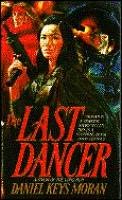 The Last Dancer, by Daniel Keys Moran: After having this book on my reading list since 2005 and having had a desire to read it for almost a decade more than that, I found The Last Dancer was available free online. Finally. This is the third volume of the Continuing Time series begun with the disappointing Emerald Eyes and continuing with The Long Run. It was The Long Run which I had read first, and which sucked me into this odd techno future of web dancers, AI, and a story of a man called “Trent the Uncatchable”. Parts of the story are hokey and clunky (most often character names...it shows, at times, that Moran created this world when he was a teenager), but generally The Long Run was a fast paced fun ride of a novel. Where the first book was about the entire Castanaveres family, and the second was about Trent, this third volume focuses mostly on Denise Castanaveres, one of the two living Castanaveres telepaths (Trent, though her brother, is not a telepath...just uncatchable). Denise hires herself out as a bodyguard to a politician she can mostly believe in (her personal moral code is central to the novel), and finds herself involved in a millennia old war between super humans. It is with The Last Dancer that the reader gets a hint of the scope of Continuing Time. There is a section nearly two thirds of the way through the book that Moran takes the focus off of Denise and tells the story of another set of characters only to return to Denise for the conclusion. This was off putting at first, but I was able to settle back in to the story. I can’t say that The Last Dancer is an outstanding work of fiction, but there is a good sense of adventure and fun (though everything is quite serious), and the reemergence of Trent in this volume is a treat, though even Trent is mostly serious. What I can say is that I enjoyed reading The Last Dancer and look forward to The AI War, which Moran is currently working on.
Traitor, by Matthew Stover: When I read Shatterpoint, the Clone Wars novel dealing with
 Mace Windu (aka Sam Jackson), I was impressed. That was a work of Star Wars fiction which really got to the darkness of the human soul in war time. The novel was a fine line of the Light vs Dark Side of the Force and Matthew Stover became a name for me to watch. I later read his novel Heroes Die, and it was clear that Stover can right some seriously badass fiction. Stover’s Traitor was one of the volumes of the New Jedi Order I was most looking forward to reading. Where other New Jedi Order authors were broadening the scope of this 19 book mini series, Stover delivered a deeply personal story. Jacen Solo had been missing and presumed dead for the last several volumes since his brother Anakin Solo was killed by the Vong. Because he was never shown to be clearly dead the reader’s assumption is that he was alive, just captured and shut off from the Force. Traitor is Jacen’s story and it keeps tight focus on Jacen and his captors, in particular the mysterious being Vergere. Jacen is imprisoned and tortured while Vergere teaches Jacen her version of the Force and life in general. It is a warped, twisted view that does not jive with everything Jacen has previously been taught, but there is a certain amount of consistency to it, too. Is Vergere teaching Jacen to betray the Jedi and the Galaxy? Does Vergere have another agenda? Whom does she serve, and what will Jacen believe? Traitor does not offer simple answers or a simple story, but thus far in the New Jedi Order it is easily the strongest story, for all the darkness. It is a personal story. It is one of the best Star Wars has to offer.
Monday, November 19, 2007
Wild Cards Interview
George R. R. Martin points to an interview he did with SFF World earlier this year regarding his Wild Cards series. It’s a great interview, and only makes me more excited to read the rest of the Wild Cards volumes.
Sunday, November 18, 2007
This Just In: Apex Digest #6

Thanks to Jim over at Shamus Writes I won a copy of Issue #6 of Apex Digest. This issue features stories by Ben Bova, Christopher Rowe, and, the reason I entered the contest in the first place - Mary Robinette Kowal.
I like receiving books and magazines and stuff in the mail. Makes me happy.
Thursday, November 15, 2007
On the Horizon: Q1 2008

Now that the 4th quarter of 2007 is drawing to a close I want to look ahead to the books coming out in the first three months of 2008, at least those which have caught my eye and my interest.
January
Wastelands, by John Joseph Adams (editor): This anthology of post apocalyptic literature from the likes of Octavia Butler, Stephen King, Cory Doctorow, George R. R. Martin, M. Rickert, Tobias Buckell, and Elizabeth Bear is perhaps my most anticipated book of the coming year, and definitely of the coming quarter.
Duma Key, by Stephen King: New King is always worth a look. The story which provided the origin of the novel was published in
 the back of Blaze and while the story doesn’t have nearly enough to grab my interest, it’s a new Stephen King novel. That’s enough.
Dust, by Elizabeth Bear: I don’t know a thing about it except that it is by Elizabeth Bear and I so loved her Blood and Iron and expect to love Whiskey and Water...which makes a new Bear a Bear to be read.
Hunters’s Run, by George R. R. Martin, Gardner Dozois, and Daniel Abraham: A new anything with George Martin’s name on it is enough to peak my interest.
Dragon Harper, by Anne and Todd McCaffrey: Anne’s Pern output in recent years (like the last ten) have not been up to her previous standards and I’m still not sure how I feel about her son Todd continuing the line, but this is still a new Pern novel. Hit or miss, but I’ll be there.
February
Reaper’s Gale, by Steven Erikson: The seventh Malazan novel.

The New Weird, by Ann and Jeff Vandermeer (editors): Hmm, maybe.
March
The Shadow Year, by Jeffrey Ford: Is this a novel? Ford’s name catches my eye, but I have mixed feelings about his work.
A World Too Near, by Kay Kenyon: I reviewed Bright of the Sky off a review copy from Pyr. I didn’t love it, but it was impressive all the same. I’m curious where Kenyon takes the story next.
-list compiled from Locus
Looks like January is the month for exciting and interesting stuff, though Reaper’s Gale leaves a big footprint on the entire quarter.
Wednesday, November 14, 2007
Quick Takes: Nevada Barr, Aaron Allston, Stephen King
Blind Descent, by Nevada Barr: The first third of Barr’s sixth Anna Pigeon mystery is creepy and confining as Anna travels into the world of caving to help rescue her friend Frieda, the dispatcher at the Mesa Verde Ranger station. Blind Descent is set in Carlsbad Caverns, in the mostly unexplored Lechuguilla caverns. Anna in the caverns where she thinks Frieda’s accident was no accident and Barr does a great job making the reader feel the tight spaces of the caverns and the crawling and climbing and the absence of light. When Anna is back out of the cave for the second half of the book (yes, a third and a half), Blind Descent becomes fairly standard storytelling and investigating until that last little bit back in the cave. Mostly well done, and I didn’t want to look away when the caving was on the page, but half the book outside the caves was bland. Wonder what Nevada Barr has for me in Liberty Falling.
Enemy Lines II: Rebel Stand, by Aaron Allston: While Allston’s X-Wing series was top notch, his two entries in the New Jedi Order have felt somewhat off, especially compared to Michael Stackpole’s earlier offerings in the NJO (comparing the two is fitting because Allston and Stackpole also wrote the X-Wing series, each with 4 or 5 novels there). What Allston does especially while in Enemy Lines is give well known characters personality and humor, as well as write some exciting space battles. But, overall the Enemy Lines novels have felt lacking. It is not that EL has been too light in tone compared to the other NJO novels, it is just that in whatever nebulous description of “good” or “exciting” or “fun” or “interesting” the two Allston entries didn’t have “it”. Still, they are better than a good half of the previous 11 NJO books...which overall speaks to the individual book quality of the NJO. I do enjoy the series arc and the character arcs going on and the next book, Stover’s Traitor...excellent.
Blaze, by Stephen King: Blaze is the final Bachman book, the last one of the novels King wrote back in the 70’s under the pen name Richard Bachman. It was only published in 2007, though, because years ago it was not good enough (this is from King’s introduction) and then it was lost, and now when King found it he was able to revise it and whip it into passable shape to be published under Richard Bachman’s name. So, basically, it was a trunk novel that got one more round of revisions and published because the writer’s name was “Stephen King”. Fair enough. I might do the same thing if I were King. The trouble is that Blaze reads like what it is, a novel that was not quite good enough to see the light during the 1970’s and early 80’s. Granted, better than Roadwork, but that doesn’t say too much. Blaze begins with what could have been an Of Mice and Men styled crime novel but the guy with a working brain got killed off and Blaze, the mentally handicapped one, is attempting to pull off one last big crime – kidnapping of a child for ransom...but all Blaze has is the echoes of his dead friend’s voice in his head and not much else. Despite flashes of interest and flashbacks to give us a better idea of who Blaze is, Blaze is a partial disappointment. The reason Blaze is not a complete disappointment is that Stephen King is completely up front with where Blaze came from, why he is publishing it, and the fact that it is a trunk novel. The partial disappointment is that some of the other Bachman books were quite good. The Long Walk: Excellent. The Running Man: Decent. (Rage and Roadwork – not so good). I’d skip this one, except to read all of Stephen King’s work.
Enemy Lines II: Rebel Stand, by Aaron Allston: While Allston’s X-Wing series was top notch, his two entries in the New Jedi Order have felt somewhat off, especially compared to Michael Stackpole’s earlier offerings in the NJO (comparing the two is fitting because Allston and Stackpole also wrote the X-Wing series, each with 4 or 5 novels there). What Allston does especially while in Enemy Lines is give well known characters personality and humor, as well as write some exciting space battles. But, overall the Enemy Lines novels have felt lacking. It is not that EL has been too light in tone compared to the other NJO novels, it is just that in whatever nebulous description of “good” or “exciting” or “fun” or “interesting” the two Allston entries didn’t have “it”. Still, they are better than a good half of the previous 11 NJO books...which overall speaks to the individual book quality of the NJO. I do enjoy the series arc and the character arcs going on and the next book, Stover’s Traitor...excellent.
Blaze, by Stephen King: Blaze is the final Bachman book, the last one of the novels King wrote back in the 70’s under the pen name Richard Bachman. It was only published in 2007, though, because years ago it was not good enough (this is from King’s introduction) and then it was lost, and now when King found it he was able to revise it and whip it into passable shape to be published under Richard Bachman’s name. So, basically, it was a trunk novel that got one more round of revisions and published because the writer’s name was “Stephen King”. Fair enough. I might do the same thing if I were King. The trouble is that Blaze reads like what it is, a novel that was not quite good enough to see the light during the 1970’s and early 80’s. Granted, better than Roadwork, but that doesn’t say too much. Blaze begins with what could have been an Of Mice and Men styled crime novel but the guy with a working brain got killed off and Blaze, the mentally handicapped one, is attempting to pull off one last big crime – kidnapping of a child for ransom...but all Blaze has is the echoes of his dead friend’s voice in his head and not much else. Despite flashes of interest and flashbacks to give us a better idea of who Blaze is, Blaze is a partial disappointment. The reason Blaze is not a complete disappointment is that Stephen King is completely up front with where Blaze came from, why he is publishing it, and the fact that it is a trunk novel. The partial disappointment is that some of the other Bachman books were quite good. The Long Walk: Excellent. The Running Man: Decent. (Rage and Roadwork – not so good). I’d skip this one, except to read all of Stephen King’s work.
Tuesday, November 13, 2007
Chapter 1 of Kitty and the Silver Bullet!
Excitement!
Carrie Vaughn has posted the entire first chapter of the fourth Kitty Norville novel Kitty and the Silver Bullet.
Last year I won the first two Kitty novels (Kitty and the Midnight Hour and Kitty Goes to Washington) in a contest over at Pat’s Fantasy Hotlist and that was my introduction to the world of Kitty Norville and her fellow lycanthropes. It wasn’t something I was terribly interested in at the time, but Vaughn’s storytelling and the character of Kitty, the host of a midnight radio show about the supernatural and a werewolf herself just pulled me right in and now a new Kitty Norville novel is something that I look forward to. Good stuff.
Carrie Vaughn has posted the entire first chapter of the fourth Kitty Norville novel Kitty and the Silver Bullet.
Last year I won the first two Kitty novels (Kitty and the Midnight Hour and Kitty Goes to Washington) in a contest over at Pat’s Fantasy Hotlist and that was my introduction to the world of Kitty Norville and her fellow lycanthropes. It wasn’t something I was terribly interested in at the time, but Vaughn’s storytelling and the character of Kitty, the host of a midnight radio show about the supernatural and a werewolf herself just pulled me right in and now a new Kitty Norville novel is something that I look forward to. Good stuff.
The Sagan Diary!
Thanks to John Joseph Adams for this!
I've been way slack in my short fiction reading lately so I had not checked Subterranean Online recently. Subterranean has published online, for free, John Scalzi's novella The Sagan Diary!!!
I know what I'll be reading today.
I've been way slack in my short fiction reading lately so I had not checked Subterranean Online recently. Subterranean has published online, for free, John Scalzi's novella The Sagan Diary!!!
I know what I'll be reading today.
21st Century Fairy Tales
The UK paper The Guardian “challenged three writers to come up with fairy tales fit for the 21st century”
Stories are by Audrey Niffenegger (The Time Traveller’s Wife), Hilary Mantel (?), and Chimamanda Ngozi Adichie (Half of a Yellow Sun, Purple Hibiscus)
These should be interesting. I really like Niffenegger and am waiting impatiently for a new novel. Her short story over at Amazon is a fun little thing.
Stories are by Audrey Niffenegger (The Time Traveller’s Wife), Hilary Mantel (?), and Chimamanda Ngozi Adichie (Half of a Yellow Sun, Purple Hibiscus)
These should be interesting. I really like Niffenegger and am waiting impatiently for a new novel. Her short story over at Amazon is a fun little thing.
Monday, November 12, 2007
200
Last night I finished the 200th book I have read so far this year. Heart-Shaped Box, by Joe Hill. That’s one scary, scary book. It is scary in ways that Stephen King seldom has been, and touches on some of that other worldy creepiness of some of the recent imported Japanese horror flicks. It’s one hell of a debut novel.
I may reach 225 books on the year, but I think 250 is out of reach.
I may reach 225 books on the year, but I think 250 is out of reach.
Saturday, November 10, 2007
Quick Takes: Frank Warren, Jonathan Lethem, Joe Lansdale

A Lifetime of Secrets, by Frank Warren: This is easily the best and strongest of the four PostSecret collections (except possibly the first). A Lifetime of Secrets is quite a bit longer than the previous two collections and this is its strength. More content for the dollar. Organized in a sort of chronological order from secrets about childhood to secrets of old age, A Lifetime of Secrets is exactly what the title says. If the PostSecret website is something you enjoy, you’ll like this. Getting glimpses into these most personal secrets, hopes, fears, betrayals, sorrows, griefs, and things kept hidden – both serious and silly – is part privilege, part curiosity, but almost always fascinating.
 You Don’t Love Me Yet, by Jonathan Lethem: A brief, lightweight novel from Jonathan Lethem dances around an almost up-and-coming band and follows the bass guitarist through her life and job as a Complaints line phone operator (not for a company, as an art project, people can call and complain about anything) uses the complaints for lyrics and the rise and fall of the band and various personal issues. At times the novel is as interesting and good as it can be, mostly it is not. This is minor Lethem, unfortunately. The man who wrote Motherless Brooklyn, and The Fortress of Solitude is not here. The man who wrote Gun, With Occasional Music and As She Climbed Across the Table is also not here. Though short, You Don’t Love Me Yet reads like a Woody Allen meets Don DeLillo (think Great Jones Street, not his stronger work) meets Dave Eggers (The You Shall Know Our Velocity Eggers, not the earnest and intelligent and quirky Eggers from his memoir) mish mash. Lethem has been one hell of a writer and will be again, but this is a misfire.
Retro Pulp Tales, by Joe R. Lansdale (editor): Joe Lansdale brings together a collection of
 contemporary authors writing stories in the style of the pulps from the 40’s. Overall this is a fun, stylish collection, but after reading a handful of stories by interest began to wane. Norman Partridge’s story at the end is worth the price of admission, but the overall styling started to grate just a little bit. The fun part of this collection is that we’ve got stories that feel realistic (yet sometimes with that sepia tone of Sky Captain and the World of Tomorrow), yet there is a bit of weirdness happening just off the page that is influencing the story and our reading of it. I believe this is a much praised collection, and rightly so, but the pulps are also not my kind of story and not what truly interests me as a reader. Still...worth checking out if only for the Partridge story.
Friday, November 09, 2007
the things you find
Midway through my reading of Stephen King’s last Bachman book Blaze I find a note from some previous patron “look for Ace’s DVD @ lake”
It’s just a reminder from a random person who read this book before me (it’s not that good, if you want to know), but I wonder what that means. Who is Ace? What DVD? Which lake? What if it is a code and the DVD is something else but served as a reminder for that unnamed thing?
What’s the story behind the note and what else could the story be?
Hmm.
It’s just a reminder from a random person who read this book before me (it’s not that good, if you want to know), but I wonder what that means. Who is Ace? What DVD? Which lake? What if it is a code and the DVD is something else but served as a reminder for that unnamed thing?
What’s the story behind the note and what else could the story be?
Hmm.
Thursday, November 08, 2007
Mendoza in Hollywood, by Kage Baker

Mendoza in Hollywood
Kage Baker
2000
Mendoza in Hollywood is Kage Baker’s third novel about the Company operatives tasked to preserve missing historical artifacts and planet and animal life which would otherwise become extinct. The operatives work for the Dr. Zeus Company and due to the scientific discoveries of the 24th Century, the operatives are once human, but now immortal cyborgs. Baker’s first Company novel, In the Garden of Iden, introduced us to both The Company and to Mendoza, a Spanish child saved from the Inquisition and made more and less than human to work for The Company as a Botanist. In that first novel she fell in love with a mortal man but had to watch him die because the Company could not and would not intervene. She grew bitter and disillusioned and betrayed and spent centuries working alone in the California wilderness during the 1700’s. Now, during the 1860’s, Mendoza is assigned to the region which would eventually develop into Hollywood. California in the 1860’s was a rough place, but Mendoza is not alone. She joins a crew of operatives with their own tasks of recording the culture of the region, taking samples of the local fauna, and a variety of other jobs to do for The Company.
When Mendoza in Hollywood opens, however, Mendoza is narrating her story to Company interrogators. We learn early that Mendoza has killed several mortals, which is an absolute taboo for The Company. Mendoza in Hollywood is narrated by Mendoza in captivity as an explanation for how she got to the point where she would and could kill mortals and why she did so. This is hanging over every part of the novel, that at some point Mendoza may snap and kill and we don’t know why. Mendoza is upset about the new assignment, but she also seems to enjoy the company of her fellow operatives.
Kage Baker takes us on a journey through the Hollywood wilderness before it became Hollywood. Because of the nature of the Immortals, Baker is able to reference hundreds of years of Hollywood history, some of which we know and some of which has not happened yet. There are screenings of classic movies, and a tour of the future homes of celebrities. But, Mendoza in Hollywood is also the story of a very emotionally broken Immortal. Mendoza has accepted the death of Nicholas, but hundreds of years later she still has not gotten over it. It changed her irrevocably.
With each novel Kage Baker tells a very different story. In the Garden of Iden was partly a Victorian romance, Sky Coyote was a classic trickster tale of indigenous culture. Mendoza in Hollywood is a western complete with bandits and prostitutes. With each novel Kage Baker develops what we know and suspect of The Company. There are further more references to that mysterious year in the future where there is no further information coming from The Company and speculation as to what that means (though less speculation than in Sky Coyote). There are little tidbits that build the reader’s understanding and sense of wonderment about the greater world of the future even as the characters are slowly making their way through the past.
The Company novels have improved steadily with each new entry. Mendoza in Hollywood is a stronger piece of fiction and storytelling than either In the Garden of Iden or Sky Coyote was, and Sky Coyote was an entertaining story indeed. Finishing Mendoza in Hollywood serves to whet my appetite for the next Company novel The Graveyard Game.
Thinking about the conclusion of Mendoza in Hollywood makes me question something of the nature of time travel in regards to The Company novels. Since time travel requires that a person can only move backwards in time and forward only up to the original departure time, what happens if an operative is working in one time period (A) and is subsequently sent back farther in time (B)? If said operative is not moved from the time period he or she is sent to (B) would not said operative from (B) eventually co-exist at the same time as the operative was originally in (A)?
That may not have made sense.
Let me try again. I was born in 1979 and in 2007 I am a Company operative working to preserve the great novels lost to history. After I preserve the works of Matthew Stover (for example) I am sent back to 1712 to do something literary. Now, I already existed between 1979 and 2007 otherwise I could not have been sent back in time to 1712. I’m immortal, so I’ll live forever. If nothing else changes I will live from 1712 back to 1979-2007. Because I had to exist in 1979 in the first place (otherwise this is all moot) starting in 1979 there has to be two of me existing at the same time: the me born in 1979 and the me that was sent back in time.
So how does that work? Obviously the me born in 1979 will do whatever I did until 2007 when I was sent back in time...but isn’t there a potential paradox or conflict with two of me existing at the same time? I know Back to the Future solves this by having the time traveling Marty / Doc not reveal himself to the past Marty / Doc, but wouldn’t that still cause an issue if I wanted to check in on myself in high school or elementary school? Or is the problem solved by the fact that had the older Joe actually interfered in young Joe’s life I would have remembered it because it had happened and changed nothing because it had to happen?
And my head just exploded.
Subscribe to:
Posts (Atom)